
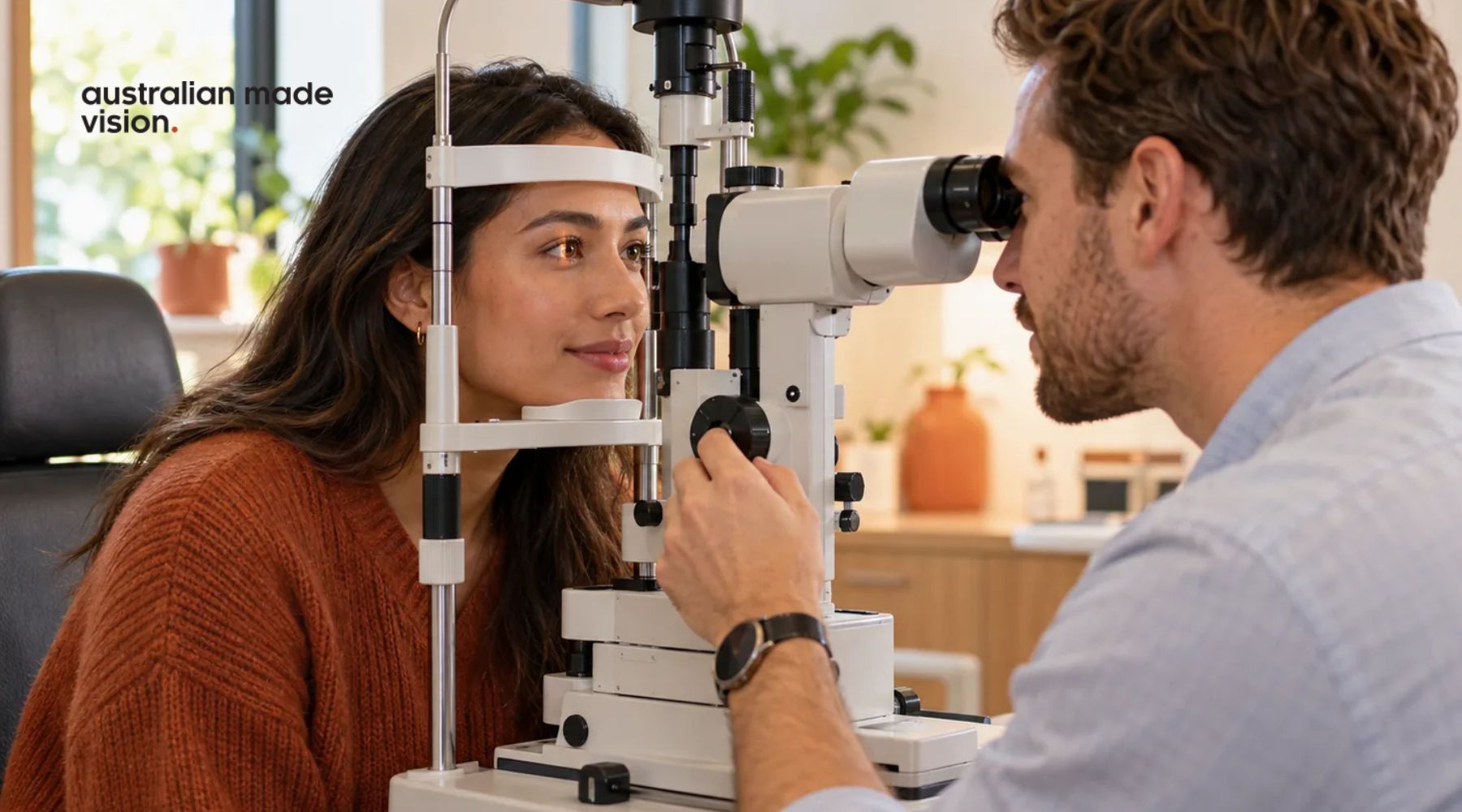
For most adults with no eye symptoms or known risk factors, an eye test every two to three years is a reasonable starting point under general Australian eye-care guidelines. From your early 60s, more frequent checks may be appropriate, and Healthdirect advises annual checks from age 65. If your vision changes or you have a condition that may affect your eyes, you may need an examination sooner. Your optometrist can recommend a suitable interval based on your eye health and examination results.
When you should not wait for a routine eye test

Arrange prompt medical assessment if you notice new or unexplained changes in your vision, eye pain, or significant redness. Sudden vision loss, severe eye pain, flashes of light, a sudden shower of floaters, or a shadow across your sight can be signs of a serious eye problem. Seek emergency assessment rather than waiting for a routine appointment.
If symptoms are sudden and severe, go to an emergency department or call triple zero (000) if an ambulance is needed.
TIME FOR AN EYE TEST?
Not Sure When Your Next Eye Test Is Due?
Your age, eye health and individual needs can affect how often you should have an eye test. Find an independent optometrist near you to discuss the right timing.
Find an Optometrist →How often should you get your eyes checked?
There is no standard interval for everyone, as eye test frequency depends on your age, symptoms, eye health, and medical history. The timeframes below provide a general guide. Follow your optometrist’s advice if it differs.
| Situation | Suggested interval or next step |
|---|---|
| Adults younger than 60 with no known risk factors | Healthdirect’s guidelines suggest a check every two to three years as a general starting point. Your optometrist may suggest another interval. |
| Adults aged 60–64 | Healthdirect’s advice for people over 60 suggests a check every one to two years. Ask what suits your individual needs. |
| Adults aged 65 and over | A yearly eye test is generally recommended. Some people need additional appointments. |
| Diabetes, high blood pressure, family history of eye disease, or an existing eye condition | Follow the schedule your treating clinician recommends, which may involve more frequent checks. |
| New or worsening eye symptoms | Arrange an assessment rather than waiting for a routine check. Sudden or severe symptoms may need urgent care. |
| Children and teenagers | The right timing depends on age, symptoms, and earlier test results. Follow child-specific advice. |
When should you book an eye test sooner?
You do not need to notice a major change before speaking with an optometrist. Blurred distance vision, difficulty reading, headaches during visual tasks, increased glare, or glasses that no longer feel right are all reasons to ask about an eye examination. These symptoms can have several causes, so do not assume you simply need a new prescription.

Some people need closer monitoring even when they have no noticeable symptoms. Diabetes, high blood pressure, a family history of eye disease, or findings from an earlier examination can affect how often an optometrist recommends follow-up. If you already have a monitoring plan, follow it rather than relying on a standard two- or three-year interval.
If eye conditions run in your family, our guide to family history and eye conditions explains which details can be useful to share at your appointment.
Is Your Eye
Health on Track?
Complete our free 18-point checklist to check your eye health, spot any gaps, and take charge of your vision.
Start Free Checklist Test →Do you need an eye test if your vision seems fine?
Yes. Eye tests do more than check whether you need glasses. They can also assess your eye health and identify signs of problems that may not be noticeable at first. The checks you need depend on your age, symptoms, and individual risk factors.
An optometrist may check your distance and near vision, measure your glasses prescription if needed, and examine the front and back of your eyes. Other tests may be appropriate for particular concerns. Not everyone needs the same tests or equipment at every visit.
How often should children have eye tests?
Children’s eye care is different from routine adult screening. An assessment may be needed if a child squints, closes one eye, struggles to see classroom material, reports trouble seeing, or has a known eye condition that needs monitoring. The timing also depends on the child’s age and findings from earlier examinations. Adult eye-test intervals should not be used for children.
For more information, read our guide to children’s eye tests. Parents and carers can ask the optometrist when their child should return and whether any further checks are needed.
Does Medicare cover an eye test every two years?
The recommended time between eye tests is different from Medicare’s standard rebate interval. Under current Medicare Benefits Schedule rules, eligible people under 65 can generally claim a standard comprehensive optometry consultation once every 36 months. For eligible people aged 65 and over, the usual interval is 12 months. Other Medicare items may apply when specific clinical criteria are met. These rules do not mean that everyone should wait until their next routine rebate is available.
Not every practice bulk bills, so you may have out-of-pocket costs. Medicare also does not generally cover prescription glasses or contact lenses. If symptoms develop or your clinician recommends an earlier eye examination, ask the practice which consultation and fees may apply rather than putting off care until the next routine rebate.
For more about costs and billing, read our bulk-billed eye test and Medicare guide. Check current Medicare entitlements and confirm fees directly with the practice.
What should you ask when booking?
Tell the practice whether you are booking a routine eye test or need help with a new concern. Ask what the appointment includes, whether the practice provides the assessment you need, how Medicare rebates apply, and whether any additional tests may cost extra.
Take your current glasses or contact lenses, details of any changes in your vision, relevant medicines, and useful family or medical history. Before you leave, ask when the optometrist recommends another visit and what changes should prompt you to come back sooner.
If you are deciding where to book, our guide to choosing an optometrist has practical questions to help you compare practices.
Planning your next eye test
If you have no symptoms but have not had your eyes checked for some time, contact an optometrist to ask when you should book. If you have an ongoing eye condition, known risk factors, or changes in your vision, follow the advice you have received about your next visit. If symptoms are sudden or severe, seek urgent medical care rather than booking a routine appointment.
When you are ready to arrange a routine appointment, find an independent optometrist through the Australian Made Vision directory. Check the individual practice’s services, appointment availability, and fees before booking.
Take the Next Step
Is It Time for Your Next Eye Test?
Eye test timing depends on your age, eye health and individual needs. Find an independent optometrist near you to discuss when your next eye examination may be appropriate.
Find an Optometrist →Frequently asked questions
Do I need an eye test every two years?
For many adults without symptoms or known risk factors, a two-year interval is within general Australian eye-care guidelines. Older adults and people with particular health concerns may need more frequent checks. Your optometrist can advise when you should return.
Do I have to wait three years between Medicare eye tests?
Not necessarily. Medicare rebate intervals and the timing of an eye examination are different things. If your vision changes or an optometrist has advised you to return sooner, contact the practice to discuss the assessment and possible costs.
How often should I have an eye test from age 65?
Healthdirect advises a routine eye health check each year from age 65. Your optometrist may recommend more frequent reviews depending on your medical and eye health needs.
Do I need a referral to see an optometrist?
You generally do not need a GP referral for a routine eye test with an Australian optometrist. If you need specialist assessment, an optometrist or GP can explain the appropriate referral process.
Should I book an eye test if I do not wear glasses?
Yes. Eye tests also check your eye health, so it is helpful even if you do not wear glasses or notice any change in your vision.
Important information
This article provides general eye health information only. It cannot diagnose an eye problem or determine how often you personally need an examination. Advice for your situation depends on a proper assessment. Australian Made Vision publishes eye health information and provides a directory; it is not a clinic or treating healthcare provider.
Sources and references
- Healthdirect – Eye tests (reviewed September 2024; accessed 14 October 2026)
- Healthdirect – Eye care (accessed 14 October 2026)
- Healthdirect – Eye-health tips for over-60s (accessed 14 October 2026)
- Better Health Channel, Victoria – Eye tests (accessed 14 October 2026)
- Australian Government Department of Health – What Medicare covers (accessed 14 October 2026)
- Services Australia – Screening, tests and scans covered by Medicare (accessed 14 October 2026)
- MBS Online – Item 10914, clinically indicated reassessment (accessed 14 October 2026)

Australian Made Vision is an independent directory that helps patients find optometrists across Australia who may offer Australian-made spectacle lenses. We do not provide clinical services and recommend contacting practices directly to confirm the products and services they offer.