

Getting used to progressive lenses can take several days, a couple of weeks, or sometimes longer. The adjustment period varies from person to person, and there is no fixed deadline that applies to every wearer. The important question is whether your vision and comfort are improving as you use the glasses for their intended tasks.
If blurred vision, headaches, or unsteadiness persist, worsen, or interfere with everyday activities, contact the practice that supplied your glasses. You do not need to wait a set number of weeks before asking for a check.
When to seek urgent medical help
Do not assume sudden blurred vision or sudden vision loss is part of adjusting to glasses. Seek urgent medical care. If sudden blurry vision occurs with a drooping face, weakness, numbness, slurred speech, or loss of balance, call triple zero (000) for an ambulance.
In this article
What can feel different when you first wear progressive lenses?
Progressive lenses change power gradually so you can see at different distances without the visible dividing lines found in some other multifocal glasses. Generally, the upper area supports distance viewing, the middle supports intermediate tasks such as using a computer, and the lower area supports close work. These are functional viewing areas rather than sharply separated sections.
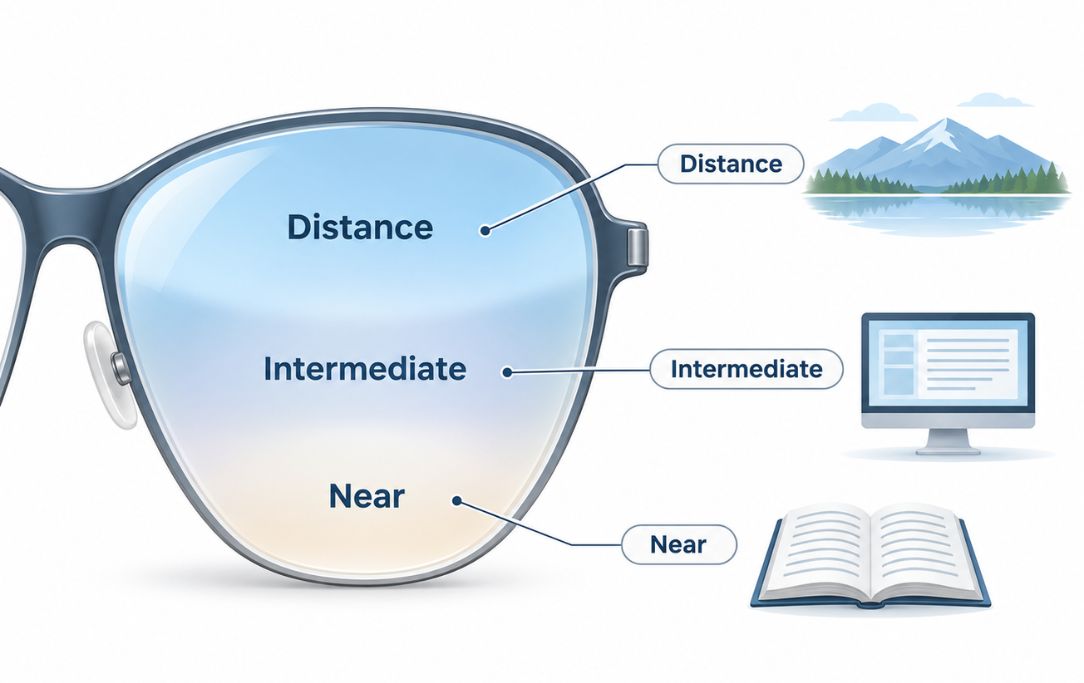
At first, you may need to think more about where you look through the lens. The outer areas can appear less clear, and movement may produce an unfamiliar shifting or “swim” sensation. Moving your eyes and head towards the viewing area for a task can take some practice. These effects vary and should not be assumed harmless when they are strong or interfere with daily activities.
Not sure which type of lens you have? Read AMV’s guide to multifocal and progressive lens differences.
GETTING USED TO PROGRESSIVE LENSES?
Need Help With Your New Glasses?
Ask the practice that supplied your progressive glasses to review the fit and prescription. If you need another practice, find an independent optometrist near you.
Find an Optometrist →Why does the adjustment period vary?
Someone wearing progressives for the first time may have a different experience from someone replacing an older pair. A changed prescription, a different frame or lens design, and the viewing distances involved in reading, screen use, and walking may all affect how the new glasses feel. Research also suggests that people differ in how their visual systems respond to progressive lenses; it does not establish an exact adjustment timetable.
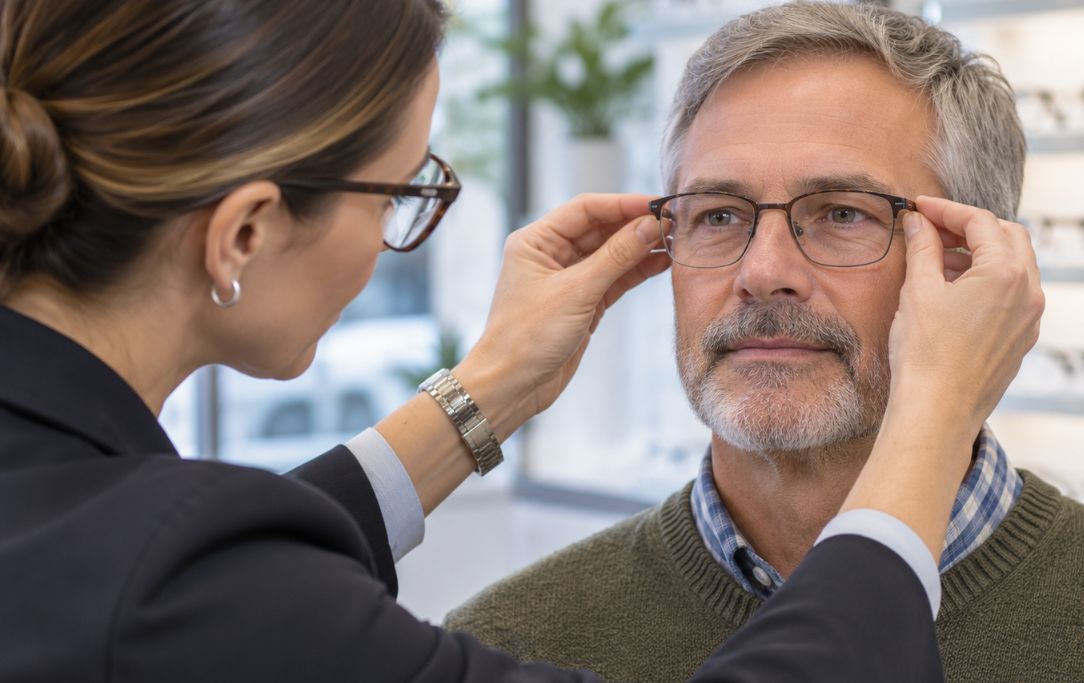
Fit matters too. Progressive lenses need to sit in the intended position in front of each eye. The dispensing team may measure the position of your pupils and the height of the lenses within the frame. How the frame sits and tilts on your face can also affect the way you access the viewing areas. These factors are worth checking, although none necessarily explains why a particular pair feels uncomfortable.
How can you get used to progressive glasses safely?
Follow the wearing instructions given by the practice that supplied your glasses. There is no single wear schedule that is suitable for everyone, particularly if you have been advised to use your glasses for specific tasks.
In a familiar, low-risk setting, start by looking straight ahead through the distance area. Then use the appropriate lower part of the lens for reading. For objects to one side, gently turn your head towards them rather than relying only on the outer lens edge. You should not need to force an awkward posture to see clearly.
If your vision feels distorted or you feel unsteady, avoid driving and other activities where unclear vision could be dangerous until the glasses have been checked and you can use them safely. Take particular care on steps. Do not try to bend the frame or alter its fit yourself to fix a possible alignment problem.
Is Your Eye
Health on Track?
Complete our free 18-point checklist to check your eye health, spot any gaps, and take charge of your vision.
Start Free Checklist Test →When should you contact the practice that supplied your glasses?
An early sense of unfamiliarity may improve. But if you cannot comfortably read, use a screen, judge your surroundings, or complete the tasks the glasses were prescribed for, a review is appropriate. You should also contact the practice if the frame slips or the clear viewing area is hard to find. The same applies if headaches, blurred vision, or dizziness persist or worsen.
You do not need to wait for an arbitrary adaptation deadline if discomfort is disrupting normal life. Contact the supplying practice when progress is not clear or the glasses are affecting your usual activities. Changes in vision, headaches, and dizziness can also have causes unrelated to lenses. Seek medical advice when symptoms are unexpected, severe, recurrent, or not clearly connected with wearing the glasses.
What might be checked at a fitting review?
Depending on the concern, an optometrist or optical dispenser may check the frame’s position and stability, the fitting height and pupil distance, the frame tilt, the prescription, and the lens design. They may also ask you to demonstrate a reading, screen, or distance task that feels difficult. A frame adjustment, prescription review, or discussion about a different option may be considered, but a replacement lens is not automatically necessary.
Common questions about progressive-lens adjustment
Can it take longer than two weeks to adjust?
Yes. Adjustment varies. Some people take longer, while others may need a fitting review. Two weeks is not a universal limit. What matters is whether everyday use is becoming easier and whether symptoms remain manageable.
Should I wear new progressive glasses all day?
Follow the advice from the practice that supplied your glasses. The team can explain whether your glasses are intended for regular use or particular tasks and whether your wearing routine needs to be adjusted.
What if new progressive glasses make me dizzy?
Do not assume the glasses are the only possible cause. Stop activities that feel unsafe and contact a health professional if dizziness persists, starts suddenly, is severe, or keeps returning. Dizziness with neurological symptoms or other emergency warning signs requires immediate medical help.
The next step if your glasses still do not feel right
If your progressive glasses are not becoming easier to use, start with the practice that supplied them. Ask the practice to review the fit and prescription and discuss whether the lenses suit your daily tasks. If you need to locate another practice, the Australian Made Vision directory lists participating independent optometrists. The individual practice provides clinical advice and can confirm its own services and aftercare arrangements.

Take the Next Step
Need Help With Your Progressive Glasses?
If your progressive glasses still do not feel right, start with the practice that supplied them. Ask about fit, prescription, and whether the lenses suit your daily tasks.
Find an Optometrist →Sources
Australian Made Vision is an independent directory that helps patients find optometrists across Australia who may offer Australian-made spectacle lenses. We do not provide clinical services and recommend contacting practices directly to confirm the products and services they offer.

Michael Nasser is a qualified Optical Dispenser with law and business degrees and a director of Opticare. He is an advocate for independent optometry in Australia and host of The Focused View, where he brings industry leaders together to discuss practice growth, technology, team development, and the future of independent eye care.