
Seek urgent medical help for sudden changes in vision. Sudden loss of vision, new flashes of light, a sudden increase in floaters, or a dark shadow or curtain moving across your sight may signal a retinal emergency. Seek immediate assessment from an optometrist or ophthalmologist (eye specialist), or attend your nearest emergency department immediately. Call triple zero (000) if you need an ambulance. Do not wait for a routine eye appointment. These symptoms have several possible causes and are not specific to diabetes. Severe eye pain with redness or worsening vision also needs emergency assessment. If vision changes happen alongside a drooping face, arm weakness, or difficulty speaking, call triple zero (000) for an ambulance. A chemical splash or penetrating eye injury also needs emergency care. For a chemical splash, start flushing the eye with cool water for 20 minutes while emergency help is arranged. Sources: healthdirect — Blurred vision, Retinal detachment, Glaucoma, Stroke, and Objects or chemicals in the eye.
Blurry vision means that what you are looking at appears less sharp or out of focus. It may affect reading, recognising distant signs, or seeing clearly through one eye or both. Sometimes the change develops gradually. At other times, it happens without warning.
There are several possible causes, from changes in your glasses prescription to conditions affecting the surface or deeper structures of the eye. The way blur begins, how long it lasts, and whether other symptoms occur can help an optometrist or doctor decide what to check. But these details cannot identify the cause on their own.
This article focuses on blurry vision specifically. For a broader overview, see AMV's guide to eye symptoms and vision problems.
Table of Contents
What does blurry vision mean?
Blurred vision describes a loss of visual clarity. Words on a page may look fuzzy, street signs may be difficult to read, or the edges of objects may not look as sharp as they used to. The change can affect near vision, distance vision, or both.
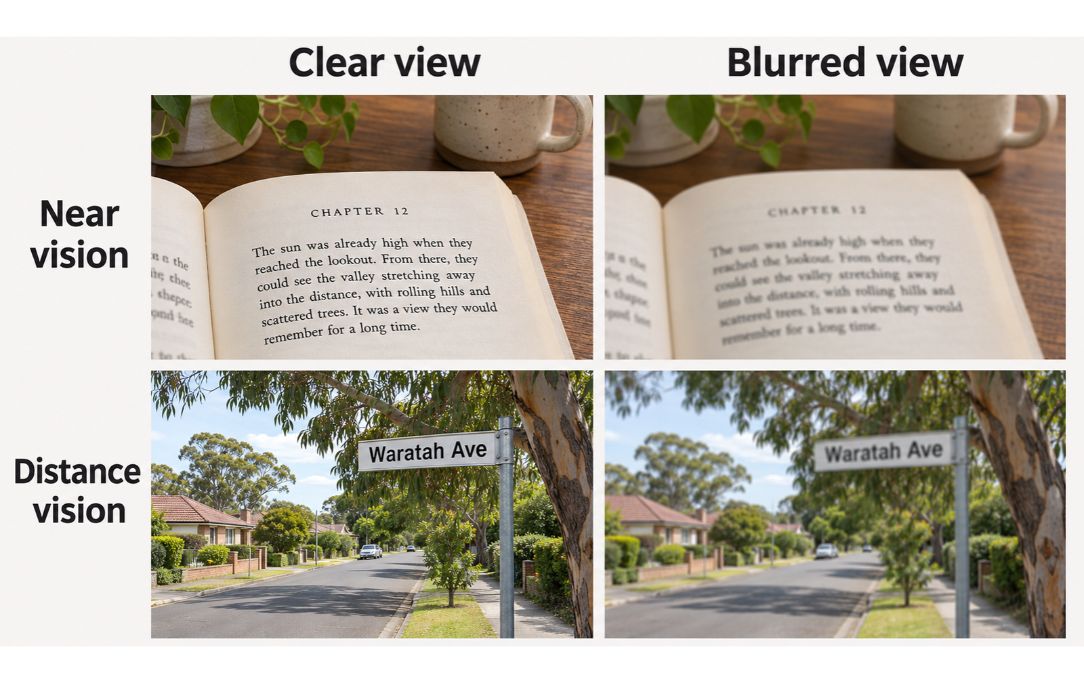
People sometimes use blurry, cloudy, and double vision interchangeably, but these descriptions are not quite the same. Cloudy vision may feel as though you are looking through haze. Double vision means seeing two images of one object. Tell the clinician what you actually notice rather than trying to label the symptom yourself.
A change that develops slowly can still need assessment. And a sudden change should never be assumed to be an ordinary prescription problem.
GRADUAL VISION CHANGES?
Time to Discuss Blurry Vision?
For gradual or recurring blur without emergency warning signs, find an independent optometrist to discuss an eye examination.
Find an Optometrist →What can cause blurry vision?
Several eye and general health conditions can affect visual clarity. The examples below explain possible reasons, not a way to diagnose yourself. An examination is needed to establish what is happening.
Prescription or focusing changes
When light is not focused clearly on the retina, the light-sensitive tissue at the back of the eye, objects can appear blurred. These focusing problems are called refractive errors.
Short-sightedness (myopia) commonly makes distant objects harder to see clearly. Long-sightedness (hyperopia) can affect close work, although symptoms vary. Astigmatism can make vision blurred or distorted at different distances. Presbyopia is a separate, age-related change that makes focusing on nearby text more difficult.
If your usual glasses no longer give you comfortable, clear vision, your prescription may need checking. That does not mean a prescription change is the only possible explanation.
Dry eyes and visual strain
The tear film helps keep the surface of the eye smooth. When it is disrupted, vision may fluctuate, sometimes becoming clearer after a blink. Dryness can occur with grittiness, irritation, watering, or discomfort. Read AMV's dry eye syndrome guide for a fuller explanation.
Long periods of reading or screen work can also be associated with tired eyes, headaches, and temporary blurred sight. An uncorrected focusing problem may add to that discomfort. AMV's article about digital eye strain covers those symptoms in more detail.
Screen use or dry eyes should not be used to explain away a sudden or marked vision change.
Cataracts and other eye-health conditions
A cataract develops when the eye's natural lens becomes cloudy. It can contribute to gradually blurred vision, increased glare from headlights, or difficulty seeing in certain lighting. You can read more in AMV's guide to cataract symptoms and assessment.
Other conditions can affect the retina, optic nerve, or pressure inside the eye. For example, a retinal detachment may cause sudden visual changes alongside flashes, floaters, or a dark shadow. Certain forms of glaucoma can cause severe eye pain, redness, and rapidly worsening vision. These symptoms require emergency assessment, not a routine appointment.
Not every serious eye condition causes pain. That is another reason not to judge the cause of blurred sight from one symptom alone. AMV's eye conditions guide explains where different eye-health topics fit.
Health conditions, medicines, and other factors
Blurred vision can sometimes be linked to health conditions outside the eye. Diabetes, for instance, may cause temporary changes in focusing as blood glucose levels vary, while diabetes-related eye disease can affect sight. People living with diabetes should discuss new visual symptoms with their treating clinician and maintain the recommended eye-health checks.
Some medicines and general health conditions may also contribute to dryness or changes in vision. Mention any medicines you take when you have your eyes assessed, but do not stop or adjust prescribed treatment without advice from the clinician responsible for it.
Does the pattern of blurry vision matter?
Yes. The pattern gives a clinician useful information, although it cannot establish the diagnosis. Think about when you first noticed the blur, what you were doing, whether it has changed, and whether anything else is happening with your eyes or general health.
Sudden versus gradual changes
Blur that starts suddenly needs urgent assessment. Sudden vision loss or a marked sudden change should be assessed immediately, even if it affects only one eye or seems to improve. Do not wait for it to clear before seeking help.
Gradual blur may relate to a focusing change or another developing eye condition. If it persists, recurs, or affects your daily activities, arrange an eye examination instead of waiting until your next scheduled check.
Blurry vision in one eye or both eyes
Blur may occur in one eye or both. Tell the clinician which eye is affected, and whether the change began at the same time. A one-sided change is not automatically harmless, and sudden loss or marked sudden blur in either eye needs emergency care.
Blur that comes and goes
Fluctuating vision can occur for different reasons, including tear-film problems or changes in focusing. But intermittent blur is not always minor. Note how often it happens, how long it lasts, and whether it comes with headaches, eye discomfort, light sensitivity, or another symptom. New, unusual, or worsening episodes warrant professional advice, and sudden changes require urgent assessment.
Blurry vision when reading, looking into the distance, or driving
Difficulty reading small text may suggest a near-focusing problem, while a classroom board or road sign becoming unclear may point towards distance vision. Glare and reduced clarity while driving can also occur with cataracts or other eye conditions.
These are clues for an eye examination, not a diagnosis. If your sight is too blurred to drive safely, do not drive until it has been appropriately assessed. This is especially important if the change appeared while you were on the road.
Is Your Eye
Health on Track?
Complete our free 18-point checklist to check your eye health, spot any gaps, and take charge of your vision.
Start Free Checklist Test →When should you arrange an eye test for blurry vision?
Book an eye examination if your vision has gradually become less clear, your usual prescription seems less effective, or blurred sight continues or keeps returning. The optometrist can check your vision and eye health and advise whether another form of assessment is needed.
Do not treat a routine eye-test booking as the right response to sudden vision changes, a painful red eye with worsening sight, or new retinal warning signs. Those symptoms need urgent or emergency medical assessment, as described at the start of this article. A contact-lens wearer who develops a red, painful, light-sensitive eye or blurred sight should seek prompt professional assessment rather than assuming it is simple dryness.
You can help the clinician by describing when the blur started, whether it affects one or both eyes, which distances are hardest to see, and what other symptoms you have noticed. If you have diabetes or another relevant health condition, mention that too.
How does an optometrist assess blurry vision?
An optometrist will generally ask about your symptoms and history before deciding which checks are appropriate. They may ask when the change began, whether it comes and goes, what glasses or contact lenses you use, and whether you have any relevant medical conditions or medicines.

Depending on the findings, an eye examination may involve a visual acuity test to measure how clearly you see, a refraction to assess your prescription, and checks of eye structures and eye health. Some situations require additional testing. Not every practice uses identical equipment, and not every person needs the same tests.
An optometrist may recommend further medical assessment or referral to an ophthalmologist if signs suggest a condition that requires specialist care. A GP can also assess possible general-health contributors. Healthdirect explains what an eye test may involve.
What can you do while seeking advice?
If your vision has changed, take note of what you are experiencing, including the start of the change and any accompanying pain, redness, flashes, or headaches. Bring your current glasses or contact-lens details and information about relevant medicines to your appointment.
Do not drive when your sight is not clear enough to do so safely. Avoid assuming that rest, new glasses, or over-the-counter drops will resolve blurred vision without knowing its cause. If you wear contact lenses and your eyes become sore or red, remove the lenses if safe to do so and seek prompt professional advice; do not continue wearing them while the problem is being assessed.
If the change is sudden or any emergency warning sign is present, seek urgent care immediately. Self-care is not a substitute for an emergency assessment.
Frequently asked questions
Does blurry vision always mean I need glasses?
No. A refractive error or an outdated prescription is one possibility, but dry eye, cataracts, general health conditions, and other eye problems can also affect clarity. An eye examination can help determine whether glasses, another form of care, or further assessment is appropriate.
Can blurred vision come and go?
Yes. Some people notice fluctuating blur, including with dry eyes or focusing difficulties. However, intermittent changes do not rule out a medical issue. Seek advice for recurring symptoms and urgent assessment for any sudden or marked change.
Can diabetes affect blurry vision?
Yes. Changes in blood glucose can affect focusing, and diabetes can also be associated with eye disease that affects vision. Diabetes Australia recommends ongoing eye-health care for people living with diabetes. New blurred vision deserves professional assessment rather than assuming it is only a blood glucose fluctuation.
Should I wait for sudden blurred vision to clear?
No. Healthdirect advises urgent medical attention for sudden blurry vision. Sudden vision loss or a marked change in sight needs immediate assessment, even if the change affects only one eye or seems temporary. If it occurs with possible stroke symptoms, call triple zero (000).
Next steps: getting your vision checked
Blurry vision has more than one possible cause, and the best next step depends on how the change began and whether other symptoms are present. Sudden or severe changes need urgent medical care. For gradual, persistent, or recurring blur without emergency warning signs, an eye examination can help clarify what is happening.
For non-emergency concerns, you can find an independent optometrist through Australian Made Vision and contact a participating practice to ask about services, appointments, and fees. AMV provides general information and a directory; the individual practice and optometrist provide examinations and clinical care.

Take the Next Step
Arrange a Vision Check
For non-emergency changes, contact an independent practice about an eye examination, appointments, and fees. Sudden changes need urgent medical care.
Find an Optometrist →General information only: This article explains possible causes of blurred vision. It cannot diagnose the cause of your symptoms or replace advice from an optometrist, GP, ophthalmologist, or emergency service as appropriate.

Australian Made Vision is an independent directory that helps patients find optometrists across Australia who may offer Australian-made spectacle lenses. We do not provide clinical services and recommend contacting practices directly to confirm the products and services they offer.