Long-sightedness (hyperopia) is a refractive error that affects how the eye focuses light. It can make reading and other close-up tasks blurry or tiring, although some people see clearly and notice few symptoms. An eye examination can measure the refractive error and help determine whether glasses or another form of correction may be useful.
Sudden vision changes need urgent attention
Do not assume sudden vision loss, severe eye pain, new flashes, a sudden increase in floaters, or a dark curtain across your vision are caused by hyperopia. Seek urgent medical assessment. Attend an emergency department for possible signs of retinal detachment. Call triple zero (000) if sudden vision changes occur with signs of stroke, such as facial drooping or weakness on one side of the body.
What is long-sightedness (hyperopia)?
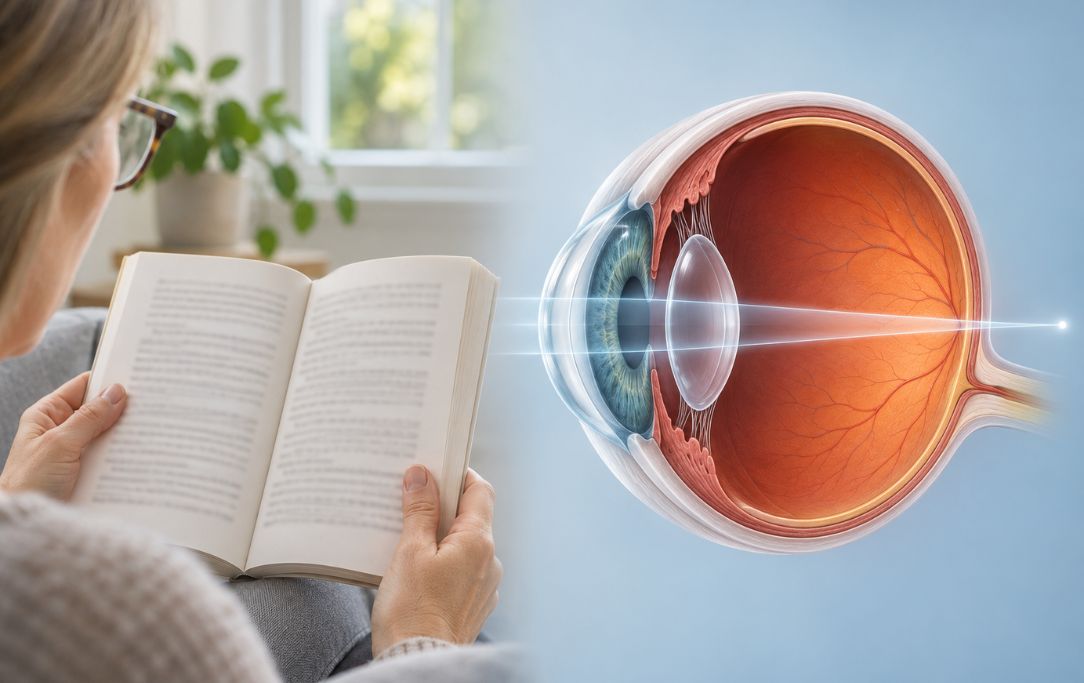
The cornea at the front of the eye and the natural lens inside the eye bend incoming light towards the retina. The retina is the light-sensitive layer at the back of the eye. With hyperopia, light would focus behind the retina when the eye is relaxed, rather than directly on it. The eye may therefore need to work harder to make an image clear.
Hyperopia is a refractive error, not an infection or a sign that the eyes are weak. Its effects depend on the degree of refractive error, a person’s age, and how well their eyes can adjust focus. Both near and distance vision may be affected when the degree of hyperopia is higher.
Why nearby objects may look blurry
When you look at a book, phone, or another nearby object, the natural lens changes shape to adjust focus. This focusing response is called accommodation. A person with hyperopia may need additional accommodation to compensate for the refractive error, especially during close work. If the eyes cannot fully compensate, nearby details may look blurred.
Can you have hyperopia without blurry vision?
Yes. Younger people may be able to use accommodation to see clearly despite mild hyperopia. That is one reason the condition may go unnoticed. Even when vision seems clear, sustained close work can still be uncomfortable.
Focusing ability changes through life. Existing hyperopia may become more noticeable as the natural lens loses flexibility with age. Presbyopia is a separate, age-related change in near focusing.
What causes long-sightedness?
Hyperopia is usually related to the eye’s shape and focusing power. It is commonly associated with an eye that is shorter than usual from front to back or a cornea that bends light less strongly. Family history may increase the likelihood of hyperopia, although it does not determine a person’s prescription.
Reading, desk work, and screen use are not established causes of the eye shape associated with hyperopia. However, close work may make an existing focusing difficulty more noticeable. This is different from saying that screens or reading caused hyperopia.
Hyperopia vs presbyopia: what is the difference?
Both conditions can make reading difficult, but they have different causes. Hyperopia is a refractive error related to how the eye focuses light when relaxed. Presbyopia occurs as the natural lens becomes less flexible with age, reducing near-focusing ability. It commonly becomes noticeable in people’s 40s.
A person may have hyperopia, presbyopia, or both. An optometrist can assess which factors are contributing. This distinction matters because near-vision blur does not always have the same cause or need the same correction.
How does an optometrist test for hyperopia?
An optometrist can assess long-sightedness during an eye examination. The optometrist may ask when symptoms occur, whether one or both eyes are affected, whether you wear spectacles or contact lenses, and whether there is relevant personal or family medical history.
Depending on the person, the examination may include:
- checking how clearly you can see up close and at a distance
- a refraction test to assess any prescription needed
- assessing how the eyes work together and adjust focus
- checking eye health and considering other possible causes of symptoms
A simple distance-vision check may miss some cases of hyperopia because accommodation can compensate for the refractive error. For some children, an optometrist may use eye drops to temporarily relax focusing and help measure the prescription more accurately. The tests used depend on the child and the clinical findings. These drops are not required at every visit.
When should you have your eyes examined?
Arrange an eye examination if near blur or discomfort while reading persists, your current glasses are no longer comfortable, or you have concerns about a child’s vision or eye alignment. New or worsening vision changes should be assessed rather than assumed to be caused by hyperopia.
Gradual focusing difficulty is different from sudden vision loss or severe eye symptoms. Sudden vision loss warrants immediate medical assessment. New flashes, a sudden increase in floaters, or a shadow across vision may indicate a retinal problem and need emergency care. Severe eye pain also requires urgent assessment.
A practical next step
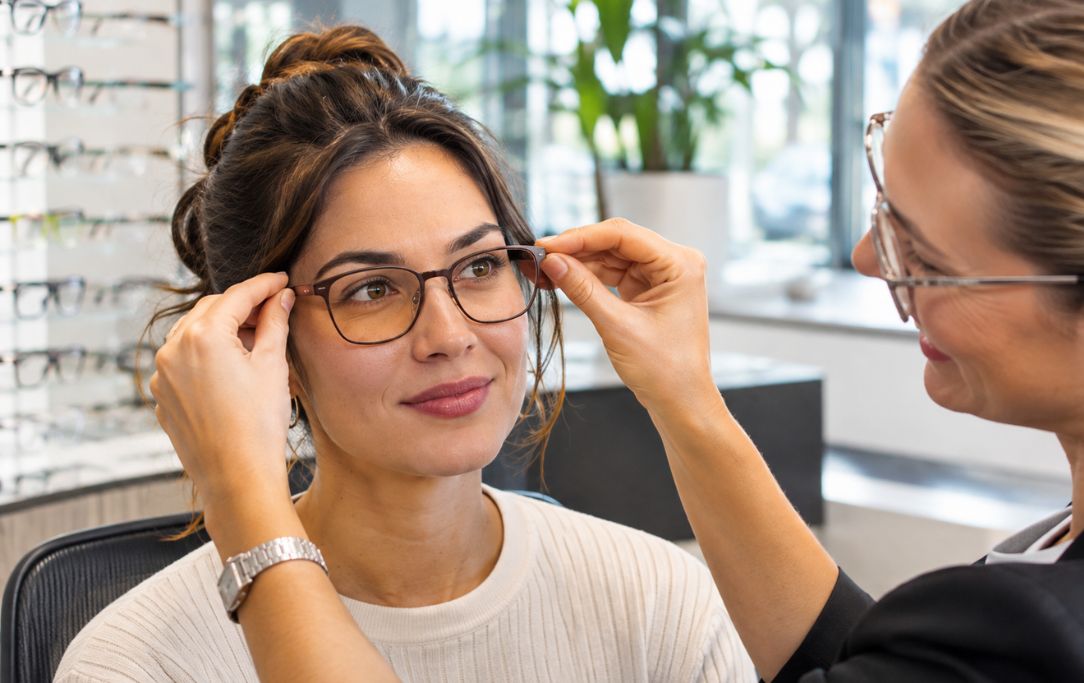
Hyperopia may go unnoticed when it is mild, but persistent difficulty with close work is worth investigating. An eye examination can help identify the cause of symptoms and whether correction may improve visual comfort.
Australian Made Vision publishes general eye-health information and lists participating independent practices. You can find an independent optometrist through the AMV directory, then contact the individual practice to confirm eye-test services, appointment details, and fees. AMV does not provide examinations, diagnoses, or treatment.
Frequently asked questions
1. Healthdirect Australia. Long-sightedness (hyperopia). Last reviewed September 2024. Accessed 2 November 2026. Source
2. Better Health Channel, Victoria. Eyes – long-sightedness. Reviewed 8 November 2023. Accessed 2 November 2026. Source
3. Healthdirect Australia. Presbyopia. Accessed 2 November 2026. Source
4. Optometry Australia. Clinical Practice Guide: Provision of Paediatric Eye Health and Vision Care Examination. August 2016. Accessed 2 November 2026. Source
5. Healthdirect Australia. Blurred vision. Accessed 2 November 2026. Source
6. Healthdirect Australia. Retinal detachment – symptoms and treatment. Accessed 2 November 2026. Source
7. Healthdirect Australia. Eye care. Accessed 2 November 2026. Source
8. National Eye Institute (US). Farsightedness (Hyperopia). Updated 4 December 2024; supplementary. Accessed 2 November 2026. Source