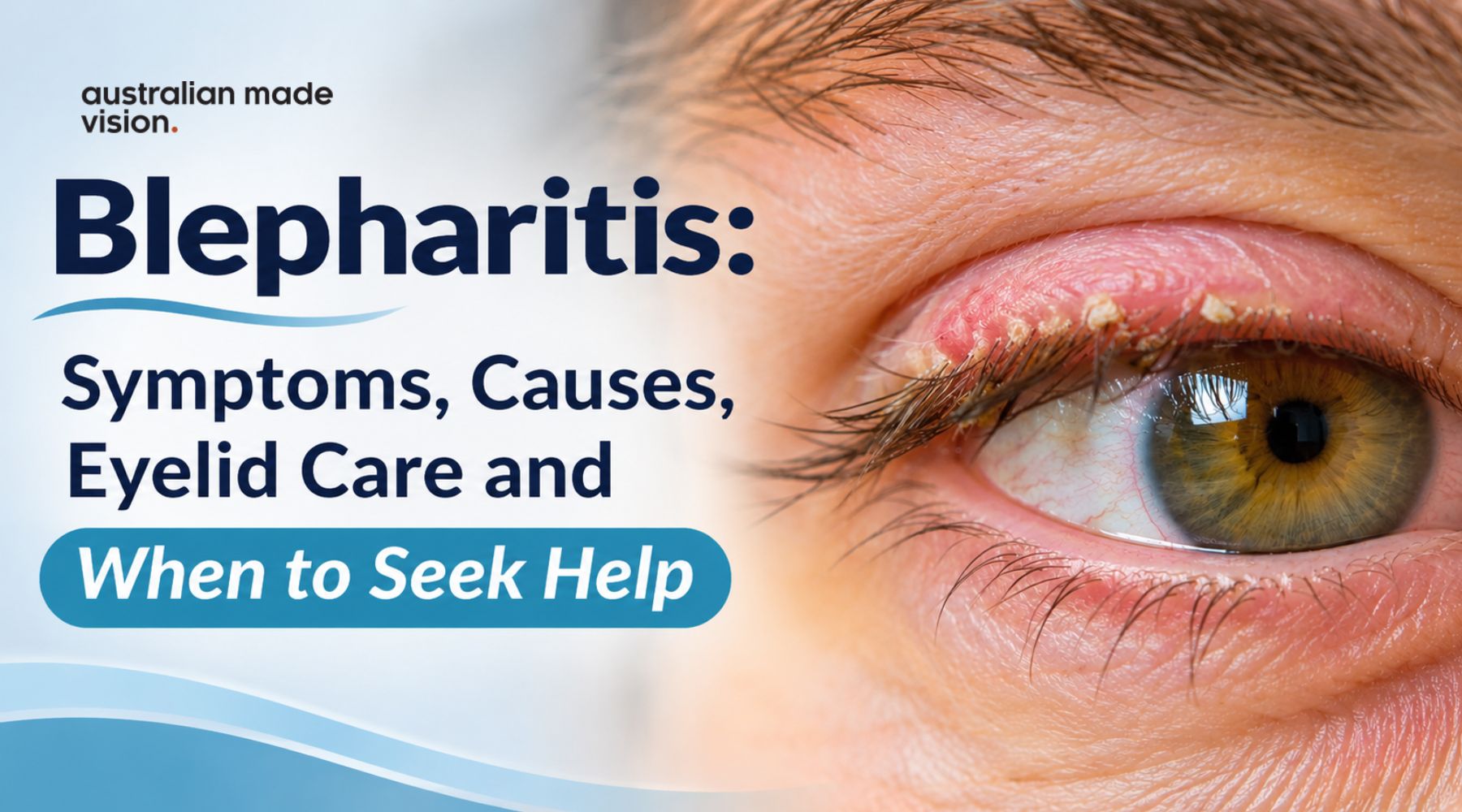
Blepharitis is inflammation along the edges of the eyelids. It can leave your lashes crusty when you wake up, make your eyelids feel itchy or sore, and cause a gritty or burning sensation in your eyes. It often affects both eyes and may settle before returning later.
Blepharitis can usually be managed, but crusting and redness do not always mean you have this condition. Other eye problems can cause similar symptoms, so an examination may be needed to work out the cause.
What is blepharitis?
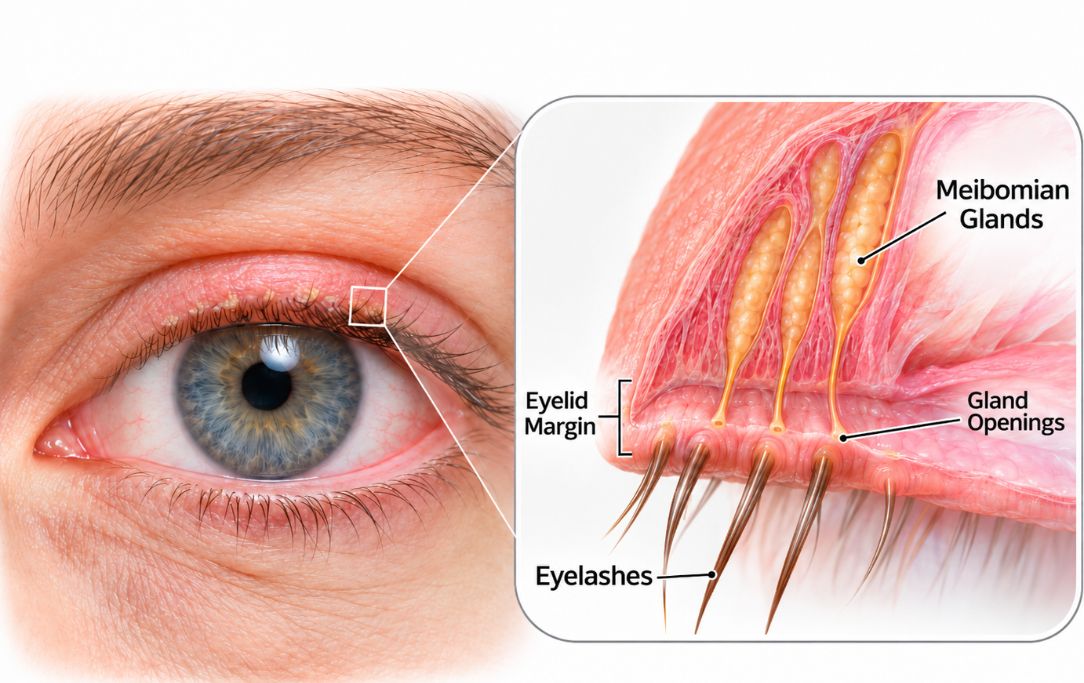
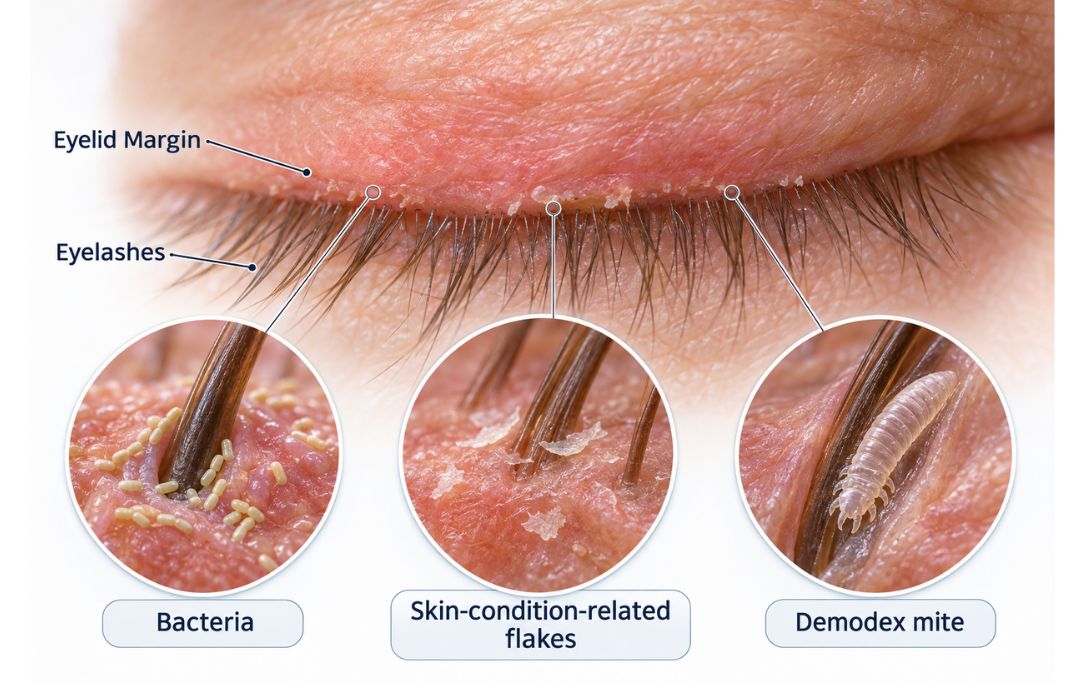
The eyelid margin is the narrow edge of the lid where your eyelashes grow. Blepharitis develops when this area becomes inflamed. You may notice redness, small flakes near the lashes, swelling, or sticky deposits along the lid edge.
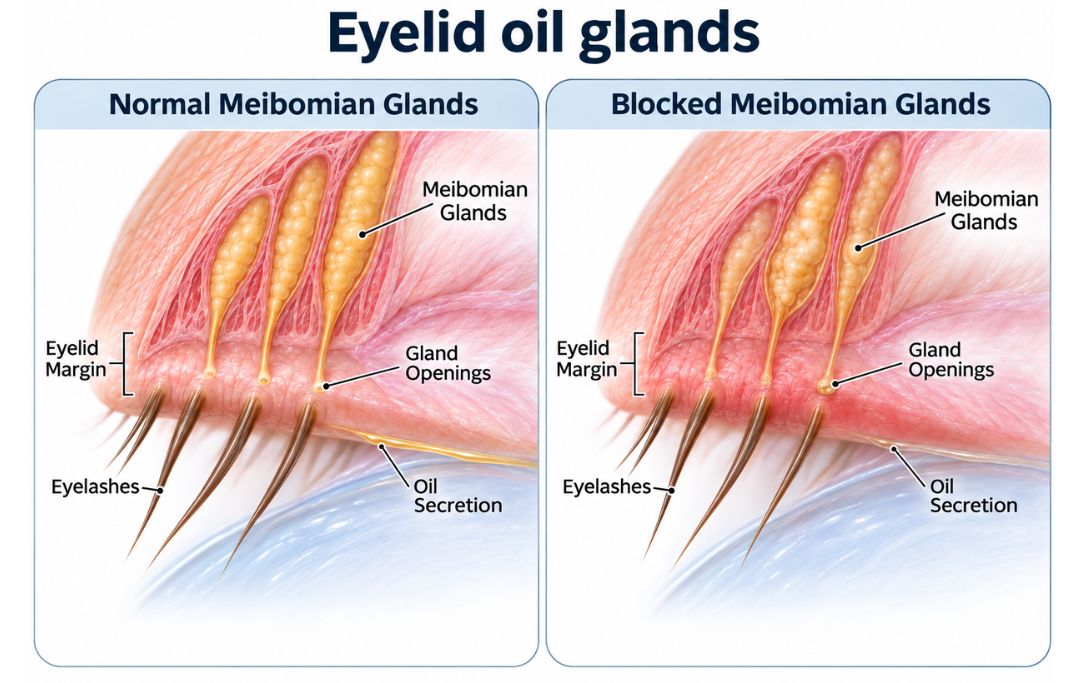
Your eyelids also contain tiny oil-producing glands called meibomian glands. The oil they release helps slow the evaporation of tears. If the glands become blocked or inflamed, the tear film may become less stable, which can add to irritation and dry-eye symptoms.
Anterior and posterior blepharitis
Clinicians sometimes describe blepharitis according to which part of the eyelid margin is affected:
- Anterior blepharitis affects the outer edge, around the base of the eyelashes. Crusting and flakes may be especially noticeable here.
- Posterior blepharitis affects the inner lid margin and is commonly linked with meibomian gland dysfunction, when the oil glands do not work as they should.
These patterns can occur together. The type is not something you need to identify from a mirror: an eye examination can help clarify what is happening.
What are the symptoms of blepharitis?
Symptoms differ between people, and they may be more noticeable after sleeping or during a flare-up. Common signs and sensations include:
- Crusty, flaky, or sticky eyelashes, particularly in the morning
- Red, irritated, or swollen eyelid edges
- Itchy, sore, or burning eyelids
- A gritty feeling, as though something is in the eye
- Watery eyes, or eyes that also feel dry
- Frequent blinking or discomfort around the lashes
- Occasional blurred vision or sensitivity to light
These symptoms are not unique to blepharitis. Eye allergy, conjunctivitis, dry eye, and other conditions can overlap. New or significant vision changes, severe pain, or marked light sensitivity should not be treated as an ordinary flare-up.
How is blepharitis different from a stye or dry eye?
These conditions can share symptoms, but they describe different problems.
How is blepharitis assessed?
An optometrist or doctor may ask when the irritation began, whether it affects one or both eyes, and if it has happened before. It helps to mention contact-lens wear, eye make-up, skin conditions, medicines, and anything you have already tried.
The examination may involve looking closely at the eyelashes, eyelid margins, oil-gland openings, and surface of the eyes. A slit-lamp microscope may be used to see these structures in more detail. The tests chosen depend on the symptoms and what the clinician finds.
If the inflammation is unusual, does not improve, or suggests another eye condition, further investigation or referral to a GP or ophthalmologist may be appropriate.
What can help manage blepharitis?
Management depends on the likely cause, severity, and examination findings. Regular eyelid care is commonly recommended, although some people need additional treatment and follow-up.
Eyelid hygiene and warm compresses
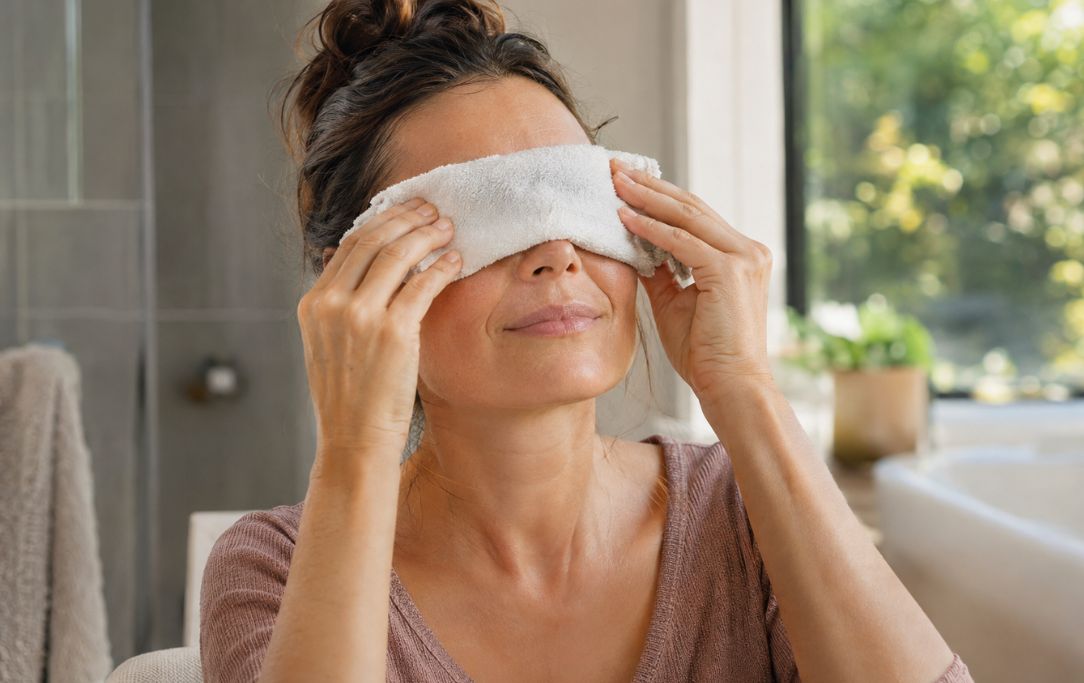
A clean, comfortably warm compress on closed eyelids can help soften crusts and support the flow of oil from the eyelid glands. Gentle cleaning along the lash line can remove accumulated flakes and debris.
A simple approach is to wash your hands, use a clean face washer warmed with water, and clean each closed eyelid gently with a separate clean pad or cloth. Avoid very hot water, vigorous rubbing, or putting cleaning solutions directly into the eye. Ask an optometrist, GP, or pharmacist which cleaning product, technique, and frequency suit your symptoms. A routine that helps one person may not suit someone with another eye condition.
Contact lenses and eye make-up
Contact lenses and eye make-up may worsen irritation during an active flare-up. Australian patient guidance advises avoiding them during treatment. An optometrist can advise when it is appropriate to resume wearing lenses or using eye products.
If a contact lens wearer develops a painful or red eye, removing the lenses is the first step, not the end of the assessment. Symptoms that continue after lens removal need prompt professional attention.
When a clinician may recommend additional care
Lubricating eye drops may be considered when dry-eye symptoms are also present. Some people may be prescribed treatment if infection or significant inflammation is suspected. The choice depends on the findings, and antibiotics are not necessary for everyone with blepharitis.
Do not start antibiotic or steroid eye medicines, or strong mite-targeting products, without professional advice. If symptoms persist despite the care you have been using, arrange a review rather than repeatedly changing products on your own.
Why does blepharitis keep coming back?
Blepharitis is often a long-term condition with periods of improvement and flare-ups. The eyelid glands or associated skin conditions may continue to contribute even after the visible crusting has settled.
A clinician may recommend an ongoing eyelid-care routine, review how you use contact lenses, or help you address an associated skin condition. This is about controlling symptoms and reducing irritation, not promising a permanent cure. If a routine stops helping, the symptoms change, or the eyelids become more painful, it is worth having the diagnosis and management checked again.
When should you see an optometrist or doctor?
If eyelid symptoms are not improving after a few days of self-care, keep returning, or make it difficult to wear contact lenses, speak with an optometrist or GP. An examination can help identify whether blepharitis, dry eye, allergy, or another condition is involved.
Seek urgent medical assessment for severe eye pain or marked sensitivity to light. Sudden vision loss or a sudden significant vision change needs immediate medical attention. A sore or red eye that does not improve after contact lenses are removed also requires prompt assessment. These symptoms should not be managed through routine eyelid cleaning alone.
Questions to ask at your eye appointment
You may find it useful to ask:
- What findings suggest blepharitis or another cause of the irritation?
- How should I clean my eyelids, and how often should I review the routine?
- Could my contact lenses, eye products, or skin condition be contributing?
- What changes would mean I should seek help sooner?
- Would follow-up or referral to another clinician be useful?
Services and equipment differ between practices, so confirm appointment details directly with the practice you choose.
Frequently asked questions
Next steps if your eyelid symptoms continue
If the crusting, itching, or irritation keeps returning, an eye examination can help clarify what is contributing and which care options may be suitable. Australian Made Vision publishes general eye-health information and lists participating independent optometry practices. You can find an independent optometrist through the AMV directory and confirm services and appointment availability directly with the individual practice.
1. Healthdirect Australia. Blepharitis. Last reviewed May 2026.
2. Healthdirect Australia. Eye care. Australian advice on contact lenses and urgent symptoms.
5. Children’s Health Queensland. Blepharitis. Page last updated October 2023.