

Tag archives: dry eyes

Eye symptoms can change how clearly you see, how your eyes feel, or how they look. Blurred vision, redness, itching, and discomfort may each have several causes. The same symptom can occur with different conditions, so a list of symptoms cannot tell you what is happening in your own eyes.

This guide groups common eye symptoms and vision problems by what you might notice. It explains which changes need urgent attention, which concerns warrant an eye examination, and where to read more. If a symptom is sudden, severe, or noticeably different from usual, do not assume it is a routine eyesight problem.

Seek emergency medical care for sudden or serious eye symptoms.

Go to the nearest emergency department if you suddenly lose vision, have a marked sudden change in sight, develop new flashes of light or many new floaters, or notice a shadow or curtain across your vision. Severe eye pain, especially with redness or a change in sight, also needs emergency assessment. If vision changes occur with a drooping face, arm weakness, or difficulty speaking, call triple zero (000) for an ambulance. After a chemical splash, immediately rinse the affected eye with cool running water for at least 20 minutes while arranging emergency help. A penetrating eye injury or injury from high-speed debris also needs emergency care.

In this article

Find the eye symptom you are experiencing

Start with the description closest to what you have noticed. These are starting points for information, not a diagnosis. One person may experience more than one symptom at a time.

Changes in eyesight

Blurred or cloudy vision example
Vision change

Blurred or cloudy vision

Objects may look out of focus up close, in the distance, or at both distances. Blur can be gradual, intermittent, or sudden. A prescription change is one possible reason, but it is not the only one. Sudden vision loss or a marked sudden change in vision needs emergency assessment.

If distance objects have become gradually less clear, read about short-sightedness and its assessment .

Floaters and flashes of light
Urgent warning sign

Flashes, floaters, or a dark shadow

Floaters may look like small spots or threads moving across your view, while flashes may appear as brief streaks of light. New flashes, a sudden increase in floaters, or a curtain-like shadow can signal a retinal problem. Go to an emergency department rather than waiting for a routine eye test.

Double vision example
Prompt assessment

Double vision

Seeing two images of one object may occur constantly or only in certain directions of gaze. New or sudden double vision requires prompt medical assessment, particularly if it is accompanied by headache, weakness, imbalance, or other neurological symptoms. Signs of stroke require a call to 000.

Wavy or distorted vision example
Urgent if sudden

Wavy, distorted, or missing areas of vision

Straight lines may appear bent, or part of a scene may look darker or absent. These changes can have different causes. Sudden distortion, a new dark area, or loss of vision should be treated as an urgent medical concern, not attributed to tired eyes.

Night driving with headlight glare
Gradual change

Difficulty seeing at night or managing glare

Headlights, bright sunlight, or dim rooms may become harder to manage. This can occur for several reasons, including prescription changes or eye conditions. If glare or cloudy vision is gradually affecting daily activities, see the guide to cataract symptoms and assessment for one possible explanation.

How the eyes look or feel
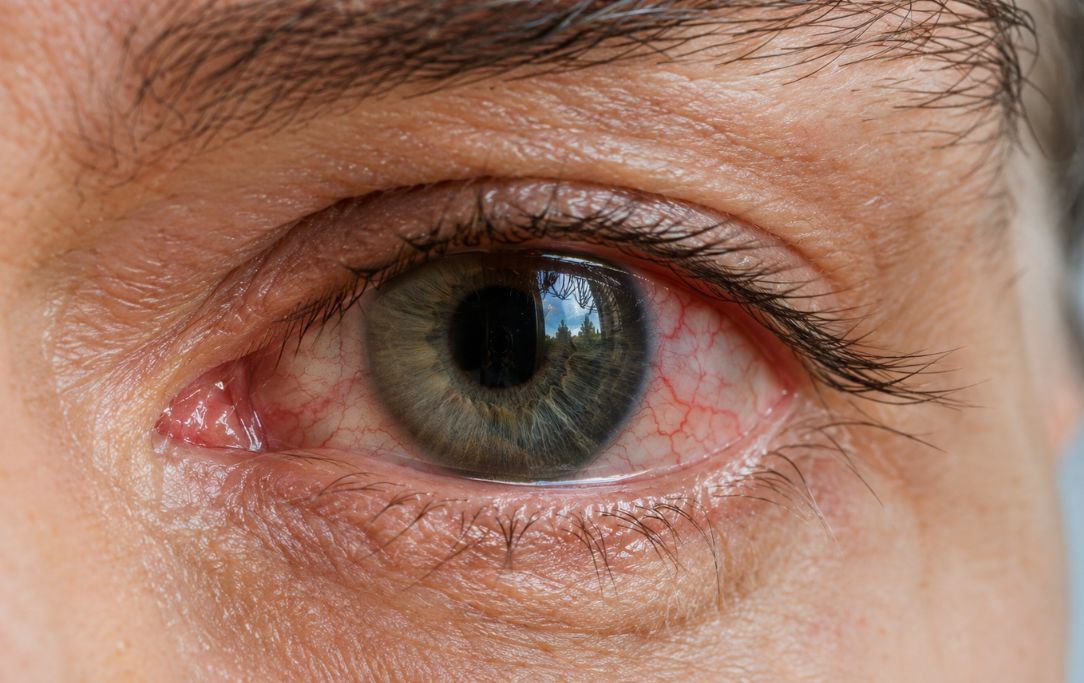
Red bloodshot eye with visible blood vessels
Eye appearance

Red or bloodshot eyes

Redness can occur with irritation, allergy, infection, or inflammation. The accompanying symptoms matter: pain, a change in vision, marked light sensitivity, or contact lens wear are reasons to seek prompt care. Do not assume every red eye is conjunctivitis.
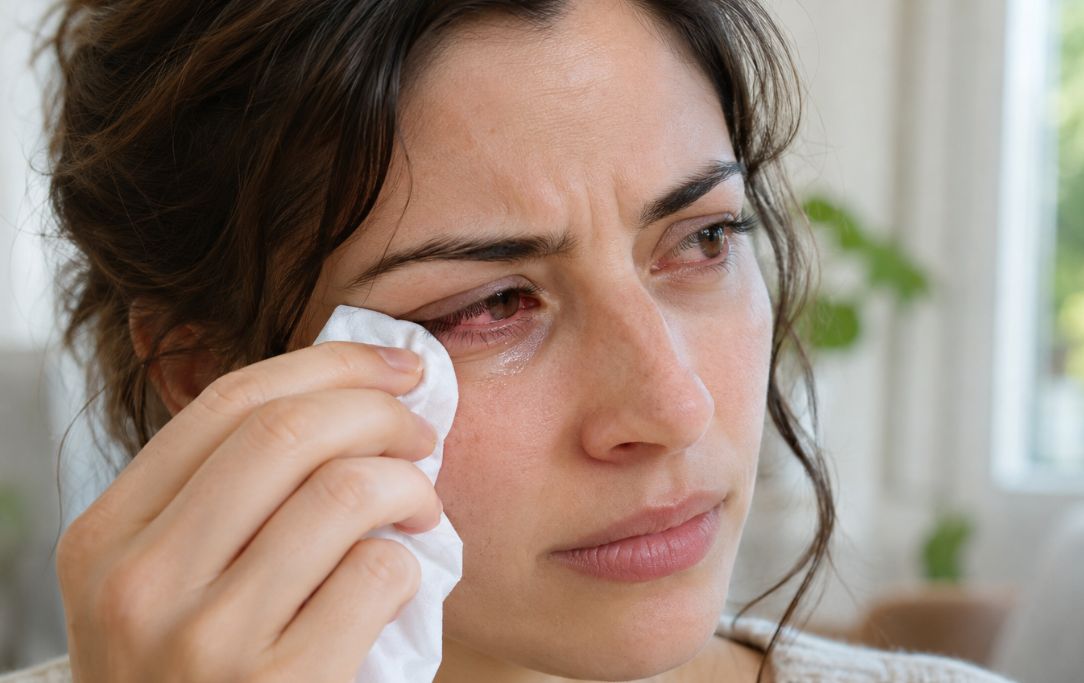
Itchy watery eyes with redness and irritation
Itching & watering

Itchy or watery eyes

Itching and watering can occur with allergies, dry eye, or other irritation. Symptoms may affect one eye or both, and they can overlap. For more detail, see hay fever and itchy eyes .

Dry, gritty, and burning eyes associated with screen discomfort
Ocular surface

Dry, gritty, or burning eyes

Some people describe a sandy feeling, stinging, or discomfort that comes and goes. Eyes can also water when the surface is irritated. Ongoing symptoms deserve assessment rather than automatic self-diagnosis. Read about dry eye symptoms, causes, and care .

Eye pain and light sensitivity or photophobia symptoms
Prompt assessment

Eye pain or sensitivity to light

A sore eye is not always a minor irritation. Severe pain, a painful red eye, light that makes the eye hurt, or pain with reduced vision needs urgent medical attention. If a chemical, sharp object, or fast-moving fragment has entered the eye, follow the emergency guidance above.
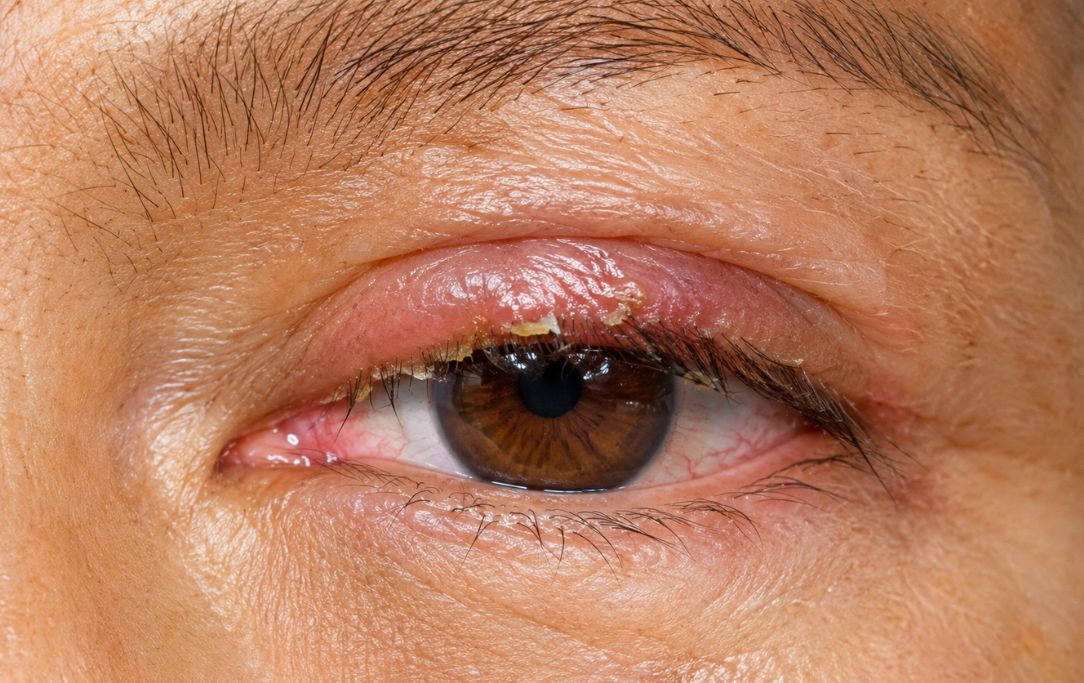
Sticky eye discharge with swollen eyelid and crusting
Needs assessment

Sticky discharge, eyelid swelling, or a lump

Crusting on the lashes, sticky discharge, swelling, and eyelid lumps can occur for different reasons. A painful eye, worsening redness, a change in sight, or a large amount of thick discharge needs prompt assessment. The appearance alone cannot confirm an infection.

Symptoms during reading, work, or school

Tired eyes and discomfort associated with prolonged screen use
Screen & close work

Tired eyes, headaches, or discomfort during screen use

Long periods of close work may be associated with tired eyes, temporary blur, dryness, or headaches. Headaches have many possible causes, so screen use should not become an explanation for every new symptom. The guide to digital eye strain discusses practical adjustments and when an eye examination may help.

Child squinting to see a distant classroom board
Children's vision

A child squinting or struggling to see the board

Children may move closer to a television or classroom board, squint at distant objects, or have difficulty with visual tasks. These observations do not prove short-sightedness. An eye examination can help identify the cause. Read more about signs of myopia in children .

ONGOING EYE SYMPTOMS?

Need an Eye Examination?

For gradual or recurring symptoms, find an independent optometrist to discuss an eye examination. Sudden or severe warning signs need urgent medical care.

Find an Optometrist

Why different eye problems can cause similar symptoms

An eye symptom describes what you notice. An eye condition is a possible explanation that may be identified after an examination. The two are not interchangeable.

For example, blurred sight may be related to how the eye focuses light, but changes in the eye’s surface, lens, or retina can also affect vision. Watery or red eyes may occur with allergy, irritation, dry eye, or infection. Some important eye conditions develop with few noticeable symptoms, particularly at first.

An optometrist or doctor considers the combination of symptoms, when they began, your health history, and examination findings. This is why a symptom page can help you decide what to ask about, but cannot confirm or rule out a condition.

Is Your Eye
Health on Track?

Complete our free 18-point checklist to check your eye health, spot any gaps, and take charge of your vision.

Start Free Checklist Test

When should you seek eye care?

The most useful distinction is between a sudden warning sign, a concerning symptom needing prompt assessment, and a gradual or recurring problem that can be discussed at an eye examination. These are general care pathways, not a substitute for clinical advice.

Emergency symptoms

Seek emergency medical attention for sudden vision loss, a new curtain or shadow across your sight, new flashes with a sudden increase in floaters, severe eye pain with redness or vision change, or an eye injury involving chemicals or a penetrating object. Call 000 immediately if visual symptoms occur with possible stroke signs, including facial drooping, weakness in an arm, or speech difficulty. Do not delay emergency care to search for an optometry appointment.

Symptoms that need prompt assessment

Contact an optometrist or doctor promptly if you have a painful red eye, significant light sensitivity, changing vision, or substantial discharge, particularly when symptoms are getting worse. Redness, pain, light sensitivity, or blurred sight in someone who wears contact lenses needs prompt professional assessment because serious eye problems can initially resemble ordinary irritation.

If you cannot access a suitable clinician promptly and the symptoms are severe or progressing, seek urgent medical care. The appropriate service depends on the symptoms and your local access to care.

Persistent or gradual changes

Arrange an eye examination if blurry sight, glare, irritation, recurring redness, difficulty reading, or other changes continue or keep returning. A new prescription may be part of the explanation, but an eye-health check can also look for other concerns. Do not wait for a scheduled routine check if symptoms are changing or becoming more troublesome.

What happens when your eye symptoms are assessed?

The practitioner will usually begin by asking what has changed and how it affects your daily activities. Useful details include whether symptoms started suddenly or gradually, whether they affect one eye or both, and whether there is pain, discharge, light sensitivity, or an injury. They may also ask about contact lenses, current glasses, medicines, and relevant medical history.

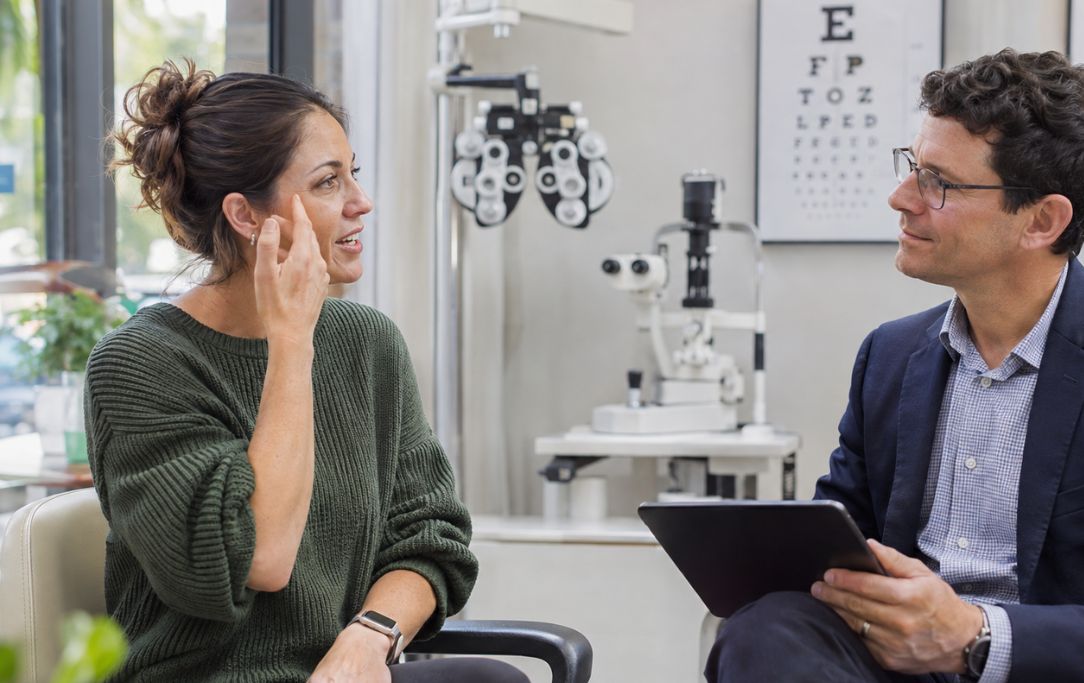
Optometrist listening to a female patient describing her eye symptoms during a consultation.
An optometrist may begin an eye assessment by discussing your symptoms, when they started, and how they affect your daily activities.

An eye examination may involve checking how clearly you see, assessing your glasses prescription when relevant, and looking at the health of different parts of your eyes. Other tests depend on the symptoms and findings. A doctor or optometrist may recommend additional assessment or referral to an ophthalmologist, who is a medical specialist in eye care.

You do not need to identify the condition before seeking help. Explaining the change as clearly as you can is a useful starting point.

Extra considerations for contact lens wearers and children

Contact lens wearers

A red, painful, or light-sensitive eye while wearing contact lenses should not be dismissed as routine dryness. Remove the lenses if the eyes become sore and seek prompt advice, especially if redness, pain, discharge, or blurred vision is present. Do not put the lenses back in while the eye is sore or until you have been advised it is safe to do so. Emergency warning signs still require emergency care.

Children's vision changes

Children may not notice or clearly describe problems seeing at a distance. A parent, carer, or teacher might instead notice squinting, moving closer to objects, or difficulty reading information on a classroom board. These behaviours are reasons to arrange a suitable eye examination, not grounds for a diagnosis. Sudden loss of vision, injury, or severe eye pain in a child needs urgent medical care just as it does in an adult.

Find appropriate help for ongoing, non-emergency symptoms

If your symptoms are gradual, persistent, or recurring, an optometrist can examine your eyes and discuss whether further assessment or referral is needed. You can browse independent optometry practices in Australia and contact an individual practice to confirm that it can assess your concern, along with its appointment availability and any fees.

The directory provides information about participating practices; examinations and clinical advice are provided by the individual practitioners. It is not an emergency-care service. For sudden or severe warning signs, use the emergency pathway above.

Take the Next Step

Find Care for Ongoing Eye Symptoms

For non-emergency symptoms that persist or return, contact an independent optometry practice. Confirm its services, appointments, and fees before booking.

Find an Optometrist
Local Practices
Eye Examinations
Individual Advice

Frequently asked questions

Yes. Some symptoms affect one eye, while others involve both. Whether a change is one-sided, new, or accompanied by pain or a change in vision can help a clinician decide what assessment is needed. Sudden vision loss in either eye needs emergency care.

Yes. The absence of pain does not rule out an important eye problem. A retinal detachment, for example, may cause flashes, floaters, or a dark shadow rather than pain. New retinal warning signs need emergency assessment even if the eye feels comfortable.

No. Sudden loss of sight or a marked sudden vision change needs immediate medical assessment. If sudden blur occurs with facial drooping, weakness, or speech difficulty, call 000 for an ambulance.

An optometrist can examine vision and eye health, while a GP can assess general medical factors and arrange other care when needed. The right starting point depends on the symptoms and how quickly they began. Severe or sudden warning signs should be assessed urgently rather than booked as routine care.

A symptom is something you notice, such as blur, itching, pain, or flashes of light. A condition is an explanation that may be identified through examination and, where needed, further testing. Similar symptoms can occur with different conditions, so symptoms alone cannot confirm a diagnosis.

Picture of Michael Nasser
Michael Nasser

Michael Nasser is a qualified Optical Dispenser with law and business degrees and a director of Opticare. He is an advocate for independent optometry in Australia and host of The Focused View, where he brings industry leaders together to discuss practice growth, technology, team development, and the future of independent eye care.

Australian medical references (accessed 30 October 2026):

General information only
The information in this article is provided for general educational purposes only and should not be considered medical advice. For personalised advice regarding your vision or eye health, please consult a qualified optometrist.Australian Made Vision is an independent directory that helps patients find optometrists across Australia who may offer Australian-made spectacle lenses. We do not provide clinical services and recommend contacting practices directly to confirm the products and services they offer.