
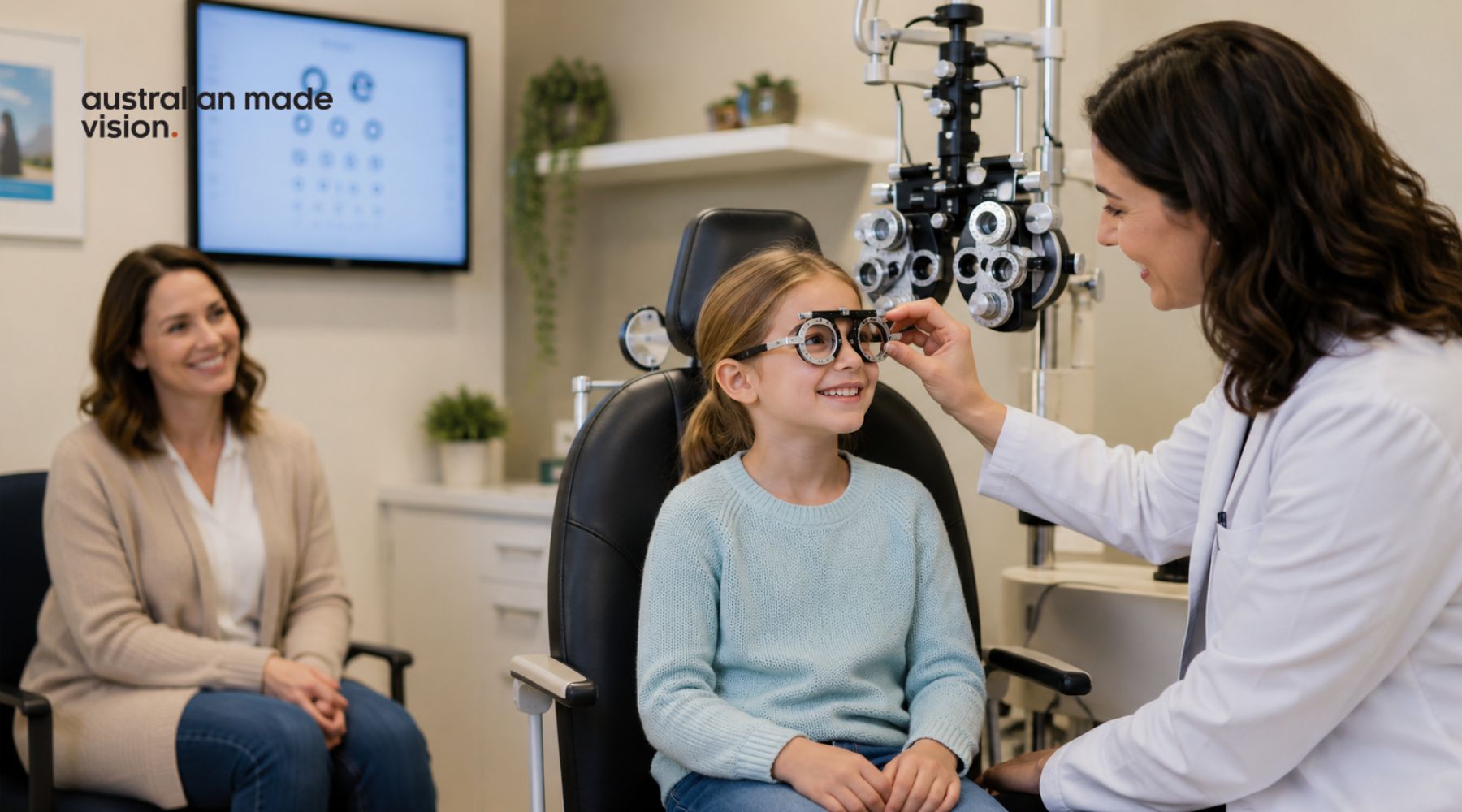
If your child has had a vision screening at school, that’s a great first step. This quick check can spot kids who might have trouble seeing the board. Still, it’s helpful to know how a school screening is different from a full eye exam and what extra things a full check can find.
Find Eye Care That Suits Your Needs
Search for an independent optometrist near you and find a local practice that suits your specific eye care needs.
Find an OptometristWhat a school screening usually checks
Most school vision screenings check how well your child can see things far away, like reading letters from across the room. This test is quick and simple, usually done by school staff, health workers, or a visiting eye care professional. It’s a helpful way to find out if your child might need glasses for seeing things at a distance.
What a comprehensive optometric exam adds
A full eye exam with an optometrist looks at more than just how well your child can see. In addition to checking vision, it usually includes:
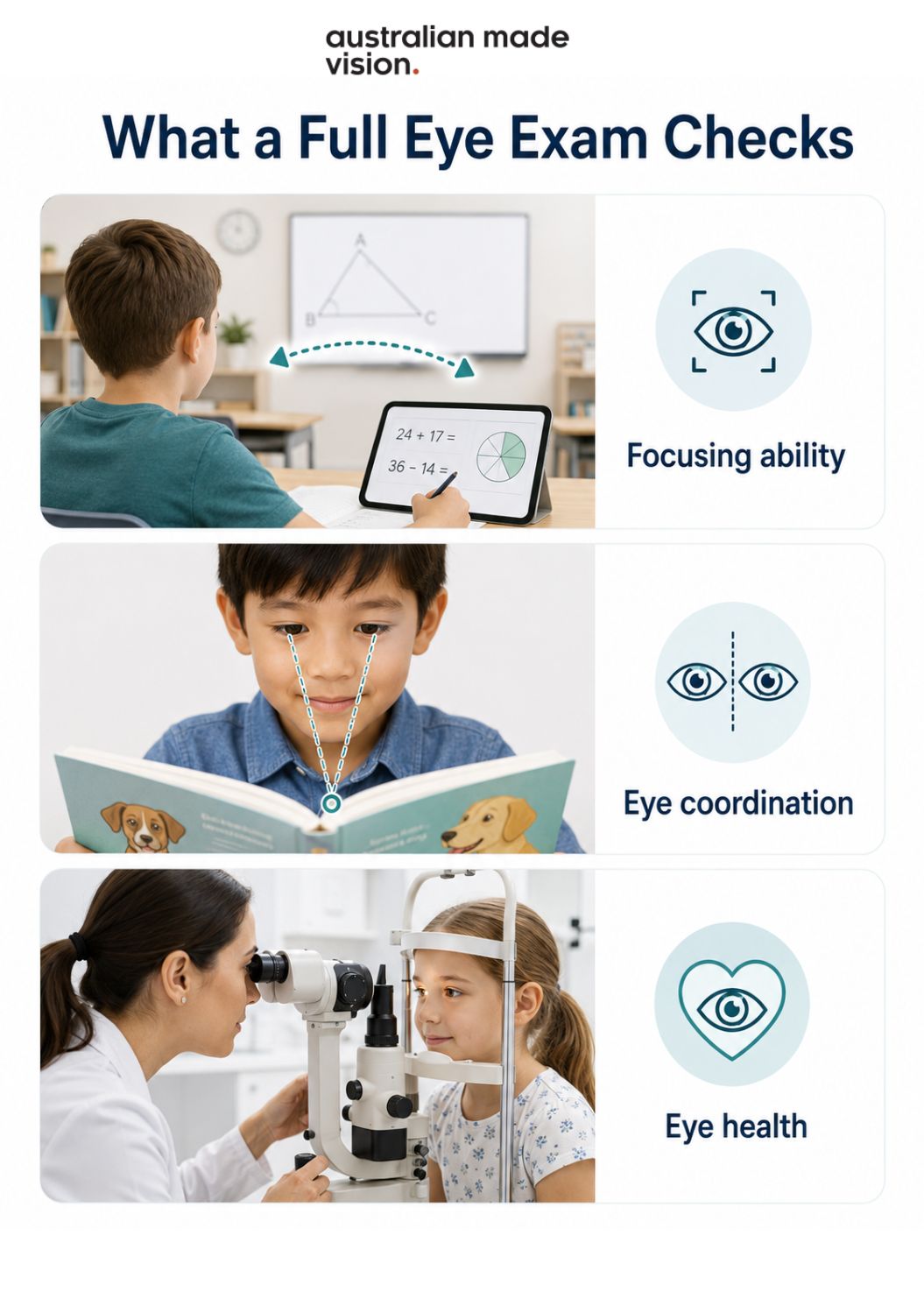
- Focusing ability: how well your child’s eyes adjust between looking at things far away and up close, like switching from the whiteboard to their workbook
- Eye coordination and teaming: how well both eyes work together, which is important for reading
- Eye health — a look at other areas, especially if there are telling symptoms or vision changes
This exam usually takes a little longer and uses special equipment. It gives a fuller picture of how your child’s eyes work every day, not just whether they can read letters from far away.
You can think of a school screening as a helpful first step, and a full eye exam as giving you the complete picture. Both are important, and together they give you more peace of mind.
When It’s Worth Booking One
Even if your child passed a school screening, you should still book a full eye test if:
They haven’t had an eye test before starting school, or it’s been a long time since their last one.
They squint, rub their eyes, sit close to the TV, or hold books very close to their face.
They seem to have trouble with reading, paying attention, or copying from the board.
There is a family history of short-sightedness or other eye problems.
Find Eye Care That Suits Your Needs
Search for an independent optometrist near you and find a local practice that suits your specific eye care needs.
Find an OptometristQuick FAQs
Does this mean school screenings aren't useful?
Not at all. They’re a simple and helpful way to spot distance vision problems early. They just don’t check for everything, so it’s best to use them along with a full eye test, not as a replacement.
How often should my child see an optometrist?
Most children should have an eye test before they start school and then every so often as they grow. An optometrist can tell you how often your child needs a check based on their needs.
Australian Made Vision is an independent directory that helps patients find optometrists across Australia who may offer Australian-made spectacle lenses. We do not provide clinical services and recommend contacting practices directly to confirm the products and services they offer.