
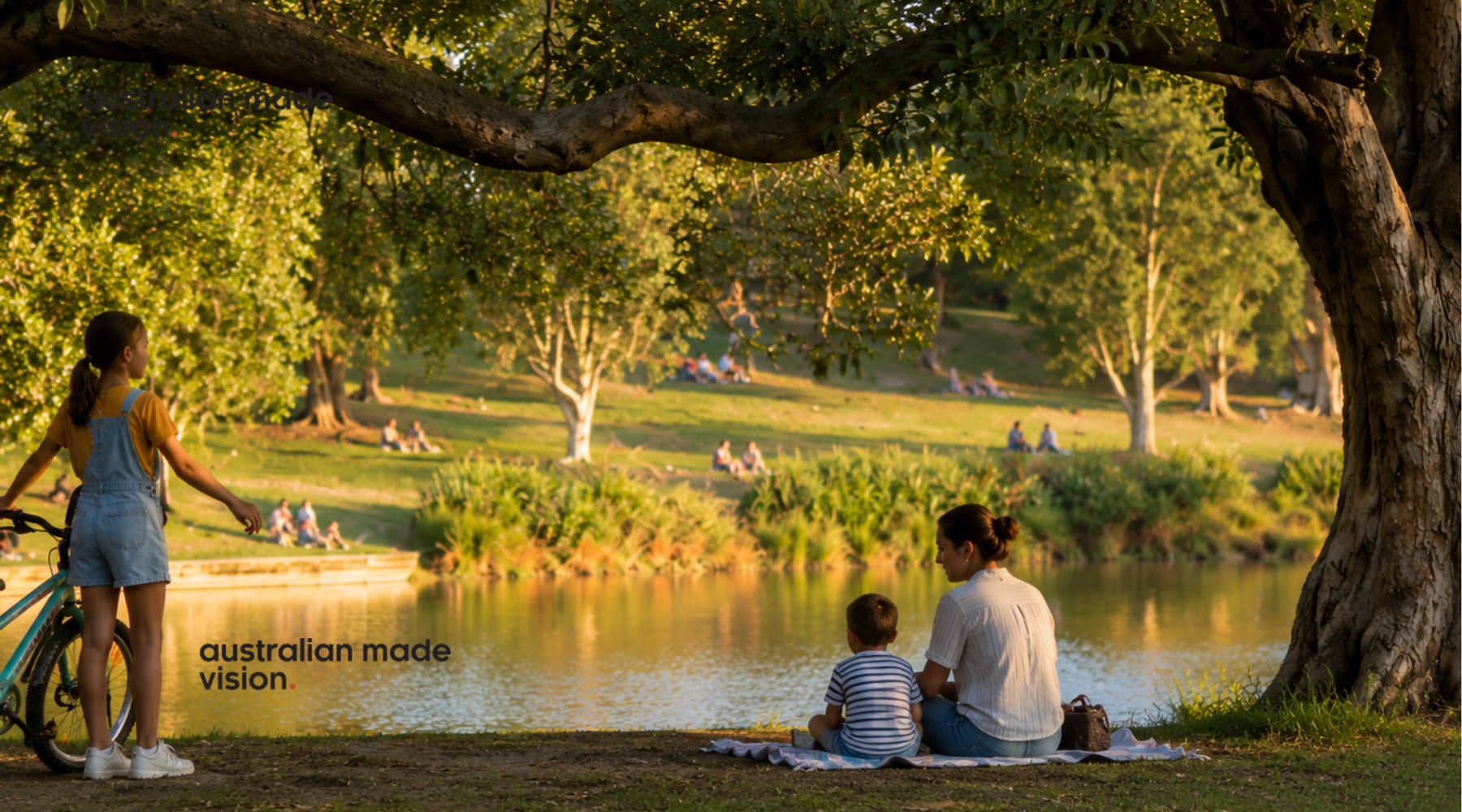
There’s good news for busy parents. One of the best ways to protect your child’s eyesight is free and something most kids already love: playing outside!
Why outdoor time protects kids' eyes
Myopia (short-sightedness) occurs when the eye grows slightly too long, causing distant objects to appear blurry. It’s becoming more common in Australian children, and once it starts, it tends to progress through the school years.
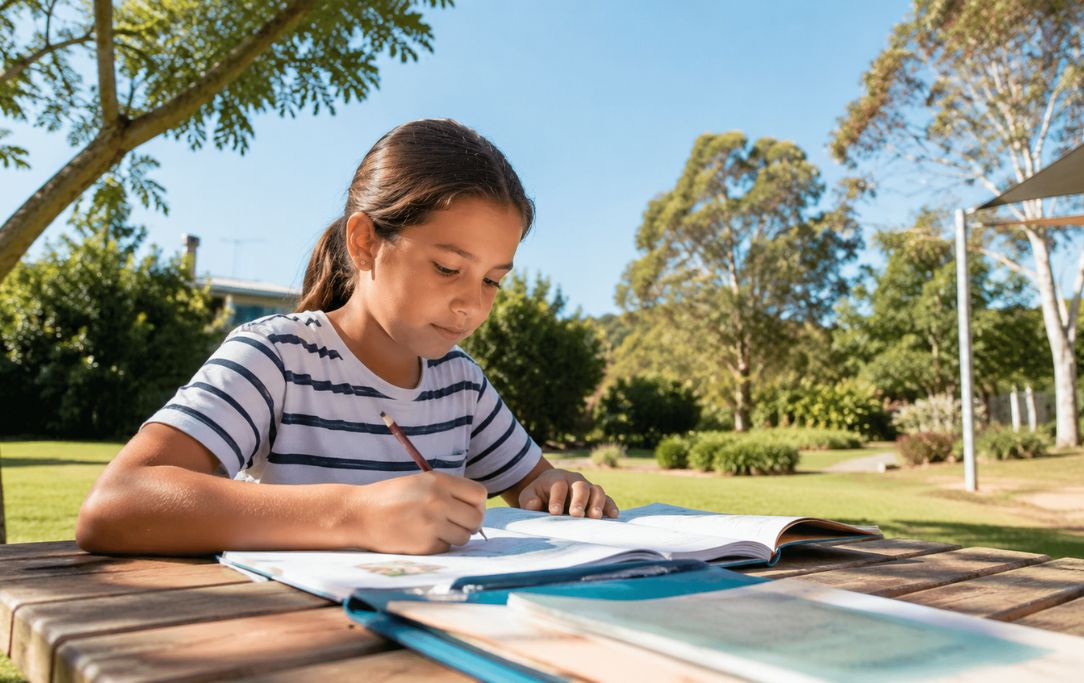
Spending time outside in natural light is one of the most proven ways to lower the risk of developing myopia and to slow its progress if it has already started. Researchers think that bright outdoor light supports healthy eye development in ways that indoor lighting, even when it’s bright, cannot.
Australian guidelines suggest that school-age children should spend at least 90 minutes outside each day to help protect their eyesight.
The part most families get wrong
It’s not that parents don’t value outdoor play. It’s that 90 minutes adds up to more than most families expect, especially on school days sandwiched between drop-offs, homework, extracurriculars, and screens. Studies suggest Australian kids average around 90 minutes a day, which means many are sitting right on the line, and plenty are getting less without realising it.
The good news is that it doesn’t need to happen in one block, and it doesn’t need to be a special outing.
Find Eye Care That Suits Your Needs
Search for an independent optometrist near you and find a local practice that suits your specific eye care needs.
Find an OptometristEasy ways to fit in 90 minutes
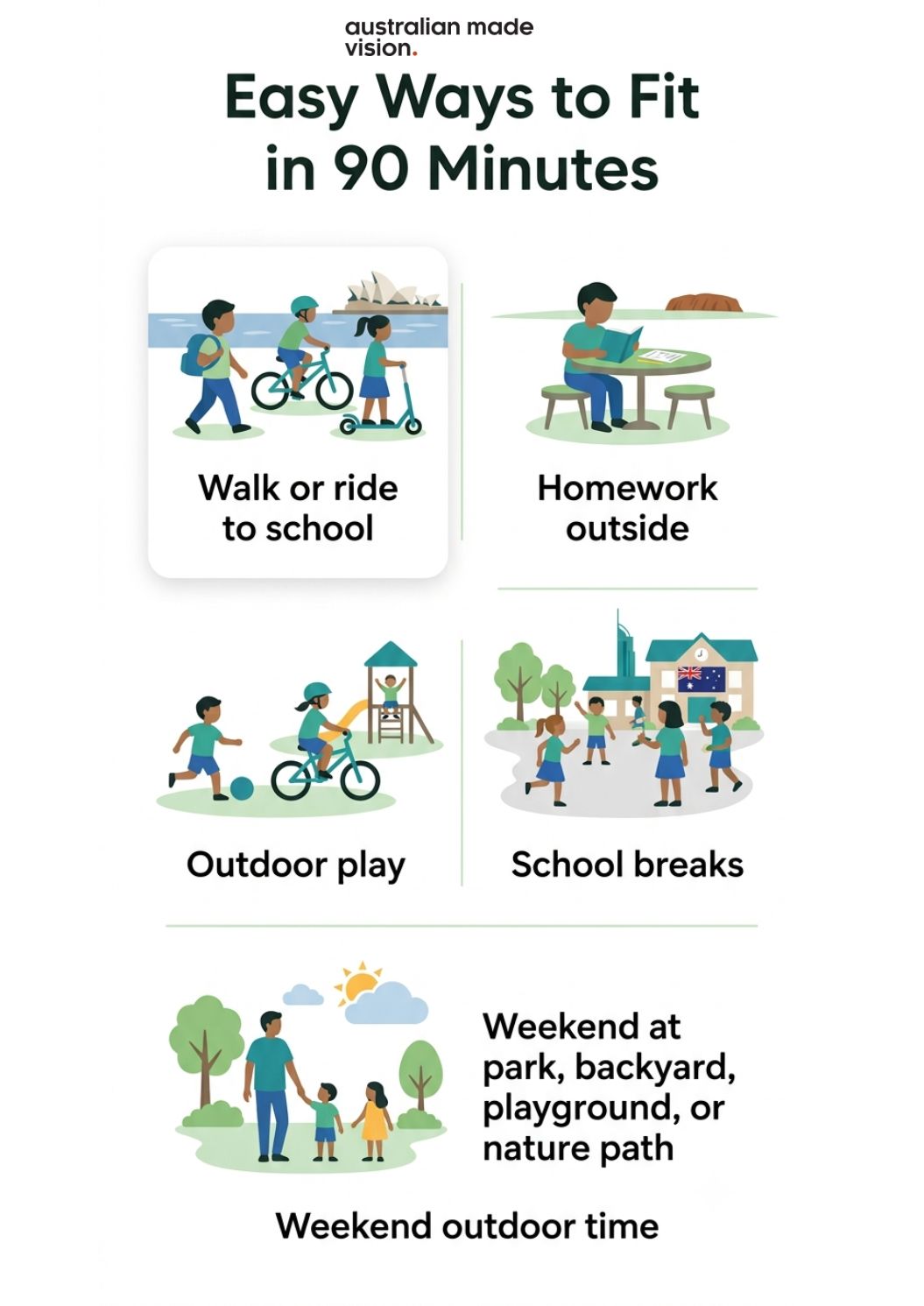
- Walk or ride to school instead of driving, even part of the way.
- Move homework outside. Reading or worksheets at an outdoor table still count.
- Choose outdoor sport or active play over an indoor screen session after school.
- Recess and lunch breaks at school also count. Time spent outdoors during the school day adds up.
- Try to prioritise outdoor activities on weekends. Parks, backyards, and playgrounds all count, whether it’s sunny or cloudy. Cloudy days are still helpful. Outdoor light is much brighter than indoor lighting, even when it’s cloudy, so don’t skip outdoor time just because the sun isn’t out.
Find Eye Care That Suits Your Needs
Search for an independent optometrist near you and find a local practice that suits your specific eye care needs.
Find an OptometristWhat about screen time?
Screens and outdoor time don’t have to be opposites, but activities like using screens, reading, or using tablets can take away from time outside. The easiest way to manage this is to make sure outdoor time comes first, then fit other activities around it.
When to also book an eye test
Outdoor time helps reduce risk, but it isn’t a substitute for regular eye checks. Book an appointment if:
- Your child squints, sits close to the TV, or holds books close to their face.
- A parent or sibling is short-sighted (myopia has a strong genetic component too)
- Your child hasn’t had an eye test before starting school, or it’s been a while since their last one.
Myopia often develops slowly, and children rarely complain because blurry distance vision can seem normal if that’s what they’re used to.
Find Eye Care That Suits Your Needs
Search for an independent optometrist near you and find a local practice that suits your specific eye care needs.
Find an OptometristQuick FAQs
Does outdoor time have to be active play to count?
No. Sitting outside reading or chatting still provides the light exposure that seems to matter most. It doesn’t need to be sports or running around.
My child already wears glasses for myopia . Is outdoor time still worth it?
Yes. Outdoor time is linked to slowing progression as well as reducing the initial risk, so it’s worth keeping up even after a diagnosis.
Is 90 minutes an exact medical requirement?
It’s a guideline based on research, not a strict cut-off. More is generally better, and less is a risk factor worth being aware of rather than a guarantee of trouble.
Australian Made Vision is an independent directory that helps patients find optometrists across Australia who may offer Australian-made spectacle lenses. We do not provide clinical services and recommend contacting practices directly to confirm the products and services they offer.