Tag archives: Reading Glasses

“Multifocal lenses” and “progressive lenses” are often used as if they mean the same thing, but the terms are not technically identical. Multifocal is the broad category for spectacle lenses that provide more than one viewing power or range. A progressive addition lens is one type of multifocal lens, with no visible segment lines and a gradual change in power across the lens.

For people comparing multifocal and progressive lenses in Australia, the practical choice depends on prescription, daily tasks, frame, fitting measurements and preferences. Bifocals, office lenses, and separate single-vision pairs may also be considered.

Key takeaways

01

All progressive spectacle lenses are multifocals, but not all multifocal lenses are progressives.

02

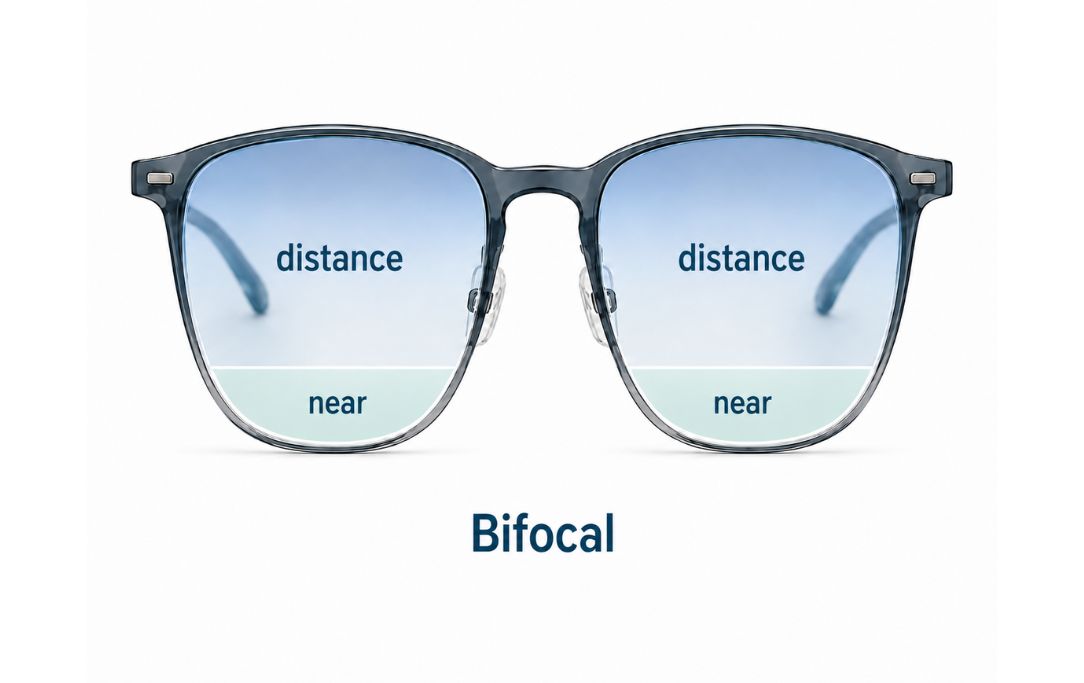
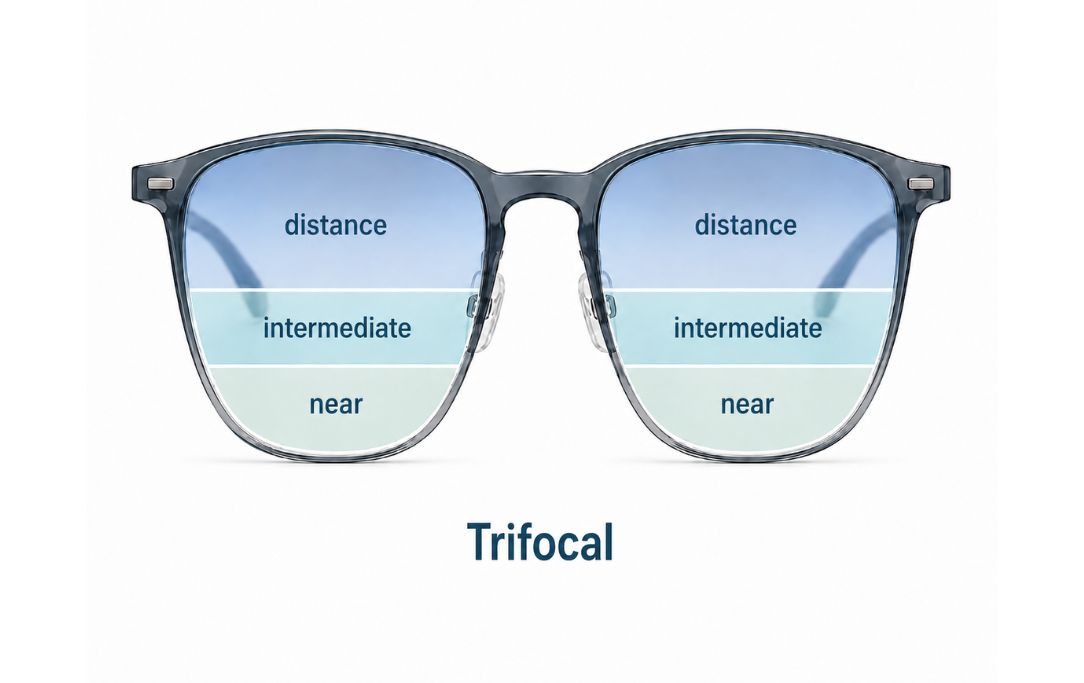
Progressives have no visible segment line, while standard bifocals and trifocals use defined sections.

03

The most suitable design depends on the wearer’s prescription, tasks, frame, and fitting measurements.

04

An eye examination, accurate dispensing and follow-up are important when choosing or reviewing multifocal glasses.

Table of Contents

What does "multifocal" mean?

A multifocal spectacle lens contains more than one optical power or supports more than one viewing range. The category includes progressive addition lenses, bifocals and trifocals.

Compare common multifocal lens designs

Choose a lens type below or allow the comparison to rotate automatically.

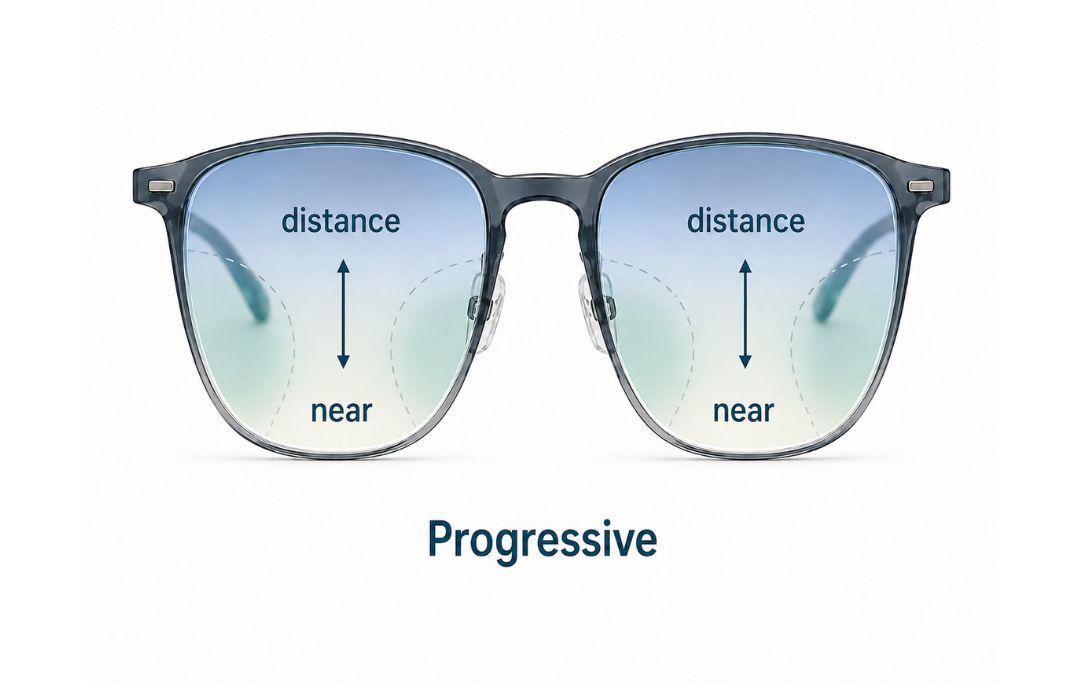
Diagram showing progressive lens viewing zones

Progressive lenses

Best for: Everyday use across distance, computer, and reading.

How it works: Lens power changes gradually with no visible lines.

Not ideal for: People who struggle with narrower side areas or need a very wide computer zone.

Main limitation: Some wearers notice peripheral blur while adjusting.

Occupational or office lenses are task-specific multifocal designs that usually prioritise computer, desk, and nearby working distances. They may not provide the general distance vision needed for driving.

Because “multifocal” is sometimes used as shorthand for “progressive” in Australian optical practices, ask what the word means on a recommendation or quote. Confirm whether the lens is progressive, bifocal, trifocal or task-specific.

This page covers spectacle lenses only. Other multifocal products require separate advice.

Is Your Eye
Health on Track?

Complete our free 18-point checklist to check your eye health, spot any gaps, and take charge of your vision.

Start Free Checklist Test

What are progressive lenses?

A progressive addition lens is a no-line multifocal in which optical power changes continuously across the lens. It is commonly explained using distance, intermediate, and near viewing, but these are functional areas rather than three sharply separated sections.

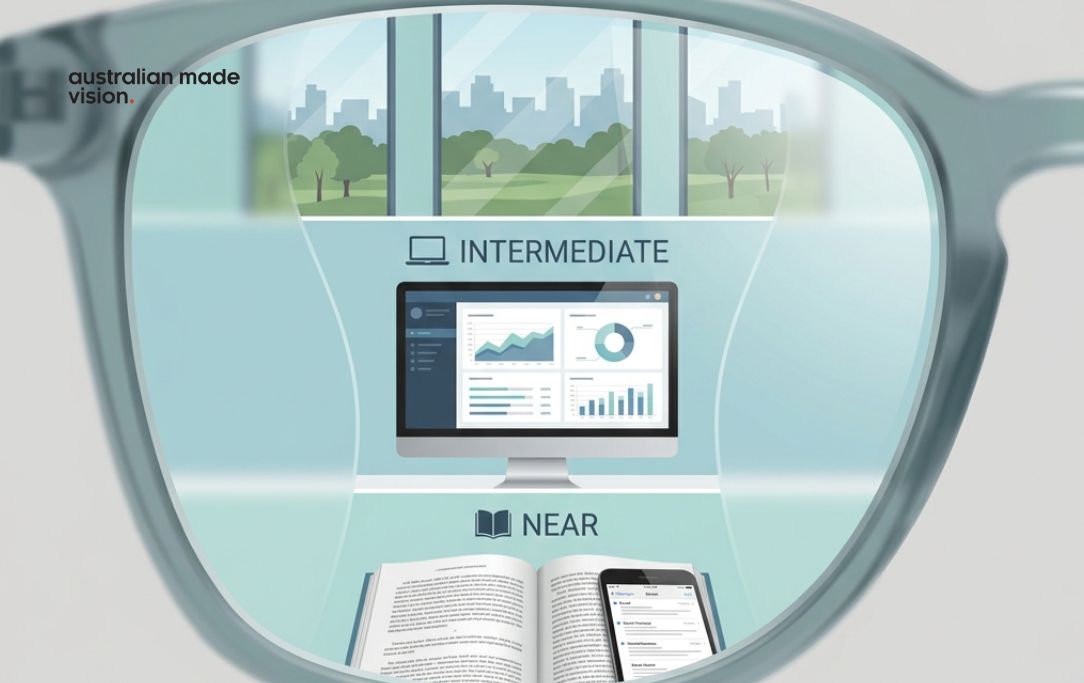
Progressive lens illustration showing how different parts of the lens provide clear distance, intermediate and near vision for everyday activities such as looking outside, using a computer and reading.
Progressive lenses provide a seamless transition between distance, intermediate and near vision, allowing clear focus for multiple everyday tasks without visible lens lines.

Optometry Australia professional education material notes that the traditional three-zone model can oversimplify the continuous optical structure of progressive lenses. In everyday terms, the wearer looks through different parts of the lens for different distances, without the visible line found in standard bifocals or trifocals.

Possible trade-offs include peripheral blur, narrower usable areas and changes in how the eyes and head move. Experience varies with prescription, design, frame and measurements.

Multifocal vs progressive lenses: quick comparison

Comparison point Multifocal Progressive addition lens
Meaning Broad category for lenses with more than one power or viewing range A specific no-line multifocal design
Relationship Includes progressives, bifocals and trifocals One type of multifocal lens
Visible lines Depends on the design No visible segment line
How power changes May change in defined steps or continuously Changes continuously across the lens
Examples Progressive, bifocal and trifocal lenses Progressive addition lens
Main takeaway The umbrella term A particular design within the category

“Multifocal” describes the wider lens family, while “progressive” identifies a no-line design. In Australia, ask which exact design is being recommended.

Find Eye Care That Suits Your Needs

Search for an independent optometrist near you and find a local practice that suits your specific eye care needs.

Find an Optometrist

Progressive, bifocal, trifocal, and office lenses compared

Lens option Typical emphasis Visible line Intermediate vision Possible strength Possible limitation
Progressive addition lens General distance, intermediate and near use No Included; usable area depends on design One pair across several distances Peripheral blur or narrower areas for some tasks
Bifocal Distance and near Yes Usually no dedicated intermediate section Clearly defined distance and near areas Visible line and limited intermediate viewing
Trifocal Distance, intermediate and near Yes Defined intermediate segment Three specified viewing ranges Visible lines and discrete changes between sections
Occupational / office lens Near and intermediate work Usually no; depends on design Prioritised Useful for desk and screen tasks May not provide suitable general distance vision
Separate single-vision pairs One main distance per pair No segment line Only when prescribed for that distance Wide task-specific viewing area Requires carrying and changing glasses

No option is better for every wearer. Progressives may suit varied daily activities, bifocals provide defined distance and near sections, and office lenses may suit sustained screen work. Separate single-vision pairs can provide broad task-specific areas.

Who may discuss multifocal lenses with an optometrist?

Adults who need different prescriptions for more than one viewing distance may be offered several lens options. A common reason is presbyopia, the age-related reduction in near focusing.

Healthdirect Australia explains that presbyopia is assessed during an eye examination and may be managed with reading glasses, bifocals, multifocals, or other specialised lenses. Age or symptoms alone do not confirm that a person needs multifocal glasses.

An examination is needed to assess the prescription and eye health. A review may also help when an existing pair no longer matches the wearer’s tasks or comfort.

Is Your Eye
Health on Track?

Complete our free 18-point checklist to check your eye health, spot any gaps, and take charge of your vision.

Start Free Checklist Test

Which lens option may suit different daily tasks?

Lens choice should reflect the distances and activities that matter most. An Australian optometrist or optical dispenser may ask about work, driving, reading and screen use.

Driver using progressive lenses for distance vision
Daily tasks

General daily use and driving

A general-purpose progressive may be prescribed for activities that involve looking between the road, dashboard, mirrors and surroundings. Clear driving vision still depends on an appropriate prescription, accurate fitting and comfortable use. New glasses should not be tried for the first time in demanding driving conditions.

Person using progressive lenses for computer and desk work
Work tasks

Computer and desk work

Standard progressives include intermediate viewing, but the usable area may not match every desk setup or long period of screen work. People who spend much of the day at a computer may discuss occupational or office lenses, which prioritise intermediate and near distances. They may not replace distance glasses for driving.

Person using progressive lenses for reading and near vision
Close work

Reading and close work

A progressive offers one-pair convenience across distance and close work. Separate reading glasses may provide a wider area for prolonged close tasks. The choice depends on the prescription and whether switching pairs is practical.

Using separate single-vision pairs

Separate single-vision glasses remain a valid option. Some people prefer one pair for distance, another for reading and, where needed, a computer pair. This provides broad task-specific viewing areas but requires changing glasses.

What affects comfort and visual performance?

The lens label is only one part of the result. Comfort and visual performance may be affected by prescription, design, frame position, pupil distance, fitting height, working distances and previous multifocal experience.

Good Vision for Life, an Optometry Australia initiative, notes that optical dispensers may take pupil-distance and fitting-height measurements for multifocal or bifocal spectacles and adjust the frame to fit the face. Processes vary between practices, so ask how the glasses will be measured, fitted and reviewed.

Getting used to new multifocal or progressive lenses

Some wearers notice an adjustment period while learning where to look through new multifocal or progressive lenses. The experience varies, and no single timeframe applies to every prescription, design and wearer.

Following the fitting practice’s instructions and using the glasses in familiar settings may help. Persistent blur, discomfort or difficulty with the intended tasks should not simply be tolerated. The frame position, measurements, prescription, design and expectations may need review.

When to ask the fitting practice for a review

Contact the fitting practice when the frame slips or sits unevenly, the expected viewing area is difficult to find, or blur and discomfort continue during normal use. A review can check the frame, measurements, prescription and design.

New or sudden vision changes should not automatically be blamed on glasses. Arrange professional assessment when a change is unexpected or affects normal activities.

Questions to ask before choosing a lens design

  • What exact lens design does “multifocal” refer to?
  • Which viewing distances and daily tasks does the design prioritise?
  • Would an office lens or separate task-specific pair be worth discussing?
  • Is the selected frame suitable and stable for the design?
  • Which measurements will be taken, and who will complete the fitting?
  • What follow-up, remake or warranty terms apply?
  • What is included in the total price, and which options are separate?

Prices are outside the scope of this comparison. For a separate overview, see Australian Made Vision’s guide to the cost of progressive lenses in Australia.

Discuss your lens options with an independent optometrist

The terminology is only a starting point. The suitable lens design depends on the individual prescription, frame, and daily activities. Australian Made Vision provides general information and a directory of participating independent practices.

Use the Australian Made Vision directory to find an independent optometrist in Australia and ask which multifocal, progressive or task-specific option may suit your needs. The individual practice provides examinations, prescriptions, products, fees and aftercare.

Find Eye Care That Suits Your Needs

Search for an independent optometrist near you and find a local practice that suits your specific eye care needs.

Find an Optometrist

Multifocal vs Progressive Lenses FAQs

Are multifocal and progressive lenses the same?

Multifocal is the broader category. Progressive addition lenses are one type of multifocal, with a continuous change in power and no visible line. Bifocals and trifocals are also multifocals.

Neither is automatically better. Progressives have no visible line, while bifocals use defined distance and near sections. Suitability depends on prescription, tasks, experience and preference.

Progressives may be prescribed for general use, including driving. Prescription, fit, and comfortable use matter. Do not drive when vision is unclear or while unfamiliar with new glasses.

Progressives include intermediate viewing, but the available area may not suit every computer setup. An occupational or office lens may be discussed for prolonged desk work.

Adjustment varies between wearers and designs. Persistent blur, discomfort or difficulty using the glasses for intended tasks should be reviewed by the fitting practice.

There is no reliable home fitting test. Ask the practice to check persistent blur, discomfort, slipping frames or difficulty finding the expected viewing area.

General information only
The information in this article is provided for general educational purposes only and should not be considered medical advice. For personalised advice regarding your vision or eye health, please consult a qualified optometrist.Australian Made Vision is an independent directory that helps patients find optometrists across Australia who may offer Australian-made spectacle lenses. We do not provide clinical services and recommend contacting practices directly to confirm the products and services they offer.

Picture of Michael Nasser
Michael Nasser
Michael Nasser is a qualified Optical Dispenser with law and business degrees and a director of Opticare. He is an advocate for independent optometry in Australia and host of The Focused View, where he brings industry leaders together to discuss practice growth, technology, team development and the future of independent eye care.