
Anti-reflective coating is a clear treatment applied to spectacle lenses to reduce reflections from the front and back surfaces. It can improve light transmission, reduce distracting lens reflections and make your eyes easier to see through the lenses. It does not remove every type of glare, and whether it is worth adding depends on your prescription, daily tasks, budget and the quality of the coating.
What anti-reflective coating does
When light reaches an uncoated spectacle lens, some of it passes through and some is reflected from the surface. Anti-reflective, or AR, coatings use very thin layers to reduce those surface reflections. The aim is to let more useful light pass through the lens and reduce reflections that may be visible to the wearer or to other people.
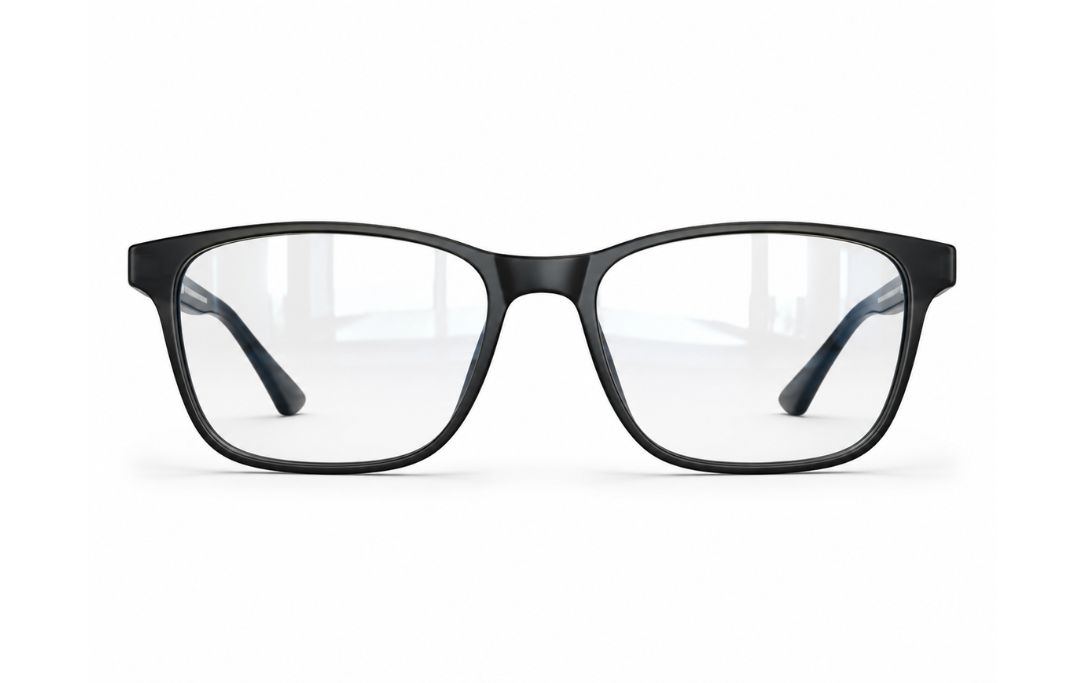
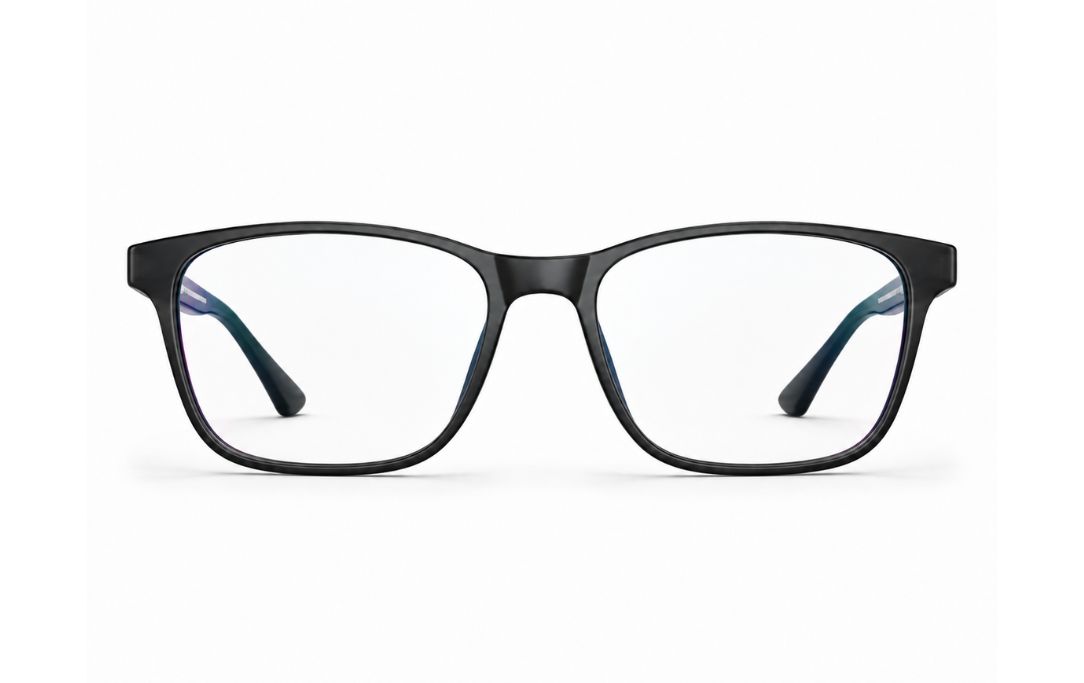
Lens reflection comparison
Uncoated lens
Surface reflections may be more noticeable on an uncoated spectacle lens.
The terms anti-reflective and anti-glare are often used as though they mean the same thing. Anti-reflective is the more accurate description. The coating reduces reflections created by the spectacle lenses themselves. It cannot remove all glare from headlights, low sun, wet roads or other bright sources.
Coating colour note
A faint green, blue or purple reflection may still be visible when the lenses are viewed at an angle. That residual colour is normal and varies by coating design.
Find Eye Care That Suits Your Needs
Search for an independent optometrist near you and find a local practice that suits your specific eye care needs.
Find an OptometristBenefits you may notice
Fewer visible reflections
The most direct benefit is a reduction in reflections from the lens surfaces. This can make the view through the lenses feel less distracting in offices, shops, cars and other places with several light sources.
Better contrast in some glare conditions
Small studies of coated spectacle lenses have reported improved contrast under glare and a wearer preference for coated lenses during daytime and night-time tasks. The research is limited and much of it is older, so the coating should not be presented as a guarantee of better night-driving performance.
Clearer-looking lenses
Reducing reflections can make the lenses less noticeable in conversation, photographs and video calls. Other people may be able to see your eyes more clearly through the lenses.
A useful option for high-index lenses
High-index lens materials are used to make some stronger prescriptions thinner. These materials can reflect more light than standard plastic, so an optometrist or optical dispenser may discuss AR coating as part of the lens package. The right combination still depends on the prescription, frame and budget.
Is anti-reflective coating useful for night driving?
It may help when reflections from your own spectacle lenses add to the visual clutter around headlights and streetlights. By reducing those lens-surface reflections, the coating may make lights feel less distracting and improve contrast for some wearers.
The limitation matters: AR coating does not remove glare that is caused inside the eye, by a vision condition or by an incorrect prescription. It also does not filter the bright reflection from a wet road in the way a daytime polarised lens can. Anyone who is struggling to see at night should discuss the problem with an optometrist rather than relying on a coating alone.
Is Your Eye
Health on Track?
Complete our free 18-point checklist to check your eye health, spot any gaps, and take charge of your vision.
Start Free Checklist Test →Can it help with computer and screen use?
AR coating can reduce reflections from the lenses when light comes from a monitor, window or overhead fitting. That may make screen work more comfortable when lens reflections are part of the problem.
Screen discomfort can also be affected by focusing demand, reduced blinking, dry eyes, lighting, screen position and an outdated prescription. A coating should therefore be treated as one possible lens feature, not a complete treatment for digital eye strain.
Who may benefit most?
AR coating is most relevant when reflections from the spectacle lenses are a regular part of the problem. It may be worth discussing if you wear your glasses for most of the day, use high-index lenses, drive frequently after dark, work under strong indoor lighting or spend a lot of time on video calls.
It may be less useful when the main concern is bright outdoor glare, because polarised sunglasses are designed for that purpose. It may also provide limited value if the discomfort comes from dry eyes, poor screen habits or a prescription that needs updating. An eye test and a clear explanation of the lens options are more useful than choosing a coating from a feature list alone.
Coating levels and added features
Practices may offer more than one coating level. Product names differ, so compare the actual features rather than relying on labels such as basic, advanced or premium.
Lens coating features to check
Anti-reflective layers
What it is intended to do: Reduce surface reflections.
What to check: Reflection level and lens compatibility.
Hard coat
What it is intended to do: Improve scratch resistance.
What to check: Not scratch-proof.
Water-repellent layer
What it is intended to do: Help water bead off.
What to check: Cleaning instructions.
Oil-repellent layer
What it is intended to do: Make fingerprints easier to remove.
What to check: Smudge performance.
Antistatic layer
What it is intended to do: Reduce dust attraction.
What to check: Included or optional.
Blue-light filter
What it is intended to do: Reduce selected blue-violet wavelengths.
What to check: Separate feature and evidence.
Evidence note
Some anti-reflective packages also include blue-light filtering. These are not the same feature. A 2023 Cochrane review found that blue-light filtering lenses may not reduce short-term eye strain from computer use compared with non-filtering lenses, and the effects on sleep were uncertain. Ask what the filter is intended to do before paying for it.
How AR coating compares with other lens options
| Option | Main purpose | Typical use |
|---|---|---|
| Anti-reflective coating | Reduce reflections from lens surfaces | Clear glasses, screens, low light |
| Polarised lenses | Reduce reflected outdoor glare | Daytime driving, water, outdoors |
| Photochromic lenses | Darken in response to light | Indoor-outdoor convenience |
| Blue-light filter | Reduce selected blue-violet wavelengths | Optional screen-related lens feature |
These options can be combined in some products, but they do different jobs. Read more about polarised lenses, photochromic lenses and the wider types of spectacle lenses before comparing a complete lens package.
How to compare anti-reflective coating in Australia
A coating that suits one person may be unnecessary or poor value for another. Before ordering new lenses, compare the following points with the practice:
- Your prescription and lens material, including whether high-index lenses are being used.
- Where reflections cause the most difficulty, such as night driving, office lighting or video calls.
- The exact coating product and which features are included.
- The total price of the lenses with and without the coating.
- The cleaning method and products recommended for the coating.
- The warranty, remake or replacement conditions if the coating fails.
- Whether the same coating is suitable for prescription sunglasses.
- What any Australian-made claim covers: the lens, coating, surfacing or final fitting.
Services, products and warranties vary between practices. Confirm the details directly before ordering.
How to care for anti-reflective lenses
Follow the instructions supplied by the practice or lens manufacturer. Coating packages differ, so the care advice that comes with the lenses should take priority.
- Rinse loose dust or grit before wiping the lenses.
- Use a clean microfibre cloth and an approved lens cleaner.
- Avoid paper towels, tissues, clothing and abrasive household cleaners.
- Keep the glasses in a protective case when they are not being worn.
- Avoid leaving coated lenses in high heat, such as on a car dashboard.
- Return to the practice if you notice peeling, crazing, haze or a change that does not clean off.
Is anti-reflective coating worth it?
It can be worthwhile when reflections from the lenses regularly affect your comfort, appearance or vision in low-light settings. It may also be useful with high-index lenses. The benefit is likely to be smaller if lens reflections do not bother you or if the main problem comes from an eye condition, dry eyes, an outdated prescription or outdoor reflected glare.
The most useful comparison is not simply coated versus uncoated. Compare the specific product, the added layers, the warranty, the total price and how the lenses will be used.
Discuss the complete lens package
An optometrist or optical dispenser can compare coating options against your prescription, frame, daily tasks and budget. Use the Australian Made Vision directory to compare independent optometry practices near you, then confirm which lens products and warranties each practice offers.
Find Eye Care That Suits Your Needs
Search for an independent optometrist near you and find a local practice that suits your specific eye care needs.
Find an OptometristAnti Reflective Coating FAQs
Is anti-reflective coating the same as anti-glare?
The terms are often used interchangeably. Anti-reflective is more precise because the coating reduces reflections from the lens surfaces. It does not remove every source of glare in the environment.
Does it help with night driving?
It may reduce reflections and ghost images created by the spectacle lenses, which can help some wearers in low light. It cannot correct other causes of glare or poor night vision.
Does it reduce digital eye strain?
It may reduce reflections on the lenses from screens and room lighting. Digital eye strain can have several contributing factors, so the coating is only one possible part of the solution.
Does anti-reflective coating filter blue light?
Not automatically. Some products combine AR coating with blue-light filtering, while others do not. Ask the practice to explain the features separately.
How long does the coating last?
There is no single lifespan for every coating. Product quality, cleaning, heat exposure, daily wear and the warranty all matter. Ask for the written care and warranty terms before ordering.
Can it be added to my current lenses?
AR coating is normally applied as part of the lens-manufacturing process. In most cases, adding it later means ordering replacement lenses. Confirm this with the practice that supplied your glasses.
Australian Made Vision is an independent directory that helps patients find optometrists across Australia who may offer Australian-made spectacle lenses. We do not provide clinical services and recommend contacting practices directly to confirm the products and services they offer.
- Optometry Australia – Controlling Light Transmission, Reflection and Absorption by Spectacle Lenses
- PubMed – Comparison between anti-reflection-coated and uncoated spectacle lenses for highway patrol troopers
- PubMed – Improved contrast sensitivity with antireflective coated lenses in the presence of glare
- Cochrane – Blue-light filtering spectacle lenses for visual performance, macular health and sleep
- Healthdirect Australia – Eye strain
- ACCC Product Safety – Sunglasses and fashion spectacles mandatory standard