

Imagine you’re halfway through a critical project on your laptop when a sudden, persistent flutter starts in your left eyelid. For many of the 50% of Australian workers who report symptoms of digital eye strain, this irritating sensation of eye twitching is a common disruption that feels far more serious than it looks. You’re likely frustrated by the constant distraction. You might even worry that a simple spasm signals a deeper neurological issue.
We believe that quality eye care should feel like a conversation with a trusted neighbour who understands your local lifestyle. While most minor spasms resolve within 48 hours, you’ll discover why your eye is jumping, how to find relief at home, and exactly when it’s time to seek personalised care from a professional. We’ll also look at why visiting an independent Australian optometrist provides the tailored solutions and high-quality craftsmanship you need to get back to your day with absolute confidence.
Key Takeaways
- Understand why eyelid myokymia is typically a harmless, temporary response to common lifestyle triggers like stress and fatigue.
- Discover how digital eye strain and lens quality contribute to muscle overexertion in the modern Australian workplace.
- Learn practical home remedies, including the 20-20-20 rule, to find gentle relief from persistent eye twitching.
- Identify the critical red flags that signal when it is time to move beyond home care and consult a professional.
- Recognise the value of seeking a bespoke consultation with a local independent optometrist who prioritises your long-term vision.
What is Eye Twitching? Understanding Eyelid Myokymia
Almost every Australian has felt that tiny, rhythmic flutter in their eyelid at some point. This sensation, known as eye twitching or eyelid myokymia, involves involuntary muscle contractions that can be quite distracting. While it feels like your whole eye is jumping, it’s usually just a series of small, benign spasms. Most of the time, these episodes are temporary and don’t signal any deeper health issues. It’s a common experience that rarely requires medical intervention, though it can certainly be a nuisance during a busy workday.
It’s helpful to distinguish these minor flutters from more persistent conditions. While myokymia is typically fleeting, Understanding Eyelid Myokymia and how it differs from essential blepharospasm is key to peace of mind. Blepharospasm is a more serious neurological condition involving sustained closure of the lids. In contrast, standard eye twitching is rarely a sign of a major neurological disorder.
The Anatomy of a Twitch
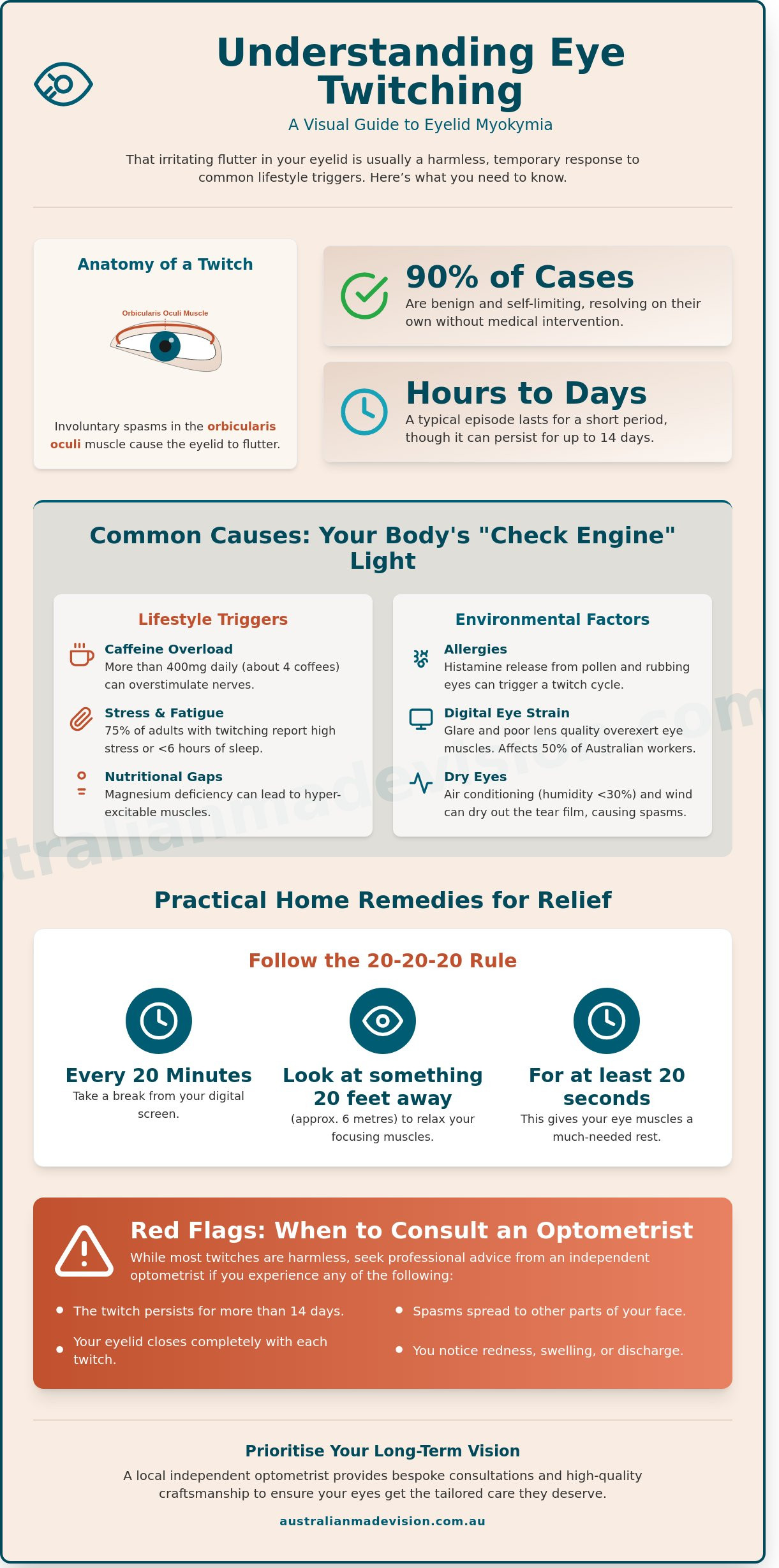
The primary muscle involved in these spasms is the orbicularis oculi. This thin muscle is responsible for closing your eyelids. When it misfires, you’ll feel a pulsing sensation in either the upper or lower lid. One of the most curious aspects of a twitch is that it often feels far more visible than it actually is. You might think everyone in the room can see your eye jumping, but your colleagues likely won’t notice a thing. This precision of movement is what makes our eyes so unique, yet also prone to these small, localised stresses.
How Long Does It Usually Last?
A typical episode lasts anywhere from a few hours to a few days. For most people, the twitch vanishes as quickly as it appeared once they’ve had a bit of rest. Data shows that eyelid myokymia is a benign, self-limiting condition in 90% of cases.
When a twitch becomes a chronic nuisance persisting for more than 14 days, visiting an independent optometrist through our local directory can help you find the root cause. These local experts provide the bespoke care and clinical precision needed to ensure your vision remains clear and comfortable. Supporting independent practices ensures you receive personalised attention from a professional who understands the unique needs of the Australian community.
The Most Common Eye Twitching Causes in 2026
Understanding why your eyelid is pulsing is the first step toward relief. While these spasms are usually harmless, they serve as a physiological “check engine” light for your body. Most instances of eye twitching result from a combination of lifestyle choices and environmental stressors that push our nervous systems to the limit.
Lifestyle Triggers in the Modern World
Caffeine is a primary culprit. Australia’s local cafe culture is world-class, but consuming more than 400mg of caffeine daily can trigger acute nerve sensitivity. This overstimulation leads to the involuntary muscle contractions we recognise as Common Eye Twitching Causes. If you’re on your fourth flat white of the day, your nerves might be paying the price.
Stress and exhaustion play equally significant roles. When you’re under pressure, your body releases cortisol and adrenaline, which can cause minor muscle tics. Data suggests that 75% of adults experiencing persistent twitching also report high levels of psychological stress or fewer than six hours of quality sleep per night. Lack of rest prevents the eyelid muscles from recovering, making them hyper-responsive to stimuli.
Nutritional gaps shouldn’t be overlooked. Magnesium is essential for proper nerve and muscle function. A deficiency in this mineral can make your eyelid muscles hyper-excitable. If you’re concerned about your nutrient levels, a consultation with a healthcare professional can provide clarity. Many patients find that addressing these basic health markers resolves the issue within 14 days.
Environmental Factors
The Australian climate and modern workspace environments present unique challenges for our vision. Constant air conditioning in office buildings often reduces humidity to below 30%, which quickly evaporates the natural tear film. This leads to dry eye syndrome, a condition currently affecting 1 in 5 Australians. When the eye surface becomes irritated, the eyelid blinks more frequently or spasms to compensate for the lack of moisture.
- Bright Lights: Excessive glare from digital screens or the harsh Australian sun can strain the ocular muscles.
- Wind Exposure: Coastal winds can dry out the cornea, triggering a protective but annoying twitch.
- Allergies: High pollen counts lead to the release of histamines, which cause swelling and rubbing.
Rubbing your eyes during allergy season is a common mistake. This action releases more histamines into the eyelid tissues and tears, which often results in a stubborn, repetitive twitch. It’s a cycle that requires professional intervention to break effectively. Finding a local expert who understands these regional environmental factors is vital for long-term comfort. You can find an independent optometrist through our directory to discuss a personalised management plan tailored to your specific environment.
Digital Eye Strain and Lens Quality
Australians now spend an average of 10.5 hours per day engaging with digital screens. This constant connectivity has fueled a rise in Computer Vision Syndrome, a condition that currently impacts approximately 65 percent of the national workforce. When you spend hours focusing on a backlit display, your ciliary muscles must work relentlessly to maintain a sharp image. This persistent overexertion is one of the primary causes of eye twitching, as the fatigued muscles around the eyelid begin to spasm under the pressure.
The quality of your lenses directly dictates how hard your eyes have to work. High-quality, locally crafted lenses are designed to reduce the “accommodation effort” required to see clearly. By choosing to consult with a local independent optometrist, you can access bespoke lens designs that provide a wider field of view and sharper focus than mass-produced alternatives found in large corporate chains.
Why Your Current Glasses Might Be the Problem
If your prescription is even slightly out of date, your eyes are effectively running a marathon every single day. An outdated lens forces the brain and eye muscles to compensate for blurriness, which leads to eye twitching as a sign of physical exhaustion. Generic lenses often suffer from peripheral distortions that increase strain; however, bespoke Australian-made lenses are tailored to your specific frame and facial measurements.
- Blue light filters: These help neutralise the high-energy visible light emitted by monitors, which 82 percent of office workers identify as a source of glare.
- Anti-reflective coatings: These layers eliminate distracting reflections from office overhead lighting, allowing more light to pass through the lens for clearer vision.
- Bespoke surfacing: Unlike generic stock lenses, custom-made lenses are ground to your exact requirements in a local facility.
The Precision Advantage
Precision surfacing in an Australian laboratory ensures that your lenses meet rigorous quality standards that imported, bulk-manufactured products often miss. This technical accuracy ensures the lens power is consistent across the entire surface. When your vision is crisp from edge to edge, your eyes don’t need to constantly readjust, which helps eliminate the triggers for a persistent eye twitching episode.
Supporting local Australian manufacturing isn’t just about quality assurance; it’s about the heritage of care. Our local technicians take pride in their craft, ensuring that every pair of lenses supports the eye’s natural focus. This commitment to precision provides a level of visual comfort that mass-market products simply can’t replicate. Choosing locally made eyewear means you’re investing in both your long-term eye health and the strength of the Australian optical industry.
How to Stop Eye Twitching: Practical Home Remedies
Most cases of eye twitching are temporary reactions to lifestyle stressors rather than serious medical conditions. These involuntary spasms often serve as a signal from your nervous system that your body requires rest or a change in environment. By adopting a few targeted habits, you can often settle the eyelid muscles and restore comfort without clinical intervention.
Immediate Relief Strategies
If your eyelid starts jumping during a busy workday, you can take direct action to calm the local nerves. A consistent warm compress routine is one of the most effective ways to relax the orbicularis oculi muscle. Follow these steps for a 5-minute recovery session:
- Soak a clean washcloth in warm water, ideally around 40 degrees Celsius.
- Wring out the excess moisture so the cloth is damp but not dripping.
- Close your eyes and lay the cloth over the affected area for five full minutes.
- Re-warm the cloth halfway through if it loses heat.
You can also perform a gentle eyelid massage to stimulate blood flow and release tension. Use your ring finger to apply very light, circular pressure to the eyelid for 30 seconds. This technique should never involve pressing on the eyeball itself; focus purely on the soft tissue of the lid. To reduce digital strain, follow the 20-20-20 rule by looking at an object 20 feet away for at least 20 seconds every 20 minutes.
Long-term Prevention
Sustainable relief from eye twitching involves addressing the underlying triggers found in your daily routine. Prioritising a consistent sleep schedule of 7 to 9 hours per night allows your ocular nerves to recover from the day’s visual demands. Lack of rest is a primary driver of muscle fatigue, making the eyelid more prone to spasms.
Dietary choices also play a significant role in nerve stability. Reducing your intake of stimulants like caffeine and nicotine can prevent the over-firing of nerves that lead to twitching. Hydration is equally vital because water intake supports the balance of electrolytes, such as magnesium and potassium, which are essential for smooth muscle function. Even mild dehydration can cause muscles to become “irritable” and prone to twitching.
Your workspace setup can either help or hinder your progress. Position your screen so the top of the monitor is at eye level and use soft, indirect lighting to minimise glare. If your eyes feel gritty or dry, using preservative-free lubricating eye drops can provide a protective barrier that reduces the urge to blink excessively. We recommend keeping a “twitch diary” for 14 days to track when spasms occur. This helps you identify if specific triggers, like an extra cup of coffee or a late night, are the culprit.
If your symptoms persist for more than a week or involve other facial muscles, it’s time to seek professional advice. You can find a trusted local expert through our directory of independent Australian optometrists who provide personalised care tailored to your specific needs.
When to Consult an Independent Optometrist
Most cases of eye twitching resolve with a few early nights and a reduction in caffeine. However, you should seek professional advice if the spasms persist for more than 14 days. If the twitching causes your eyelid to close completely or begins to involve other muscles in your face, these are clear red flags that require a clinical assessment. A sudden change in your vision or redness and discharge accompanying the twitch also warrants an immediate visit to your local clinic.
The Independent Optometry Difference
Choosing an independent practice ensures you receive a level of care that goes beyond a standard retail transaction. While corporate providers often operate on 15 or 20 minute appointment cycles, independent optometrists typically dedicate 30 to 45 minutes to a comprehensive exam. This extra time allows them to investigate the root cause of your eye twitching rather than just treating the surface symptoms. They focus on your long-term clinical health and offer a bespoke service tailored to your specific ocular needs.
Independent providers also offer a significantly broader range of lens technologies. Instead of being restricted to a single corporate supply chain, they can source premium products that suit your lifestyle. You can easily find an independent optometrist who prioritises high-quality Australian-made lenses. Supporting these community-based providers helps maintain the local optical industry, which currently employs over 1,500 skilled workers across the country. It’s a choice that combines superior clinical care with a commitment to local craftsmanship.
Preparing for Your Appointment
To help your optometrist provide an accurate diagnosis, come prepared with details about your daily routine. Mention your total daily screen time and whether you’ve recently increased your workload or stress levels. Your practitioner will use this information during a comprehensive exam to rule out underlying issues like dry eye syndrome or uncorrected astigmatism. These conditions are frequent triggers for persistent eye twitching and are easily managed with the right prescription.
- Write down how often the twitching occurs and what time of day it’s most frequent.
- List any new medications or supplements you’ve started in the last 30 days.
- Ask about specialised Australian-made lens coatings that reduce digital eye strain.
- Inquire about the health of your tear film and whether environmental factors are contributing to the irritation.
By visiting a local expert, you’re investing in a professional relationship with someone who understands your history. This continuity of care is vital for managing chronic symptoms and ensuring your vision remains clear and comfortable for years to come.
Take Control of Your Visual Comfort Today
While most instances of eye twitching are temporary responses to stress or fatigue, persistent symptoms in 2026 often stem from modern digital eye strain and inadequate lens support. You can manage minor spasms with improved sleep and hydration, but recurring issues deserve the attention of a master of their craft. Independent optometrists offer a level of personalised care that corporate chains often miss, focusing on your unique ocular health and lifestyle requirements. By visiting a local practice, you support Australian lens manufacturing and gain access to bespoke lens technology designed for your specific vision profile.
Choosing an independent provider means you’re investing in high-quality craftsmanship and the heritage of local industry. These experts take the time to ensure your prescription is perfect, reducing the strain that leads to involuntary eyelid movements. You don’t have to let a minor flicker turn into a major distraction. Experience the difference that dedicated, community-focused eyecare makes for your long-term health. Support your local economy while ensuring your eyes receive the premium treatment they deserve. It’s a simple step that benefits both your vision and your community.
Ready to find clarity? Find a local independent optometrist for a personalised eye exam and enjoy the peace of mind that comes with expert Australian care.
Frequently Asked Questions
Is eye twitching a sign of a stroke or something serious?
Most eye twitching is a harmless condition called eyelid myokymia and is rarely a sign of a stroke or serious neurological issue. A stroke typically presents with sudden facial drooping, muscle weakness, or slurred speech, whereas a twitch is localized to the eyelid muscle. Clinical data suggests that over 90% of cases are benign and related to lifestyle factors like fatigue or stress.
Can caffeine really cause my eye to twitch for days?
Yes, caffeine is a potent stimulant that can trigger eye twitching for several days by increasing muscle sensitivity and heart rate. Research indicates that consuming more than 400 milligrams of caffeine daily, which is roughly four cups of brewed coffee, significantly increases the risk of persistent eyelid spasms. Reducing your intake often resolves the issue within 48 hours as the stimulant leaves your system.
What vitamins should I take for eye twitching?
Magnesium, Vitamin B12, and Vitamin D are the most effective supplements for supporting nerve and muscle function to stop eye twitching. Magnesium deficiency affects approximately 1 in 3 Australian adults and is a leading cause of muscle excitability. We recommend consulting an independent optometrist or GP before starting a new supplement regime to ensure it’s tailored to your specific health needs and local diet.
How do I know if my eye twitch is caused by stress or eye strain?
Stress-induced twitches usually appear during periods of high cortisol, while eye strain is directly linked to prolonged visual tasks like computer work. If the spasm starts after 2 hours of screen time, it’s likely ocular fatigue rather than general anxiety. Our local independent practices often see patients whose symptoms improve once they manage their 15-minute break intervals and reduce digital glare with quality lenses.
Can my glasses prescription cause my eyelid to spasm?
An incorrect or outdated glasses prescription is a common cause of eye twitching because it forces your ocular muscles to work harder to focus. Even a minor refractive error of 0.50 dioptres can lead to chronic muscle fatigue and spasms over a standard eight-hour workday. Choosing bespoke lenses from an independent provider ensures your prescription is precisely matched to your unique visual requirements and lifestyle.
When should I see a doctor about an eye twitch?
You should book an appointment with an optometrist if your eye twitch lasts longer than 14 days or causes the eyelid to close completely. Seek immediate care if the spasm spreads to other parts of your face or if your eye becomes red and painful. Clinical guidelines suggest that persistent twitching requires a professional assessment to rule out underlying issues like blepharospasm or ocular surface disease.
Does the 20-20-20 rule actually work for eye twitching?
The 20-20-20 rule is highly effective at reducing the digital eye strain that often triggers eye twitching. Every 20 minutes, you look at an object 20 feet away for at least 20 seconds to relax the focusing muscles inside your eye. Studies show this simple habit can reduce symptoms of computer vision syndrome in 70% of regular screen users by providing necessary micro-breaks.
Are there specific eye drops that stop twitching?
There are no specific medicated eye drops designed solely to stop twitching, but lubricating drops can help if the cause is dry eye irritation. About 50% of people with eyelid spasms find relief using preservative-free artificial tears to soothe the ocular surface. If your eyes feel gritty or dry, a local independent optometrist can recommend a high-quality Australian-made lubricant to help calm the nerves around the eye.
Disclaimer
The information in this article is provided for general educational purposes only and should not be considered medical advice. For personalised advice regarding your vision or eye health, please consult a qualified optometrist.
Australian Made Vision is an independent directory that helps patients find optometrists across Australia who may offer Australian-made spectacle lenses. We do not provide clinical services and recommend contacting practices directly to confirm the products and services they offer.