

What if the 15-minute ‘quick’ test you just booked is actually missing 40% of the early-stage health markers that a comprehensive eye check should identify? It’s a common concern for the 13 million Australians currently living with one or more chronic eye conditions. You likely feel that familiar sense of hesitation when booking an appointment. You might worry about hidden costs or feel like you’re just another number in a high-pressure retail environment.
We understand that you want more than a simple prescription; you’re looking for clinical expertise and a genuine connection to your local community. This guide ensures you’ll know exactly what to expect from a professional consultation in 2026. You’ll learn the difference between basic and thorough exams, how Medicare bulk-billing actually works, and why choosing an independent Australian optometrist provides the bespoke care your vision deserves. We’ll walk you through the clinical process and give you the tools to choose a provider who prioritises your health over a sales target.
Key Takeaways
- Understand why a comprehensive eye check is a vital preventative health measure for detecting conditions like glaucoma and macular degeneration early.
- Learn what to expect during your consultation, from discussing your unique lifestyle needs to the precision of clinical health testing.
- Identify when it is time to book your next appointment and the specific warning signs that require immediate professional attention.
- Discover the benefits of choosing an independent optometrist for personalised care and a long-term commitment to your vision health.
- Explore why pairing your prescription with high-quality, Australian-made lenses is essential for achieving the best visual outcomes and supporting local craftsmanship.
Understanding the Eye Check: More Than Just a Vision Test
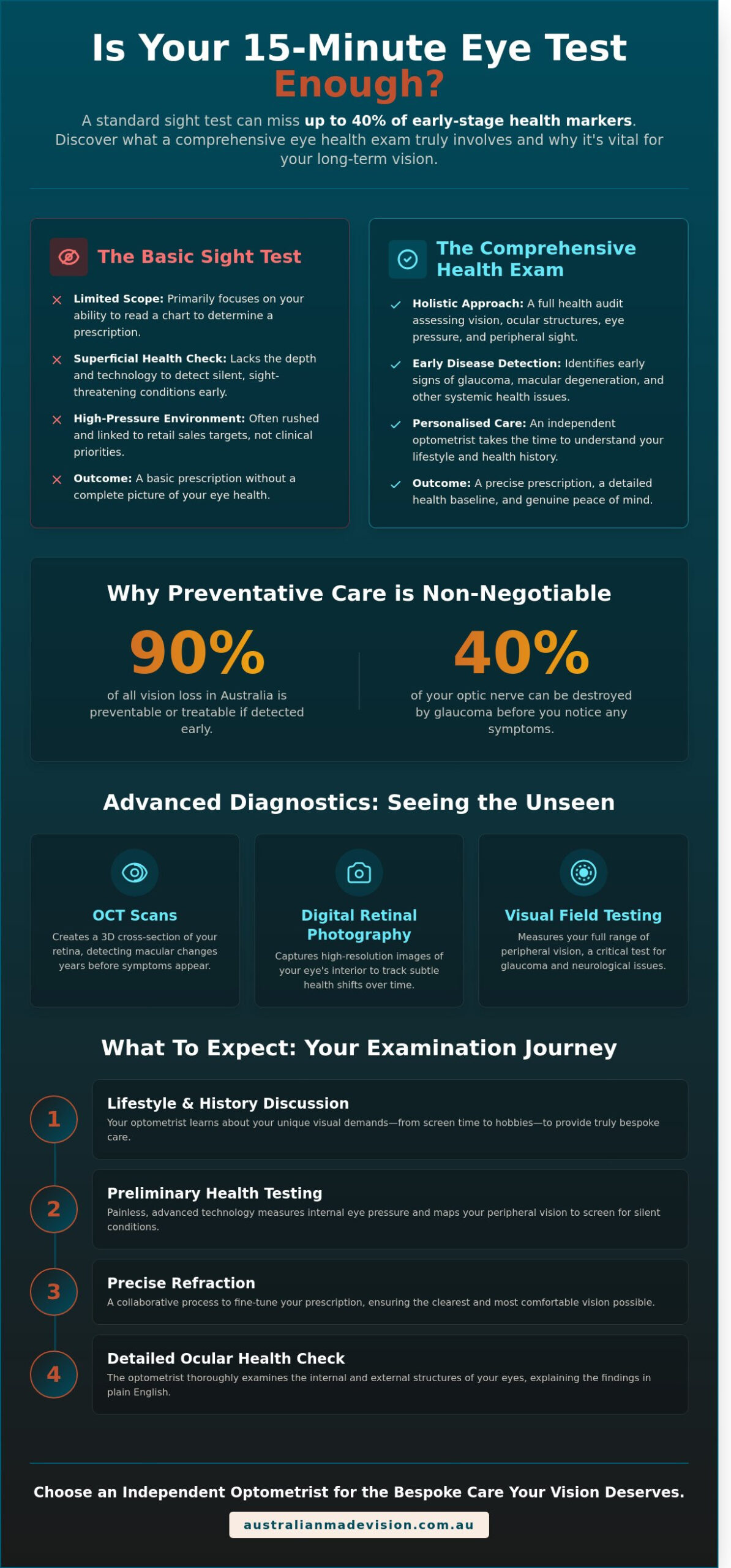
An eye check serves as a vital health audit for your most precious sense. It involves a series of clinical tests that assess how well you see and the physical condition of your ocular structures. Many people mistake a simple sight test for a full examination, yet these two services differ significantly. While a sight test focuses on your ability to read a chart, a comprehensive assessment looks for early signs of silent conditions like glaucoma or macular degeneration. In 2026, Australians spend upwards of 10.5 hours daily on digital devices, making these regular reviews more critical than ever to manage eye strain and digital fatigue.
Preventative care remains the cornerstone of modern optometry. Data from Vision 2020 Australia indicates that nearly 90 percent of vision loss is preventable or treatable if caught early enough. A thorough examination doesn’t just result in a prescription; it provides peace of mind that your eyes are functioning correctly from the surface to the retina. Choosing a local, independent practitioner ensures you receive a thorough evaluation that isn’t rushed to meet corporate retail quotas.
Vision Assessment vs. Eye Health
Your optometrist acts as a primary healthcare provider, much like a GP for your eyes. During the refraction part of the exam, they determine the exact power needed for your spectacle lenses to ensure crisp vision. However, clear sight doesn’t guarantee your eyes are healthy. Conditions like glaucoma can destroy 40 percent of your optic nerve before you notice any change in your sight. Independent optometrists often dedicate more time to these checks, focusing on the intricate health of the eye rather than just the final prescription. This personalised approach helps identify issues that might be missed in a standard ten-minute screening.
The Role of Technology in Modern Checks
Modern diagnostics have evolved to include sophisticated, non-invasive imaging that goes far beyond the traditional torch and magnifying glass. These tools allow for a level of precision that was unavailable a decade ago. Key technologies used in a comprehensive eye check include:
- OCT Scans: Optical Coherence Tomography creates a 3D map of your eye, detecting macular changes years before symptoms appear.
- Digital Retinal Photography: This captures high-resolution images of the back of your eye to track subtle health shifts over time.
- Visual Field Testing: A critical tool for measuring peripheral vision and identifying early signs of neurological issues or glaucoma.
The true value of this technology lies in the clinical interpretation provided by your practitioner. When you visit an independent optometrist, you’re benefiting from a professional who takes the time to explain these results in plain English. They combine high-end diagnostic data with a deep understanding of your personal health history, ensuring your care is as unique as your vision.
What to Expect During Your Comprehensive Eye Examination
A comprehensive eye check is far more than a simple vision test. It’s a detailed health assessment that combines clinical precision with personal care. Your appointment begins with a deep dive into your history. We discuss your daily screen habits, outdoor activities, and any family history of eye conditions. This conversation ensures your care is bespoke, reflecting the specific demands of your Australian lifestyle.
The process moves into preliminary testing. Clinical assistants use advanced technology to measure your internal eye pressure and map your peripheral vision. These steps are vital for the early detection of conditions like glaucoma, which often shows no symptoms in its early stages. By using high-quality diagnostic tools, your optometrist builds a foundation of data before you even sit in the exam chair.
Step-by-Step Breakdown of the Exam
During the pre-test phase, you’ll encounter machines that might feel a bit strange, like the one that delivers a gentle puff of air. This measures intraocular pressure. We also use digital retinal imaging to capture a high-resolution map of your eye’s interior. This creates a permanent record, allowing us to track subtle changes in your health over several years.
The refraction phase is where we determine your exact prescription. You’ll look through various lenses while the optometrist asks which option looks clearer. Don’t worry about giving a wrong answer. Your honest, instinctive responses help us craft a lens profile that feels natural and reduces eye strain. This is a collaborative effort to ensure your vision is as sharp as possible.
The health check is the most critical part of the eye check. Your optometrist uses a slit lamp, a specialised microscope, to examine the front and back of your eyes. They look for signs of cataracts, dry eye, and even systemic issues like diabetes. This thorough inspection ensures that your eyes aren’t just seeing well, but are fundamentally healthy.
Specialised Tests for Children and Seniors
Children require a different approach to eye care. Their checks focus on developmental milestones and binocular vision. With myopia rates in Australia projected to affect 31% of the population by 2030, early intervention is essential. We use specific tests to monitor eye growth and offer myopia management strategies that protect a child’s sight as they grow.
For older Australians, the focus shifts toward age-related conditions. Macular degeneration affects approximately 1.5 million Australians, making detailed macula scans a priority for patients over 50. These specialised tests go beyond the standard adult check-up, often involving optical coherence tomography (OCT) to see beneath the surface of the retina.
Finding a master of their craft who takes the time for these detailed assessments is easy when you search for an independent optometrist who prioritises personalised community care. Your optometrist will conclude the exam with a tailored summary. They’ll recommend specific lens coatings or lifestyle adjustments that suit your occupation, whether you’re working in a high-rise office or enjoying the bright Australian sun.
When Should You Book an Eye Check?
Maintaining your vision requires a proactive approach rather than waiting for things to go blurry. In Australia, the clinical standard for most adults is a comprehensive eye check every two years. This schedule allows your optometrist to monitor subtle changes in eye pressure and retinal health that you might not notice yourself. Independent practitioners often take extra time during these sessions to understand your specific lifestyle needs, whether you’re working on a sun-drenched site or a darkened office.
Medicare provides significant support for these essential health services. For most Australians under the age of 65, Medicare covers a full consultation once every three years. Once you reach 65, this eligibility increases to an annual rebate. Many local, independent clinics offer bulk-billing for these clinical fees, ensuring that high-quality care remains accessible to the whole community. You can find a dedicated professional near you through our directory of independent optometrists.
Frequency Guidelines by Age Group
- Children: Vision issues affect approximately 25% of Australian school-aged children. It’s vital to book their first thorough assessment before they start primary school at age five. Since 80% of classroom learning is visual, early detection of conditions like “lazy eye” prevents long-term developmental delays. Understanding the complex relationship between vision and learning is crucial for parents who want to ensure their child’s academic success.
- Adults 18-64: Digital eye strain is a modern epidemic, with 65% of office workers reporting symptoms like dry eyes or neck pain. A biennial eye check helps manage these issues through tailored lens solutions and ergonomic advice.
- Seniors 65+: Risk factors for glaucoma and macular degeneration increase significantly after 60. Annual reviews are the gold standard for this age group to preserve independence and mobility.
Symptoms That Require an Urgent Eye Check
Certain red flags demand immediate professional attention. If you experience a sudden shower of “floaters” or flashes of light, contact an optometrist the same day. These can be signs of a retinal tear or detachment, which requires urgent intervention to prevent permanent sight loss. Sudden blurriness or a “curtain” falling over your field of vision are also critical emergencies.
Don’t ignore persistent headaches or unusual light sensitivity. These symptoms often point to underlying binocular vision issues or changes in eye pressure. For the 1.3 million Australians living with diabetes, annual reviews are mandatory. Diabetic retinopathy remains a leading cause of preventable blindness, but regular monitoring at a local clinic can catch early signs before they damage your sight. Choosing an independent provider ensures you receive consistent care from a practitioner who knows your history and values your long-term health.
Independent vs. Corporate: Choosing Where to Have Your Eye Check
Deciding where to book your next appointment is a choice between a retail transaction and a long-term health partnership. While corporate chains are visible in every shopping centre, independent Australian optometrists offer a different level of clinical dedication. These local experts prioritise the health of your eyes over the volume of frames sold each day.
Your eye check serves as a vital health screening. When performed by a practitioner who owns their practice, the focus remains on your clinical outcomes. You aren’t just a number in a high-volume system; you’re a member of the local community receiving tailored medical attention.
The Independent Advantage
Continuity of care is the primary benefit of choosing a local practitioner. You won’t be shuffled between different staff members every year. Instead, you build a relationship with a professional who remembers your clinical history from 2023. This consistency allows for the early detection of subtle changes in your vision that a stranger might overlook.
Independent providers also have the clinical freedom to prescribe bespoke lens solutions. They aren’t restricted to a limited range of corporate house brands that may not suit your specific lifestyle or prescription. Find an independent optometrist near you to experience this personalised care and access high-quality, locally crafted options.
Why Your Choice of Provider Matters
The business model behind your provider influences the technology available to you. Data from 2024 indicates that independent practices often reinvest a higher percentage of their revenue into advanced diagnostic equipment, such as digital retinal imaging and OCT scanners. These tools provide a comprehensive 3D view of your ocular health that basic screenings might miss.
- Tailored Recommendations: Advice is based on your visual needs, not monthly sales targets or inventory clearances.
- Advanced Technology: Access to the latest diagnostic tools for early detection of conditions like glaucoma and macular degeneration.
- Supporting Local: Your fees stay within the Australian economy, supporting local jobs and manufacturing sectors.
Choosing local also strengthens the Australian optometry sector. These practices often source products from local artisans and manufacturers, keeping specialised skills within the country. Your decision ensures that expert, ethical eyecare remains accessible in your neighbourhood. It’s a commitment to quality that benefits both your vision and the national industry.
From Prescription to Precision: The Importance of Australian-Made Lenses
The results of your eye check are only as good as the lenses that interpret them. An accurate prescription requires an equally precise manufacturing process to ensure you see clearly. Choosing Australian-made lenses means you’re investing in optical products that meet strict national quality standards. These lenses don’t just sit in a frame; they’re engineered to work with your unique visual system.
Local manufacturing offers a significant speed advantage. While offshore orders often take 14 days or more to arrive, Australian labs typically provide a turnaround of 3 to 5 business days. This efficiency doesn’t sacrifice quality. In fact, local technicians oversee every stage of production, ensuring that the final product matches the optometrist’s exact specifications. It’s about getting your vision right the first time.
The Craftsmanship Behind Your Vision
Mass-produced lenses often follow a one-size-fits-all approach that ignores the nuances of your frame choice. Locally surfaced lenses are different. They use digital surfacing technology to achieve precision down to 0.01 dioptres. This bespoke process reduces peripheral distortion by approximately 25% in progressive designs. Choosing local also supports the 20,000 Australians employed in the medical technology sector. It’s a sustainable choice that reduces the carbon footprint created by international shipping.
Choosing the Right Lens Technology
Modern life demands more from our eyes than ever before. You might require specialised occupational lenses for office work or blue light filters to reduce digital eye strain. Independent optometrists have the freedom to recommend the best Australian-made technology for your specific needs. They aren’t tied to the limited house brands found in large corporate chains.
- Single Vision Lenses: Enhanced for edge-to-edge clarity.
- Progressive Lenses: Tailored for seamless transitions between near and far distances.
- Premium Coatings: Anti-reflective layers that block 99% of distracting glare.
Your vision is a vital part of your daily life. It deserves more than a generic solution. By visiting a local expert found through the Australian Made Vision directory, you can ensure your next eye check leads to a pair of glasses crafted with care. Support local industry and enjoy the confidence that comes with world-class Australian craftsmanship.
Prioritising Your Vision for 2026 and Beyond
Your sight deserves more than a generic retail experience. By choosing an independent practitioner, you gain access to a comprehensive 40-minute consultation that prioritises your specific health needs rather than high-volume turnover. These local experts provide high-performance lens technology that’s crafted with precision right here in Australia. Research indicates that 90% of vision loss is preventable or treatable when caught early, making a regular eye check every two years an essential part of your health routine.
Supporting independent optometry means you’re investing in personalised care and the future of Australian manufacturing. It’s a choice that combines ethical commitment with the highest standards of clinical expertise. You’ll receive bespoke solutions tailored to your lifestyle, ensuring your vision remains sharp and comfortable in our unique Australian light conditions. This approach fosters a stronger community connection while delivering superior optical outcomes for your daily life.
Find an independent optometrist who uses Australian-made lenses here to access expert care and world-class local craftsmanship. Taking this proactive step today guarantees your eyes are in the best possible hands for the future.
Frequently Asked Questions
How much does an eye check cost in Australia?
A standard eye check in Australia typically costs between $70 and $120 at most independent practices. While some corporate chains offer lower entry prices, independent providers often include advanced imaging in this fee to ensure a higher standard of care. This investment supports local clinical expertise and ensures your vision receives the precise attention it deserves. Many practices provide transparent pricing up front so you know exactly what to expect before your appointment begins.
Does Medicare cover the cost of my eye test?
Medicare provides a rebate for a comprehensive eye check every 36 months for Australians under 65 years of age. If you’re over 65, you can access this benefit every 12 months to monitor age related changes. Many independent optometrists choose to bulk bill these services directly to Medicare. This means you won’t have any out of pocket expenses for the standard clinical components of your vision assessment and health screening.
How long does a comprehensive eye check take?
You should allow between 30 and 45 minutes for a thorough consultation with a local optometrist. This timeframe allows our community’s experts to perform a series of precise tests, from reading charts to examining the internal health of your eyes. Independent practices often dedicate more time to these sessions than high volume clinics. They focus on understanding your specific lifestyle needs and crafting a bespoke vision solution that suits your daily routine.
Will I need to have my eyes dilated during the check?
Dilation is not required for every patient, but it’s recommended for approximately 25 percent of comprehensive exams to view the retina clearly. Your optometrist will use specialised drops that widen your pupils, which usually takes 20 minutes to take effect. This step is vital for detecting early signs of conditions like glaucoma or macula degeneration. If your eyes are dilated, your vision will stay blurry for about 2 to 4 hours, so please bring sunglasses.
Can I get an eye check if I don’t wear glasses?
Yes, you should book an eye check even if you have 20/20 vision and don’t require corrective lenses. These appointments are about more than just reading a chart; they’re a vital health screening for your entire body. Optometrists can detect systemic issues like high blood pressure or diabetes by examining the blood vessels in your eyes. Maintaining a regular schedule ensures your ocular health remains as authentic and strong as the local products we champion.
What is the difference between an optometrist and an ophthalmologist?
An optometrist is your primary eye care provider who performs vision tests and prescribes locally crafted lenses. They’re university trained professionals who manage most common eye conditions within the community. An ophthalmologist is a medical doctor who specialises in surgical procedures and treating complex eye diseases. Most patients start with an independent optometrist, who will then provide a referral to a specialist if you require surgery or advanced medical intervention.
How often should children have their eyes checked?
Children should have their first eye assessment at 6 months of age, followed by another check at age 3 and before starting school. Statistics from Optometry Australia show that 1 in 5 children have an undiagnosed vision problem that affects their learning. Regular visits every 2 years help ensure their visual development stays on track. Early detection allows for tailored treatments that support your child’s growth and success in the classroom. For parents concerned about their child’s academic performance, understanding how vision impacts learning can provide valuable insights into potential underlying visual processing issues.
Do I get a copy of my prescription after the eye check?
You are legally entitled to a printed copy of your prescription immediately following your eye check. Under Australian law, your optometrist must provide this information so you can choose where to purchase your eyewear. While we encourage supporting independent practices that offer bespoke Australian made frames, the choice is entirely yours. Having your prescription allows you to maintain a record of your vision history and ensures you receive the most precise lenses for your needs.
Disclaimer
The information in this article is provided for general educational purposes only and should not be considered medical advice. For personalised advice regarding your vision or eye health, please consult a qualified optometrist.
Australian Made Vision is an independent directory that helps patients find optometrists across Australia who may offer Australian-made spectacle lenses. We do not provide clinical services and recommend contacting practices directly to confirm the products and services they offer.