

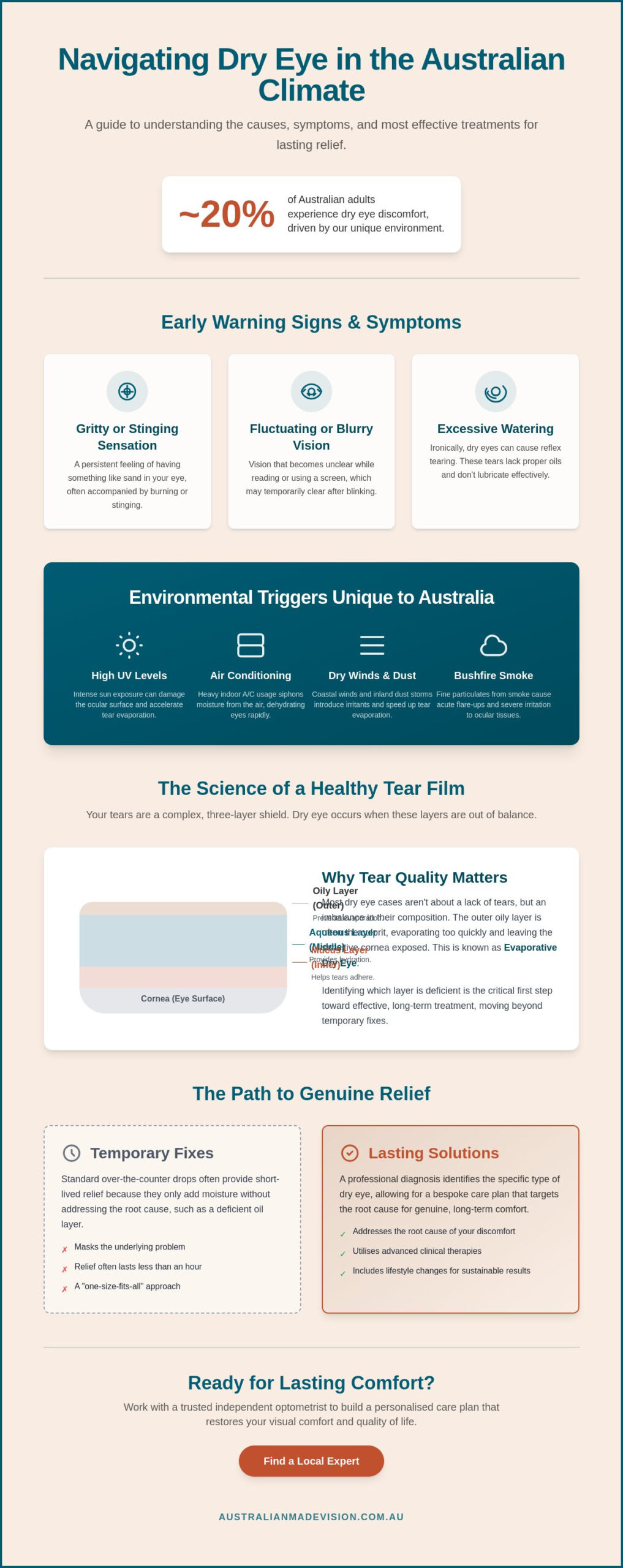
Imagine driving home along the coast at 5:00 PM, but instead of enjoying the sunset, you’re squinting through a gritty haze that feels like fine beach sand under your eyelids. You’ve likely tried every bottle on the chemist’s shelf, only to find the relief lasts less than fifteen minutes. It’s exhausting when persistent stinging disrupts your productivity at the office or makes a simple evening drive feel like a safety hazard. You aren’t alone in this struggle; clinical data from 2024 suggests that nearly 20% of Australian adults face similar discomfort due to our unique environmental challenges.
We believe you deserve a solution that addresses the root cause rather than just masking the symptoms with temporary fixes. This guide explores the most advanced dry eye treatment options available in 2026, specifically curated for the intense UV levels and dry winds we face across the country. We’ll walk you through professional clinical therapies and authentic lifestyle changes that provide genuine, lasting comfort. By the end of this article, you’ll understand how to work with a trusted local expert to build a bespoke care plan that restores your vision while supporting our local independent practitioners.
Key Takeaways
- Understand how the unique Australian climate impacts your tear film and why identifying your specific type of dry eye is the first step toward lasting relief.
- Explore a comprehensive range of clinical and home-based dry eye treatment options tailored to address the root cause of your discomfort rather than just masking symptoms.
- Discover how bespoke spectacle lenses and simple lifestyle adjustments can significantly reduce the impact of digital eye strain on your ocular health.
- Learn why the personalised care and advanced diagnostic tools found at independent Australian optometrists provide a more effective path to recovery than one-size-fits-all corporate models.
Understanding Dry Eye Syndrome in the Australian Climate
Australia’s vast landscapes and sun-drenched cities offer a beautiful lifestyle, but they also present unique challenges for our ocular health. Dry eye syndrome is a complex, multifactorial disease of the ocular surface that affects millions of people across the country. It isn’t just a minor irritation; it’s a chronic condition where your eyes either fail to produce enough tears or the quality of those tears is poor. While many people reach for over-the-counter “artificial tears,” these often act as a temporary mask for deeper issues. Effective dry eye treatment options require a more tailored approach that addresses the root cause rather than just soothing the surface for an hour.
A 2021 study published in the Journal of Clinical Medicine suggested that nearly 20 percent of the population experiences dry eye symptoms. In Australia, this prevalence is often higher due to our extreme environmental conditions. Distinguishing between a bit of occasional dryness after a long flight and chronic dry eye syndrome is vital for your long-term health. Chronic cases involve persistent inflammation and potential damage to the eye’s surface. Seeking guidance from an independent optometrist ensures you receive bespoke care that focuses on your specific ocular needs.
Common Symptoms and Early Warning Signs
Recognising the early signs can prevent long-term discomfort and protect your vision. Most people report a stinging or burning sensation, persistent redness, or a gritty “foreign body” feeling as if sand is trapped under the eyelid. This discomfort can make daily tasks feel like a struggle. Consider these common indicators:
- Watery eyes: This occurs when the brain detects dryness and signals the lacrimal glands to flood the eye with reflex tears. These tears lack the essential oils needed to stay on the eye, so they run down your face without providing relief.
- Fluctuating vision: You might notice your sight becomes blurry while reading or driving, only clearing up momentarily after a deliberate blink.
- Light sensitivity: A sudden discomfort in bright environments can signal that your tear film is no longer protecting the ocular surface.
Environmental Triggers Unique to Australia
Our local climate plays a massive role in tear film stability. High UV levels and constant coastal winds accelerate tear evaporation, leaving the ocular surface vulnerable and sore. Inside, the heavy use of air conditioning in Australian offices and homes siphons moisture from the air, contributing to rapid dehydration of the eyes. Bushfire smoke or seasonal dust storms can trigger acute flare-ups by introducing fine particulates that irritate the delicate ocular tissues. Understanding these triggers is the first step in exploring dry eye treatment options that provide more than just a quick fix for your symptoms.
The Science of Tears: Identifying Your Specific Type of Dry Eye
Tears are a sophisticated biological shield, not just simple droplets of salt water. Your tear film consists of three distinct layers that must work in perfect harmony to keep your vision clear and your eyes comfortable. The outer oily layer prevents evaporation, the middle watery layer provides hydration, and the inner mucus layer ensures tears stick to the eye surface. When one of these layers falls out of balance, you experience the stinging or grit that defines chronic dryness.
Most patients we see in Australian clinics suffer because these layers aren’t performing their specific roles. Understanding this delicate chemistry is the first step in evaluating your dry eye treatment options effectively. A professional diagnosis is vital because using generic “off-the-shelf” drops can sometimes mask the underlying problem rather than fixing it. Your health history also plays a significant role, as conditions like diabetes or thyroid issues can alter the chemical makeup of your tears.
Australian conditions often exacerbate these imbalances. Our harsh sun and heavy reliance on air conditioning in offices can strip moisture from the eye surface faster than your body can replenish it. This makes a bespoke approach to eye care essential for long term relief. By identifying the root cause, we can move away from temporary fixes toward a solution that respects the unique biology of your vision.
Evaporative Dry Eye and Meibomian Gland Dysfunction (MGD)
MGD is the leading cause of dry eye, accounting for approximately 86% of cases according to clinical research. This occurs when the tiny meibomian glands in your eyelids become blocked, preventing the essential oily layer from coating your tears. Without this oil, your tears evaporate up to 10 times faster than normal. Treatment for MGD often involves heat-based clinical therapies designed to clear these blockages and restore your eye’s natural protection.
Aqueous Deficient Dry Eye
This type occurs when your lacrimal glands fail to produce enough watery fluid to keep the eye moist. It’s frequently linked to the natural ageing process or side effects from common medications like antihistamines and blood pressure tablets. In some instances, it may signal an underlying systemic condition such as Sjögren’s syndrome, which requires a coordinated care approach. Identifying this deficiency early allows for more targeted strategies to support your eye’s hydration.
Finding the right solution starts with a conversation with a master of their craft. You can find an independent optometrist who takes the time to provide a bespoke assessment of your tear quality and eye health.
Comparing Dry Eye Treatment Options: From Drops to Procedures
Selecting the right dry eye treatment options requires more than a quick trip to the local chemist. Every eye is unique. The best path forward depends entirely on your specific symptoms and causes of dry eyes, whether that involves a lack of oil or insufficient water in your tears. While generic eye drops might provide a momentary soothe, they rarely address the underlying inflammation or gland dysfunction. Many standard chemist products contain preservatives like benzalkonium chloride. These chemicals can actually irritate the ocular surface if used more than four times a day. We always recommend choosing preservative-free formulations to protect your long-term eye health and ensure the delicate balance of your tear film remains intact.
Clinical Procedures for Moderate to Severe Cases
For chronic discomfort, independent optometrists offer specialised procedures that go beyond what you can do at home. Punctal plugs are tiny, biocompatible devices inserted into the tear ducts. They act like a stopper in a sink, keeping your natural tears on the eye surface for longer. If your dry eye stems from Meibomian Gland Dysfunction (MGD), Intense Pulsed Light (IPL) therapy is a breakthrough. This treatment uses gentle light pulses to reduce inflammation and liquefy hardened oils in the glands. Your practitioner might also prescribe medicated anti-inflammatory drops to calm the eye surface, a step often necessary before other treatments become effective. Finding a local expert through a directory of independent optometrists ensures you receive this level of bespoke clinical care tailored to your heritage and lifestyle.
At-Home Management Strategies
Effective care continues between clinic visits. Daily lid hygiene is essential for maintaining the lash line and preventing debris from clogging oil glands. Using a warm compress for 10 minutes each night helps soften oils, making them flow more easily. Diet also plays a role in your overall dry eye treatment options. Research indicates that high-quality Omega-3 fatty acid supplements can improve the quality of the oil layer in your tears. If you spend your workday in front of a screen, follow this simple “blink break” checklist to keep your eyes hydrated:
- Set a timer for every 20 minutes of digital screen time.
- Look at an object at least 6 metres away for 20 seconds.
- Perform five slow, deliberate blinks to fully redistribute your tear film.
- Ensure your monitor is positioned slightly below eye level to reduce the eye’s exposed surface area.
This proactive approach reflects the high-quality craftsmanship we value in Australian eyecare. It’s about taking the time to get the small details right. By combining professional clinical intervention with disciplined home habits, you can achieve lasting relief that supports both your vision and your connection to the community.
Lifestyle Adjustments and Lens Technologies for Lasting Relief
Managing ocular comfort involves more than just drops; it requires a look at how we interact with our environment. Digital eye strain is a primary driver of modern discomfort. Research from 2023 indicates that Australians spend an average of 5.5 hours on screens daily. When we focus on digital devices, our blink rate can plummet from 15 times per minute to just 5 or 6. This lack of movement prevents the meibomian glands from releasing essential oils, leading to rapid tear evaporation. Integrating environmental changes, like using a humidifier in air-conditioned offices or positioning your monitor slightly below eye level, forms a vital part of effective dry eye treatment options.
Choosing high-quality, locally crafted spectacle lenses can significantly reduce the physiological burden on your eyes. Our Australian-made precision lenses are designed to provide the sharpest possible focus, which prevents the ciliary muscle from overworking. When your eyes don’t have to struggle to resolve an image, they remain more relaxed. This relaxation encourages a more natural, frequent blink pattern. Supporting local manufacturing ensures you receive a bespoke product tailored to your specific visual needs and environmental conditions.
The Role of Anti-Reflective and Blue Light Coatings
Glare from overhead lighting and digital screens often leads to squinting, which physically restricts the tear film from spreading across the eye. Advanced anti-reflective coatings eliminate these distracting reflections, allowing the eyes to stay open and relaxed. For heavy screen users, blue light filtering helps improve visual contrast and reduces the “dazzle” effect that causes fatigue. You can learn more about how these factors influence your ocular health in The Human Eye guide.
Bespoke Lens Solutions for Dry Eye Sufferers
Specialised occupational lenses are a game-changer for mid-distance work, as they provide a wide, clear field of view for monitors without the head-tilting required by standard multifocals. This ergonomic benefit reduces physical strain and keeps the eyes in a more comfortable position. An accurate, up-to-date prescription is essential to prevent “over-focusing” strain that dries the ocular surface. Additionally, wrap-around sunglasses are a practical choice for the Australian climate, as they create a physical barrier against wind and dust that would otherwise strip away the delicate tear film outdoors.
Why Personalised Care at an Independent Optometrist Makes the Difference
Independent practices operate differently than high-volume retail chains. They often provide 30 to 45 minutes for a standard consultation, which is nearly double the time found in many corporate settings. This extra time allows for a deep dive into your lifestyle and symptoms. It ensures that the dry eye treatment options recommended for you aren’t just generic suggestions, but precise medical interventions tailored to your biology. You aren’t just a booking in a system; you’re a patient with a unique ocular profile that deserves focused attention.
These clinics aren’t bound by restrictive corporate product lists. This freedom allows your optometrist to source the most advanced lubricants, heat masks, and specialised in-office therapies available in 2026. They act as a long-term partner in your eye health, tracking the progression of your condition over years rather than minutes. This continuity is vital for managing chronic issues, as your practitioner remembers what worked for you last summer and what needs adjusting for the winter months ahead.
The Advantage of a Comprehensive Eye Exam
A thorough assessment is the foundation of lasting relief. Independent practitioners often invest in high-resolution Meibography to capture detailed images of your oil glands. This technology identifies atrophy before it becomes irreversible. They also use clinical dyes like fluorescein to map tear film stability and identify dry patches on the cornea with absolute precision. You can learn more about identifying these high-standard clinics in our guide on Choosing the Right Optometrist.
Managing a chronic condition requires more than a one-off visit. Because independent optometrists own their practices, they have a personal stake in your outcomes. They provide a stable point of contact for your eye care journey, ensuring that your history isn’t lost between rotating staff members. This relationship allows for proactive adjustments to your management plan, preventing flare-ups before they disrupt your daily life.
Supporting Local Australian Manufacturing
Choosing an independent practice often opens the door to bespoke, Australian-made lens technology. These lenses are crafted in local laboratories with a level of precision that mass-produced imports rarely match. For dry eye sufferers, specific lens coatings and moisture-retaining materials can make a significant difference in daily comfort. Supporting local manufacturing means you’re receiving a product designed for the unique UV and environmental conditions of the Australian climate.
Beyond the clinical benefits, your choice strengthens the local community. Every visit to an independent clinic helps maintain high-skilled jobs and keeps the Australian optometry industry vibrant and competitive. It’s a choice that reflects a commitment to quality, heritage, and ethical care. If you’re ready to explore professional dry eye treatment options with a practitioner who truly takes the time to listen, use our directory to find a local expert in your area today.
Securing Long-Term Comfort for Your Eyes
Finding the right path to relief starts with understanding that your eyes are as unique as your fingerprint. Recent 2024 reports from the Bureau of Meteorology show increasing dry conditions across Australia, which directly impacts tear stability and ocular comfort. You’ve now seen how effective dry eye treatment options range from advanced clinical procedures to high-quality, locally crafted lens technologies designed for our specific climate.
Choosing an independent optometrist ensures your care is rooted in clinical expertise rather than corporate sales targets. These local experts provide bespoke assessments that address the root cause of your symptoms while supporting high-quality, Australian-made lens manufacturing. By visiting a local practice, you’re investing in a community-focused approach that prioritises your long-term health and sustains our national craft.
Don’t let persistent irritation dictate your daily life. Your journey toward lasting clarity and comfort begins with a professional, tailored consultation. Find an independent Australian optometrist for a personalised dry eye assessment and experience the difference of care that’s truly home-grown.
Take the first step today toward clearer vision and join a community that values precision, local heritage, and your long-term wellbeing.
Frequently Asked Questions
Can dry eyes be cured permanently?
Dry eye syndrome is typically a chronic condition that doesn’t have a singular permanent cure, but you can manage it effectively with the right dry eye treatment options. Most patients find long-term relief through a combination of in-office therapies and bespoke home care routines. According to the TFOS DEWS II report from 2017, successful management focuses on restoring the balance of your tear film rather than a one-time fix.
Are expensive eye drops better than cheap ones?
Higher-priced eye drops often provide better value because they typically exclude harsh preservatives like benzalkonium chloride, which can damage the ocular surface over time. While basic saline drops might cost less at an Australian chemist, advanced lipid-based formulations are engineered to mimic your natural tears. Independent optometrists often recommend these premium, preservative-free options to ensure your eyes remain healthy and comfortable without long-term irritation.
How does screen time affect dry eye syndrome?
Extended screen time significantly impacts your eye health because your blink rate drops by 66 percent when focusing on digital devices. This reduced blinking leads to faster tear evaporation and increased discomfort. We recommend following the 20-20-20 rule, which involves looking at something 20 feet away for 20 seconds every 20 minutes to help reset your tear film and maintain moisture.
Can I wear contact lenses if I have dry eyes?
You can still wear contact lenses if you have dry eyes, provided you choose the right materials and replacement schedules. Modern daily disposable lenses or specialised scleral lenses are designed specifically for sensitive eyes to maintain hydration. An independent Australian optometrist can provide a bespoke fitting to ensure your lenses don’t compromise your comfort or eye health while offering you a broader range of choices than corporate chains.
Is dry eye a sign of a more serious health problem?
Persistent dry eye can sometimes indicate underlying systemic conditions such as Sjogren’s syndrome, rheumatoid arthritis, or lupus. Research indicates that approximately 1 in 10 patients with severe dry eye may have an undiagnosed autoimmune disorder. It’s vital to seek a comprehensive exam from a local expert who takes the time to look at your overall health history and provides tailored recommendations for your specific situation.
What is the best vitamins for dry eyes?
Omega-3 fatty acids, specifically EPA and DHA found in high-quality fish oil, are the most effective supplements for managing dry eye symptoms. A 2018 study published in the journal Ocular Surface showed that consistent intake of these nutrients improves the quality of the oil produced by your meibomian glands. Always consult with your optometrist to determine the correct dosage for your specific needs and to ensure it doesn’t interfere with other medications.
How often should I use artificial tears?
You should use preservative-free artificial tears four times a day if you have moderate symptoms, though some patients require more frequent application. If you find yourself needing drops more than six times daily, it’s a sign you need more advanced dry eye treatment options beyond basic lubrication. Overusing drops containing preservatives can actually worsen inflammation, so choosing the right local product is essential for your comfort.
Can laser eye surgery cause chronic dry eye?
Laser eye surgery like LASIK can cause temporary dry eye symptoms in up to 95 percent of patients immediately after the procedure. While most people recover within 6 to 12 months, a small percentage may develop chronic issues. This is why thorough pre-operative screening by an independent professional is crucial to ensure your tear film is healthy enough for the procedure and to discuss all available choices for your vision.
Disclaimer
The information in this article is provided for general educational purposes only and should not be considered medical advice. For personalised advice regarding your vision or eye health, please consult a qualified optometrist.
Australian Made Vision is an independent directory that helps patients find optometrists across Australia who may offer Australian-made spectacle lenses. We do not provide clinical services and recommend contacting practices directly to confirm the products and services they offer.