
A cataract is a clouding of the eye’s normally clear natural lens. Cataracts usually develop gradually and may affect one eye or both eyes. As the lens becomes cloudier, vision can look blurred, foggy or less detailed, and bright lights may become harder to manage.
An eye examination can identify signs of cataract and check whether another condition may be contributing to the change in vision. In the early stages, an updated prescription, better lighting or glare management may help. When a cataract begins to interfere with everyday activities, referral to an ophthalmologist and a discussion about surgery may be appropriate.
Sudden vision loss, any new sudden vision problem, flashes of light, a sudden increase or change in floaters, or a shadow or dark curtain in your vision are not typical gradual cataract symptoms. Go to the nearest emergency department or call triple zero (000) for an ambulance. These symptoms may be caused by retinal detachment or another eye emergency.
What are cataracts?
The natural lens sits behind the coloured part of the eye, called the iris. It helps focus light onto the retina at the back of the eye so the brain can form a clear image. A cataract develops when the lens becomes cloudy and less light passes through it clearly.
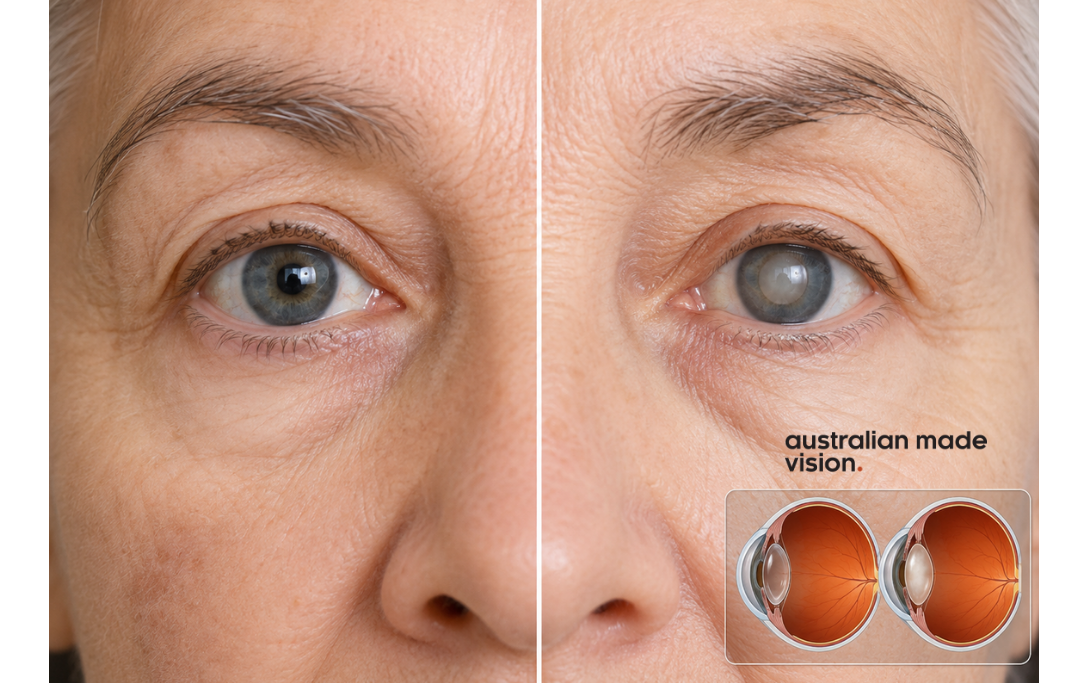
Cataracts are more common with ageing, but they can also occur in younger adults. They may develop in one eye or both eyes, and each eye can change at a different rate. Early cataracts may cause little or no noticeable difficulty. Changes can become more apparent as the clouding increases.

Visual simulation only. Cataract symptoms and severity can vary between people.
Cataracts are generally not painful. Eye pain, a very red eye, or a sudden change in vision may have another cause and should not be assumed to be a cataract.
Find Eye Care That Suits Your Needs
Search for an independent optometrist near you and find a local practice that suits your specific eye care needs.
Find an OptometristCommon cataract symptoms and their effect on daily life
Cataract symptoms are usually gradual. They can vary between people and between the two eyes. The symptoms below can also occur with other eye conditions, so an eye examination is needed to identify the cause.
Cloudy, blurred, or foggy vision
Vision may become less sharp or seem as though you are looking through a fogged window. Reading small print, recognising faces or seeing fine detail may become more difficult. A prescription change may improve clarity for a time, but glasses do not remove a cataract.
Glare, halos, and sensitivity to bright light
Bright sunlight, indoor lighting or oncoming headlights may create more glare than before. Some people notice rings or halos around lights. These changes can make night driving or moving between bright and dim environments more difficult.
Trouble seeing at night or in dim light
Reduced contrast and increased glare can make it harder to see in low light. Tasks such as walking through a dim room, reading in soft lighting or driving after dark may require more effort. Anyone concerned about their ability to drive safely should discuss this with an eye-care professional and follow the relevant licensing requirements.
Changes in colour, contrast, or detail
Colours may look faded, dull or more yellow than before. It may also become harder to distinguish objects from a similar-coloured background or see subtle detail.
Frequent glasses prescription changes
A changing lens can alter the eye’s focusing power, so the glasses prescription may change more often. This is not specific to cataracts. Other eye or general health factors can also affect vision, which is why repeated prescription changes should be assessed rather than self-diagnosed.
What causes cataracts and who may be at higher risk?
Most cataracts develop as part of the ageing process. Changes within the lens can cause its normally clear proteins and structure to become cloudy over time. Age alone does not predict how quickly a cataract will progress or how much it will affect a person’s daily life.
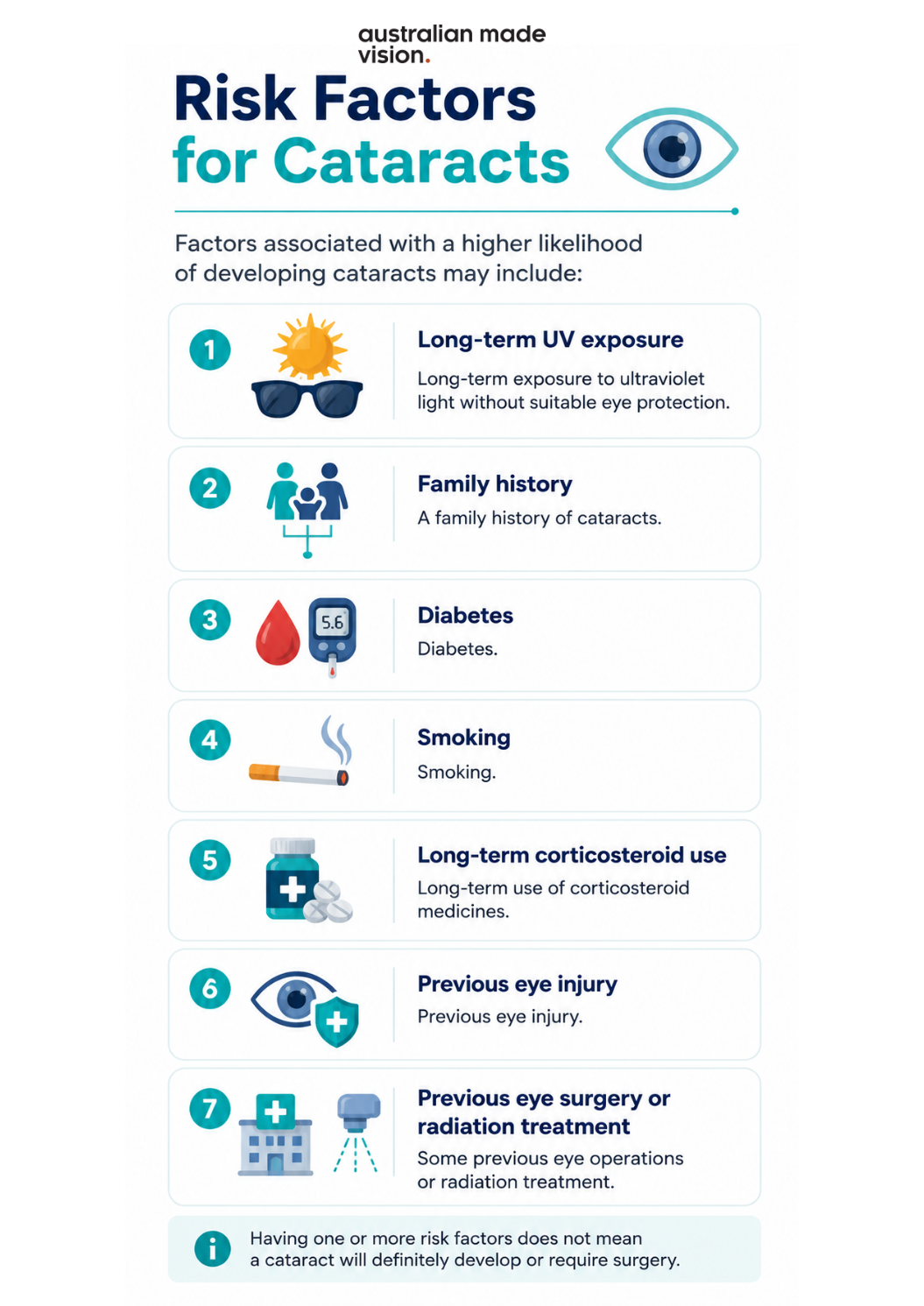
Factors associated with a higher likelihood of developing cataracts include:
- Long-term exposure to ultraviolet light without suitable eye protection
- A family history of cataracts
- Diabetes
- Smoking
- Long-term use of corticosteroid medicines
- Previous eye injury
- Some previous eye operations
- Radiation treatment
Having one or more risk factors does not mean a cataract will definitely develop or require surgery. Cataracts can also be present at birth or develop during childhood, but paediatric cataracts need a separate assessment and are outside the main scope of this adult guide.
Find Eye Care That Suits Your Needs
Search for an independent optometrist near you and find a local practice that suits your specific eye care needs.
Find an OptometristIs Your Eye
Health on Track?
Complete our free 18-point checklist to check your eye health, spot any gaps, and take charge of your vision.
Start Free Checklist Test →How are cataracts assessed?
An optometrist, GP. or ophthalmologist may be a first point of contact for a person with changing vision. The exact examination can vary, but cataract assessment usually considers both what the eye looks like and how the vision change affects everyday activities.
Discussion of symptoms and daily tasks
The clinician may ask when the change began, whether one or both eyes are affected, and whether glare, reading, work, mobility. or driving has become more difficult. This information matters because the presence of a cataract alone does not determine whether surgery is needed.
Vision and eye examination
The examination may include checking visual acuity, which measures how clearly you can see letters or symbols at a set distance. The front of the eye and the lens may be examined with a slit lamp, a microscope that provides a magnified view of eye structures. Other checks may be included to assess the overall health of the eyes and rule out other possible causes of reduced vision.
Monitoring and referral
An optometrist may detect signs of cataract, monitor changes, and discuss practical support. A GP may contribute information about other health conditions or medicines. When specialist assessment is appropriate, an optometrist or doctor may refer the person to an ophthalmologist, a medical specialist who assesses and performs cataract surgery.
Referral requirements can differ between services. A detailed referral may include eye-test results, information about how vision affects daily life, and relevant medical history.
What may help before cataract surgery is needed?
Not every cataract needs surgery when it is first detected. When symptoms are mild and daily activities are not significantly affected, monitoring and practical changes may be suitable.
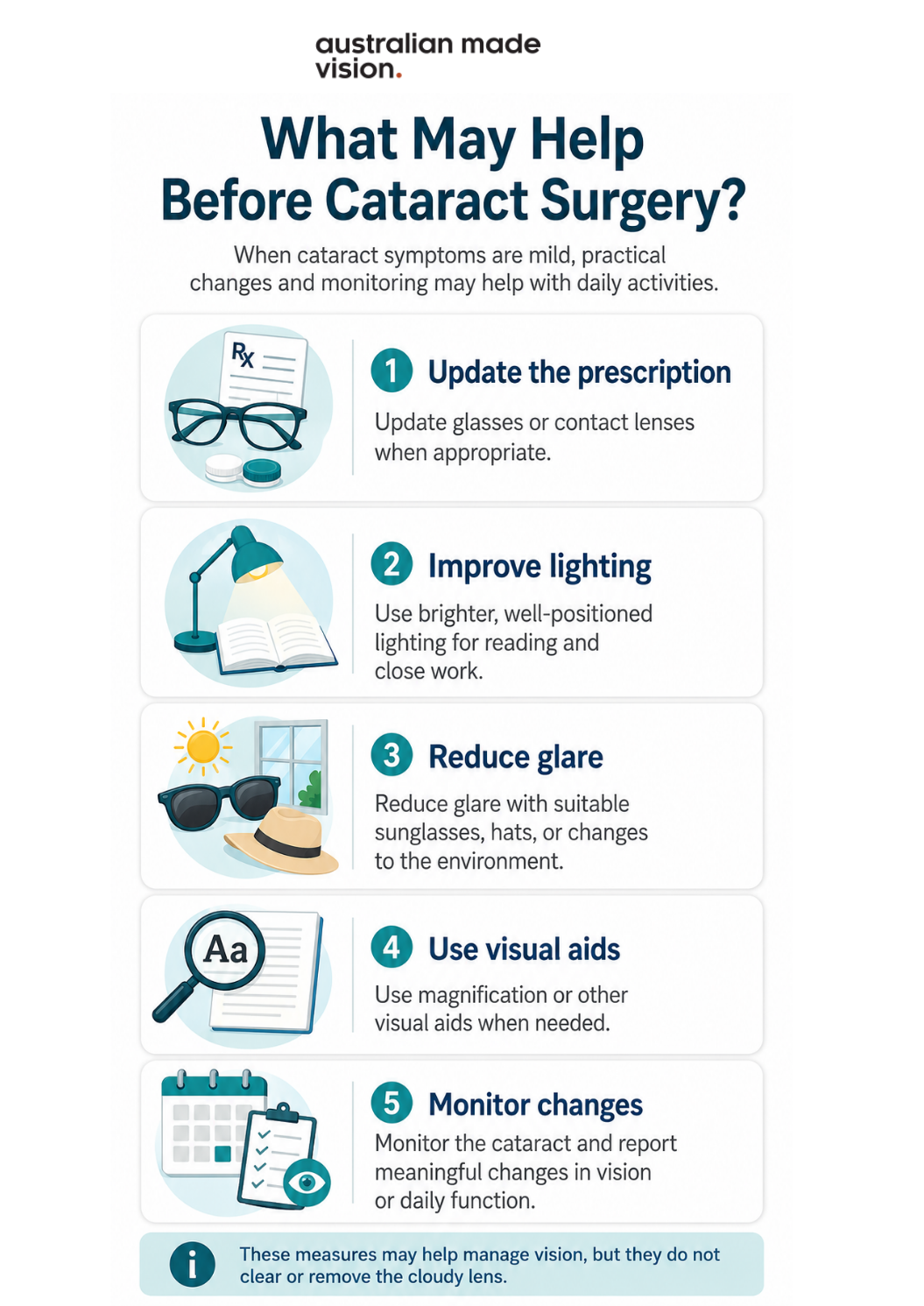
Options that may help include:
- Updating the glasses or contact-lens prescription when appropriate
- Using brighter, well-positioned lighting for reading and close work
- Reducing glare with suitable sunglasses, hats, or changes to the environment
- Using magnification or other visual aids when needed
- Monitoring the cataract and reporting meaningful changes in vision or daily function
These measures may improve how a person manages their vision, but they do not clear or remove the cloudy lens. The appropriate approach depends on examination findings, symptoms, and personal circumstances.
Find Eye Care That Suits Your Needs
Search for an independent optometrist near you and find a local practice that suits your specific eye care needs.
Find an OptometristWhen might cataract surgery be discussed?
Cataract surgery may be considered when reduced vision, glare or poor contrast interferes with usual activities such as reading, working, driving, moving around safely, or living independently. There is no single level of blur that makes surgery necessary for everyone.
The Australian Cataract Clinical Care Standard states that the presence of a cataract alone is not an indication for surgery. The decision should consider how the person’s vision affects daily life, other eye or medical conditions, the expected benefits, possible harms, and the person’s preferences.
If surgery is being considered, an ophthalmologist assesses whether it is suitable and discusses the available options. At a high level, cataract surgery removes the cloudy natural lens and replaces it with an artificial intraocular lens. The timing and likely benefit vary from person to person, so individual advice must follow a specialist examination.
When should you arrange an eye test?
Arrange an eye examination as soon as practical if you notice persistent or gradual changes such as cloudy vision, increasing glare, difficulty seeing at night, faded colours, or repeated prescription changes. You do not need to wait until the change becomes severe or until a routine appointment is due.
An examination can help determine whether cataract, a prescription change or another eye condition may be involved. It can also clarify whether monitoring, practical support or referral should be discussed.
Questions to ask a practice or optometrist
Services and examination processes vary between practices. Before or during an appointment, useful questions may include:
- Does the practice assess and monitor cataracts?
- What may be included in the eye examination, and is any preparation needed?
- How should I explain changes in glare, reading, driving or other daily activities?
- When might referral to an ophthalmologist be considered?
- What follow-up may be recommended if surgery is not needed now?
- Which appointment fees, tests and services should I confirm directly with the practice?
A practical next step
If gradual vision changes are persistent or affecting daily activities, an eye examination can help identify the cause and whether monitoring or referral may be appropriate. You can read what to expect during an eye check, then use the Australian Made Vision directory to compare participating independent optometry practices.
Australian Made Vision publishes general eye-health information and provides a directory. Appointments, examinations, referrals and clinical care are provided by the individual practice and clinicians. Confirm available services, fees, and booking details directly with the practice.
Find Eye Care That Suits Your Needs
Search for an independent optometrist near you and find a local practice that suits your specific eye care needs.
Find an OptometristFrequently asked questions about cataracts
Can cataracts be reversed without surgery?
No non-surgical option clears the cloudy natural lens. An updated prescription, improved lighting, or visual aids may help a person function more comfortably in the early stages. Surgery is the option that removes the cataract.
How quickly do cataracts progress?
Progression varies. A cataract may change slowly, and the rate can differ between the two eyes. It is difficult to predict an exact timeline for an individual, so changes in symptoms and daily function are more useful than a fixed schedule.
Do all cataracts need surgery?
No. A cataract that does not cause meaningful symptoms or limit daily activities may be monitored. Surgery may be discussed when the visual effect becomes significant and the expected benefits are appropriate for the person’s circumstances.
Can cataracts affect one eye or both eyes?
Cataracts are generally not painful. Eye pain, marked redness, or a sudden vision change should be assessed for other possible causes. Sudden loss of vision, flashes, new floaters, or a curtain-like shadow need emergency care.
Do cataracts cause pain?
If gradual vision changes are persistent or affecting daily activities, an eye examination can help identify the cause and whether monitoring or referral may be appropriate. You can read what to expect during an eye check, then use the Australian Made Vision directory to compare participating independent optometry practices.
Australian Made Vision publishes general eye-health information and provides a directory. Appointments, examinations, referrals and clinical care are provided by the individual practice and clinicians. Confirm available services, fees, and booking details directly with the practice.
Can cataracts affect night driving?
They can. Glare from headlights, halos around lights, and reduced vision in dim conditions may make night driving more difficult. An eye examination can assess the cause and help determine the next step. This page does not provide individual fitness-to-drive advice.
Australian Made Vision is an independent directory that helps patients find optometrists across Australia who may offer Australian-made spectacle lenses. We do not provide clinical services and recommend contacting practices directly to confirm the products and services they offer.