
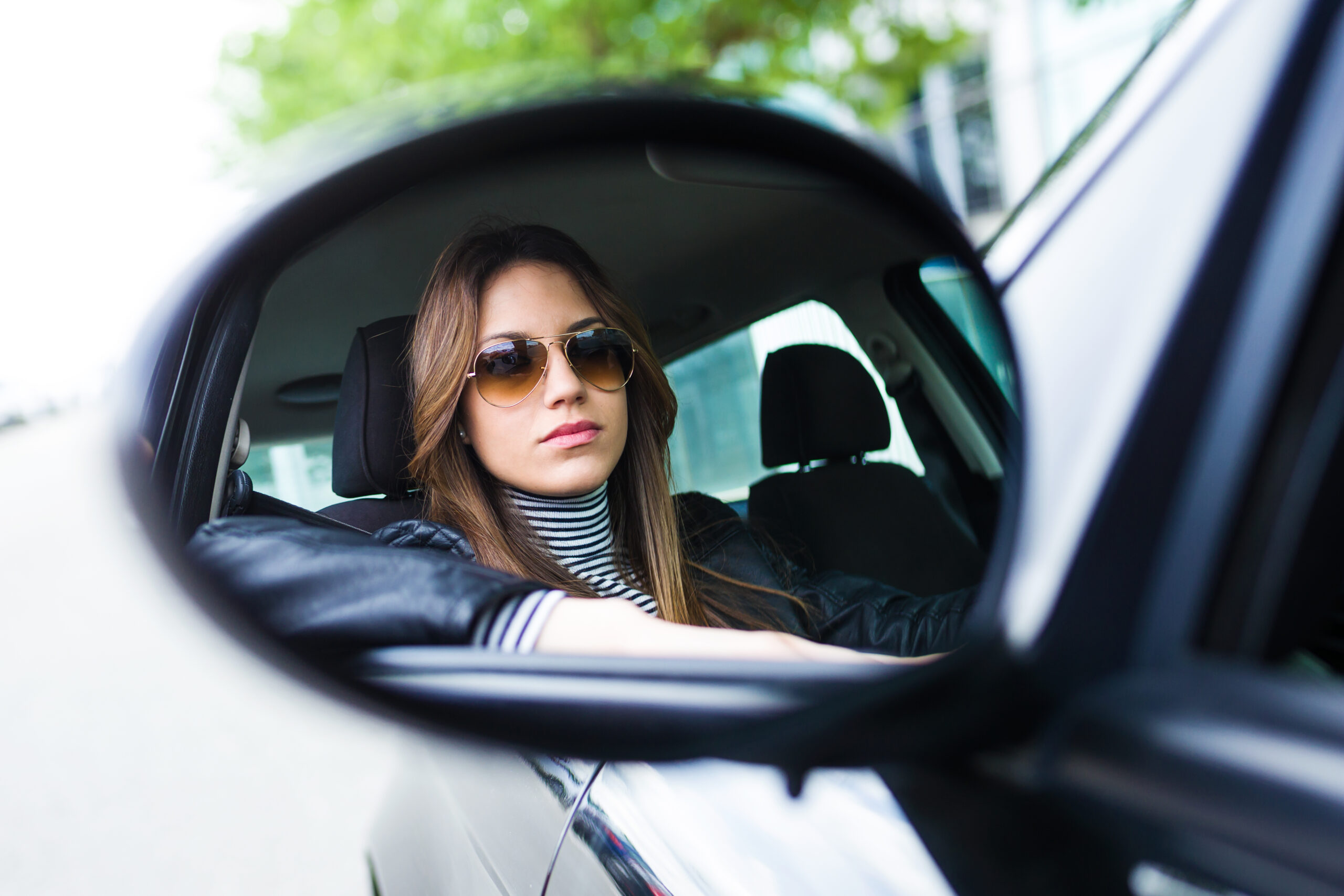
Last Friday, Sarah was driving home along the coast at 4:30 PM when the afternoon sun hit the wet road, creating a whiteout that completely hid the car in front of her. This split second of blindness is a terrifying reality for many Australian motorists who rely on standard sunglasses that can’t handle intense reflections. We agree that no one should feel unsafe or suffer from eye strain and fatigue while simply trying to get from A to B. It’s why we’re so passionate about precision-crafted eyewear that’s built for our unique environment.
Discover how the benefits of polarised lenses for driving can eliminate 99% of reflected glare and provide you with the sharpest possible vision on the road. We’ll explain how this technology works to protect your eye health and why it’s a vital tool for any long-distance road trip. We will also look at the advantage of choosing bespoke, Australian-made lenses through an independent optometrist to ensure your vision is tailored to your lifestyle.
Key Takeaways
- Learn how advanced vertical light filtration acts like a “Venetian blind” for your eyes, effectively blocking the dangerous horizontal glare reflected off Australian roads.
- Discover the critical benefits of polarised lenses for driving, such as faster reaction times and the ability to see clearly through surface reflections and road haze.
- Find out how to protect your vision from long-term fatigue by eliminating the “squint reflex” and preventing the headaches often caused by harsh sunlight.
- Understand the professional advantage of choosing bespoke, Australian-made lenses that offer superior precision while supporting our local industry and craftsmanship.
Understanding the Science: How Polarised Lenses Work for Drivers
Driving on Australian roads requires more than just a dark pair of spectacles. We’ve all experienced that moment when the afternoon sun hits the bonnet or a wet road surface, creating a blinding flash. This is where the benefits of polarised lenses for driving become a vital safety feature. While standard tinted lenses simply dim your entire field of vision, polarised technology acts as a sophisticated light filter designed for precision and comfort.
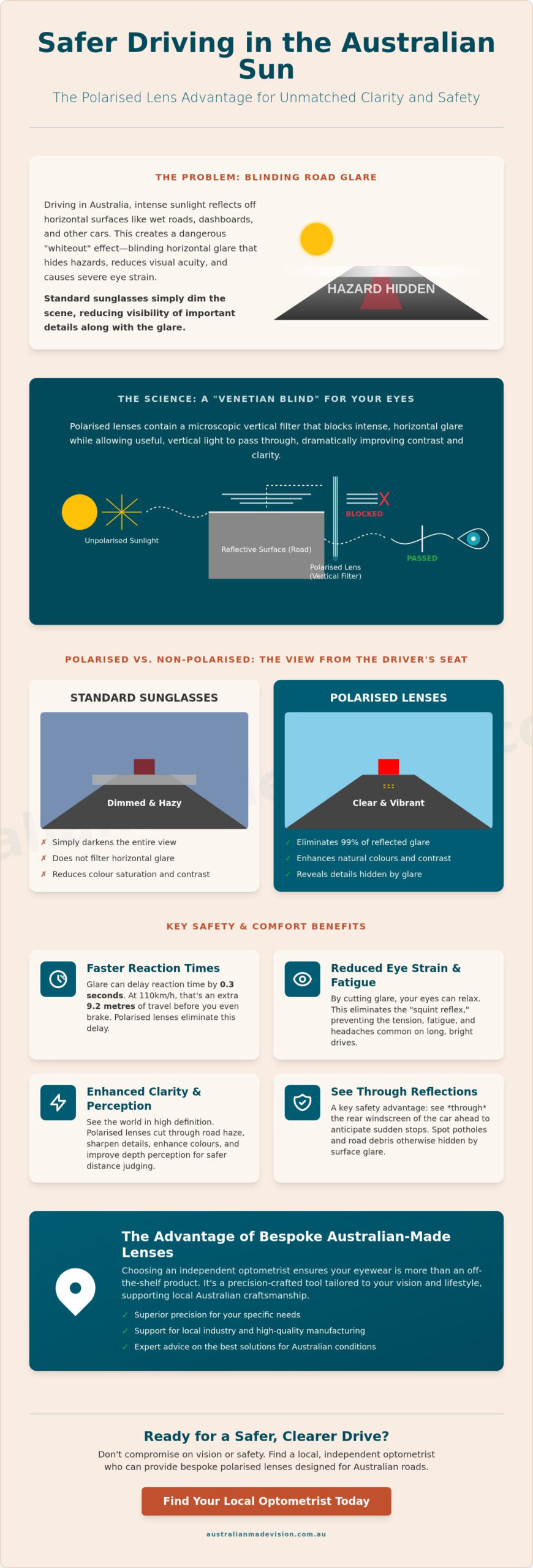
To understand the technology, it helps to look at How Polarised Lenses Work. Light waves from the sun travel in every direction. However, when these waves strike a flat, horizontal surface, they reflect back as concentrated horizontal light. This specific type of light is what we recognise as glare. Polarised lenses contain a special chemical filter applied in a vertical orientation, much like the slats of a Venetian blind.
The Problem with Horizontal Glare
When light bounces off the road, it creates intense white-out spots that can hide hazards. This horizontal glare reduces your visual acuity, making it harder to recognise objects or judge distances accurately. Standard sunglasses treat all light equally, which means they dim the glare but also dim the important details you need to see. Independent optometrists, like those found in our directory of local practices, focus on these technical differences to ensure your vision remains sharp and safe.
Light Transmission and Visual Clarity
By blocking horizontal waves, polarised filters allow only useful vertical light to reach your eyes. This process dramatically improves contrast and colour saturation for the driver. You’ll find that the landscape looks more vivid, as the haze of reflected light is stripped away. It’s a level of clarity that off-the-shelf corporate options rarely match, reflecting the high-quality craftsmanship we value in Australian eyecare. Polarisation is a microscopic vertical grid that neutralises reflected glare.
- Reduces eye strain during long drives on the highway.
- Improves reaction times by removing visual noise from the road surface.
- Enhances the natural colours of the Australian landscape for a more comfortable experience.
- Provides a level of visual precision that standard tints cannot achieve.
Choosing the right lens is about more than just style; it’s about the local expertise that goes into every bespoke pair of glasses. When you visit an independent practice, you aren’t just a customer in a queue. You’re a member of the community receiving tailored advice on how to protect your vision while supporting local industry and high-quality manufacturing standards.
Key Safety Benefits of Polarised Lenses for Driving
Driving on Australian roads demands constant vigilance. One of the primary benefits of polarised lenses for driving is the immediate reduction in visual interference that leads to mental fatigue. By filtering out horizontal light waves, these lenses allow your brain to process visual information faster. Research indicates that glare can delay a driver’s reaction time by up to 0.3 seconds. While that sounds small, at a speed of 110km/h on the M1, that equates to an extra 9.2 metres of travel before you even hit the brakes.
- Faster reaction times: Eliminating the “white-out” effect of glare allows for quicker identification of brake lights and indicators.
- Cutting through road haze: On hot days, heat shimmer on the bitumen can obscure distant objects; polarised filters sharpen these edges.
- Managing sun dazzle: During the “golden hour” at sunrise and sunset, the low sun angle often blinds drivers. Polarised lenses reduce this intensity without making the overall environment too dark.
- Enhanced depth perception: By increasing contrast, these lenses help you better judge the distance between your car and others, especially in the flat light of an overcast afternoon.
Choosing the right eyewear isn’t just about style; it’s about the precision of your vision. Finding an independent optometrist through our directory ensures you receive bespoke advice tailored to your specific driving habits and local conditions.
Reducing Blinding Reflections from Other Vehicles
Modern cars feature an abundance of reflective surfaces like chrome trim, polished alloys, and steeply angled rear windows. In heavy traffic, these surfaces bounce sunlight directly into your eyes, creating “hot spots” that can mask the car’s actual position. Polarised lenses neutralise these reflections instantly. A significant safety advantage is the ability to see through the rear windscreen of the vehicle ahead. This allows you to spot the brake lights of the car two or three positions in front, giving you vital extra seconds to react to sudden stops.
Wet Road Safety and Visibility
Rain can make road surfaces highly reflective, reducing contrast and making lane markings or surface details harder to see. Polarised lenses are designed to reduce this reflected glare, which may provide a clearer and more comfortable view in bright, wet conditions. They can also make puddles, road markings and changes in the road surface easier to notice. However, polarised lenses do not improve tyre grip or prevent hydroplaning, so drivers should still reduce their speed and allow extra stopping distance when roads are wet.
Protecting Your Vision: Comfort and Long-Term Health
Driving across our vast landscapes often means facing harsh, horizontal glare that bounces off the bitumen and car bonnets. This isn’t just a minor nuisance; it’s a physiological challenge for your body. When intense light hits your eyes, it triggers the “squint reflex,” a natural but taxing response. Your facial muscles tighten and your pupils constrict rapidly to compensate for the sudden brightness. Over a long commute, this constant muscular adjustment leads to physical exhaustion and those all-too-familiar glare-induced headaches.
One of the primary benefits of polarised lenses for driving is the immediate physiological relief they provide. By filtering out the scattered light that causes “noise” in your vision, these lenses allow your ocular muscles to remain in a natural, relaxed state. This is especially life-changing for individuals living with photophobia or general light sensitivity. Instead of battling the environment, your eyes can simply observe it. This sense of visual comfort is a hallmark of high-quality, bespoke eyewear crafted with the Australian sun in mind.
Combating Eye Fatigue on Long Australian Drives
Visual fatigue happens because your brain works overtime to “clean up” messy, high-contrast images. When you’re driving into a low afternoon sun on the Pacific Highway, your visual cortex struggles to distinguish between the road surface and the shimmering heat haze. Polarised filters act as a sophisticated pre-processor for your brain. They remove the visual clutter before it even reaches your retina. This clarity ensures you stay alert for longer periods.
When your eyes don’t have to work as hard, your overall fatigue levels drop. Data from road safety studies often links visual comfort to improved reaction times. By choosing lenses that prioritise clarity, you’re making a proactive choice for your safety and the safety of your community. Our local independent optometrists focus on these technical details because they understand that a millimetre of precision in lens alignment can make the difference between a strained drive and a comfortable one.
Long-Term UV Protection and Eye Health
We often focus on the immediate view, but your long-term health is our greatest priority. In Australia, our UV levels are consistently high, frequently reaching “extreme” ratings on the Bureau of Meteorology index. Prolonged exposure is a leading contributor to serious conditions like cataracts and macular degeneration. It’s vital to understand that polarisation and UV protection are two different technologies. While polarisation handles the glare, a high-quality lens must also provide 100% UV protection to shield the delicate internal structures of your eye.
Choosing Australian-made lenses ensures your eyewear meets our rigorous national standards for sun safety. It’s about more than just dark glass; it’s about authentic, locally crafted protection that stands up to our unique climate. For a deeper look at how light affects your biology and how to maintain your sight, explore this comprehensive guide to vision health. Investing in the right technology today protects the heritage of your vision for decades to come.
Polarised vs. Non-Polarised: Making the Right Choice for the Road
Choosing between these two lens types isn’t just about cost. It’s about how your eyes process the harsh Australian light. Standard tinted lenses act like a dimmer switch by making everything in your field of vision darker. Polarised lenses act like a sophisticated filter, specifically targeting the horizontal light waves that cause blinding glare. This distinction is one of the primary benefits of polarised lenses for driving, especially when the midday sun hits the bitumen on a long highway stretch.
During the peak of the day, the sun sits directly overhead, creating intense reflections off car bonnets and white vehicles. At twilight, the light hits at a low angle, often bouncing directly into your eyes from side mirrors or wet surfaces after a summer storm. Polarised lenses excel in both scenarios by maintaining a level of contrast that standard tints simply can’t match. This clarity helps you spot hazards, like a kangaroo in the scrub or a cyclist in the shadows, much faster than you would with basic sunglasses.
The Digital Dashboard Consideration
A common concern involves reading LCD or LED screens while wearing polarised filters. While older digital displays sometimes appeared dark or distorted, 2026 vehicle technology has largely solved this issue. Most modern car manufacturers now use screen layers that are compatible with polarisation. It’s still a good idea to test your specific vehicle. We suggest taking your frames out to your car during a consultation with your local expert to ensure every dial and map is perfectly visible.
When Non-Polarised Might Be Preferred
There are rare, niche scenarios where a standard tint is actually better. If you’re driving in the Snowy Mountains during winter, seeing the “glint” of black ice is a vital safety cue. Polarised lenses might move that reflection, making the road look dry when it’s actually frozen. Similarly, certain pilots or operators of heavy industrial machinery require non-polarised lenses to view specific cockpit instruments. For 95% of Australian road users, however, the comfort and safety of polarised lenses make them the superior choice for daily travel.
Beyond the steering wheel, these lenses offer incredible versatility for the Australian lifestyle. Whether you’re fishing on the Murray River or spending a Saturday at the local cricket, the same technology that protects you on the road provides crystal-clear vision by the water. Investing in a bespoke, locally crafted pair ensures you aren’t just buying a fashion accessory, but a precision tool for your eye health.
- Choose polarised if you drive more than 30 minutes during daylight hours.
- Choose polarised if you suffer from eye fatigue or headaches after long trips.
- Choose non-polarised only if your professional equipment specifically forbids them.
Ready to experience the difference that precision-crafted lenses can make for your daily commute? Find an independent optometrist near you to discuss the best polarised options for your vision needs.
The Advantage of Bespoke Australian-Made Lenses
Some independent optometry practices offer Australian-made lenses for people who prefer locally manufactured eyewear and access to locally based support. Available lens designs, coatings and manufacturing processes can vary between suppliers, so it is worth asking the practice where the lenses are made and which options suit your prescription.
For driving, the right lens choice depends on your prescription, frame, daily conditions and visual needs. Polarised lenses may help reduce reflected glare from roads and other flat surfaces, making driving more comfortable in bright conditions. An optometrist can explain whether polarised lenses are suitable for you and discuss the lens options available through the individual practice.
- Higher Precision: Local labs use advanced software to map your prescription onto the lens with incredible detail.
- Quality Control: Australian facilities adhere to strict national standards, ensuring every lens meets high safety requirements.
- Economic Support: Your purchase directly supports local technicians, delivery drivers, and optical experts.
- Environmental Impact: Reducing the distance your lenses travel from the lab to your face lowers the overall carbon footprint.
Why Independent Optometry Matters
Independent optometrists operate differently from large corporate chains. They focus on the individual behind the prescription rather than meeting a sales quota. This personalised approach allows them to tailor specific lens coatings to your exact driving habits. If you often face the harsh afternoon sun on your daily commute, an independent practitioner can select a specific polarisation depth or tint gradient that works for you. They offer a level of clinical care that isn’t restricted by a limited corporate range. You can learn more about this in our guide on choosing the right optometrist to see how tailored care changes your visual experience.
Finding Your Locally Crafted Solution
You should feel empowered to ask your practitioner exactly where your lenses are surfaced. There is a distinct sense of pride in wearing high-quality, Australian-made spectacle lenses. It signals a choice for quality and community over mass-market convenience. Local production means your lenses don’t spend weeks in international transit, ensuring a faster turnaround for your new eyewear. Most importantly, it ensures your glasses meet rigorous Australian standards for UV protection and impact resistance. To truly experience the benefits of polarised lenses for driving, you deserve a solution that is as unique as your own vision. Find an independent optometrist in your area to start your journey toward clearer, safer, and locally crafted vision.
Drive with Confidence Using Locally Crafted Vision
Your time behind the wheel deserves the clarity and safety that only high-quality optics can provide. By choosing to invest in your vision, you’re prioritising a safer journey for yourself and everyone else on the road. The benefits of polarised lenses for driving extend far beyond simple comfort. They offer a critical reduction in blinding glare that can obscure hazards, while also shielding your eyes from long-term UV damage.
Opting for precision-engineered lens technology ensures your sight remains sharp through every turn. When these lenses are locally crafted, you’re not just getting a product; you’re supporting the heritage of Australian-made manufacturing. Independent practitioners offer the personalised care and expert advice needed to tailor these solutions to your specific lifestyle. It’s a choice that reflects a commitment to quality and our local community.
Ready to experience the difference on your next trip? You can find an independent Australian optometrist for your polarised lenses through our curated directory. Take the next step toward a clearer, safer future on our local roads today.
Frequently Asked Questions
Are polarised lenses better for driving than standard sunglasses?
Yes, polarised lenses are significantly better for driving because they specifically eliminate horizontal glare reflecting off the road and other vehicles. While standard sunglasses simply dim your overall field of vision, the benefits of polarised lenses for driving include a 70% reduction in blinding reflections from the bonnet and wet bitumen. This specialized filtration allows you to see with greater clarity and reduces eye fatigue during long trips across the Australian landscape.
Can polarised lenses make it hard to see my car’s dashboard?
Some digital dashboards and Head-Up Displays (HUDs) can appear dim or distorted when viewed through polarised filters. This occurs because many older LCD screens use their own polarising layers that clash with your eyewear. If you drive a vehicle manufactured before 2024, it’s a good idea to visit an independent optometrist to test how your specific screens react to different lens types before committing to a bespoke pair.
Do polarised lenses protect against UV rays?
Polarisation itself is designed to cut glare, but our Australian-made lenses are manufactured to include 100% UV protection as a standard feature. In Australia, where the UV index frequently exceeds 11 during summer months, it’s vital to ensure your eyewear meets the AS/NZS 1067.1:2016 safety standards. High-quality polarised lenses provide this dual protection, shielding your eyes from both uncomfortable glare and the long-term damage caused by solar radiation.
Are polarised sunglasses good for driving in the rain?
Polarised sunglasses are exceptionally helpful for driving in wet conditions because they cut through the “mirror effect” created by water on the road surface. By filtering out the scattered light reflecting off puddles, you can see road markings and hazards more clearly through the rain. Many drivers find that this improves their depth perception and confidence during heavy downpours, making it a safer choice for the unpredictable Australian weather.
Should I get polarised lenses if I have a prescription?
You should definitely consider polarised lenses for your prescription to ensure you have the clearest possible vision while behind the wheel. Independent optometrists specialise in crafting bespoke, Australian-made prescription lenses that combine your unique vision correction with advanced light-filtering technology. Approximately 60% of drivers who require distance correction now choose polarised options to achieve the highest level of safety and visual comfort.
How can I tell if my current sunglasses are polarised?
You can check your sunglasses by looking at a digital screen, such as a smartphone or a petrol pump display, and slowly tilting your head. If the screen appears to turn black or changes colour significantly at a 90 degree angle, your lenses are polarised. This simple test confirms that the horizontal light filter is working to protect your eyes from the harsh reflections encountered on the road.
Are there any downsides to using polarised lenses for driving?
The primary downsides are the potential darkening of LCD screens and the visible “rainbow” patterns seen on some tempered glass windows. These visual effects are a result of the physics of light rather than a defect in the lens itself. While some drivers find these patterns distracting at first, most find that the safety benefits of polarised lenses for driving far outweigh these minor technical inconveniences.
Disclaimer
The information in this article is provided for general educational purposes only and should not be considered medical advice. For personalised advice regarding your vision or eye health, please consult a qualified optometrist.
Australian Made Vision is an independent directory that helps patients find optometrists across Australia who may offer Australian-made spectacle lenses. We do not provide clinical services and recommend contacting practices directly to confirm the products and services they offer.