
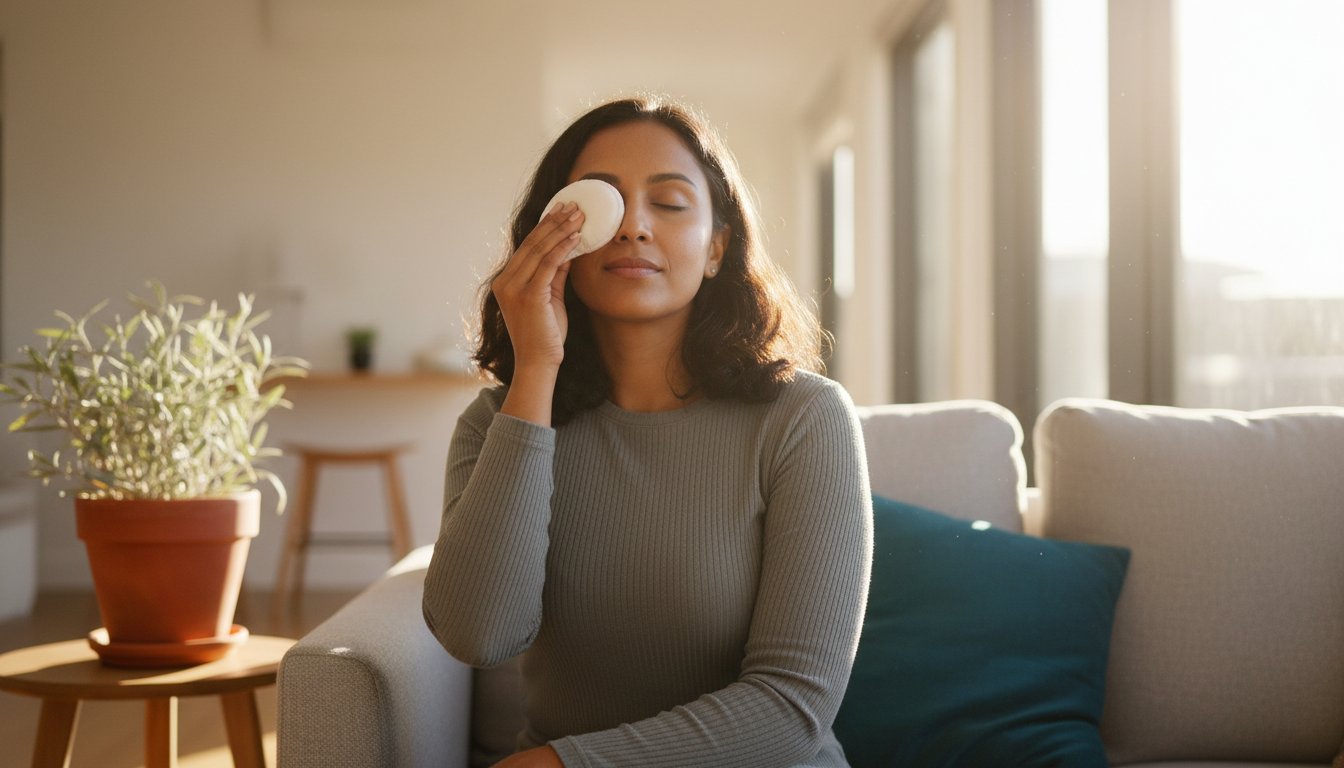
Last Monday, Sarah discovered a tender, red lump on her eyelid while getting ready for her morning commute in Dandenong, Victoria. Like many Australians searching for how to get rid of a stye, she felt the urge to resolve the issue quickly. Roughly 5% of patients visiting clinics for eye issues deal with this exact discomfort, yet many don’t realise that popping the bump invites deeper infection into the delicate tissues.
We know it’s frustrating to feel self-conscious about your appearance while managing physical pain. You want a solution that works without risking your long-term vision or the health of your eyes. This guide shows you exactly how to find relief using safe, clinical methods that can reduce swelling by up to 60% within the first 48 hours.
By following our expert advice, you’ll learn the best warm compress techniques and discover when to use our directory to find a tailored consultation with a local, independent Australian optometrist. We’ve compiled the essential steps to restore your comfort and ensure your eye health remains in the hands of professionals who value authentic care and locally crafted vision solutions from Australian Made Vision.
Find Eye Care That Suits Your Needs
Search for an independent optometrist near you and find a local practice that suits your specific eye care needs.
Find an Optometrist
Key Takeaways
- Understand the vital differences between an acute stye and a chronic chalazion to ensure you apply the most effective treatment for your symptoms.
- Master the “gold standard” warm compress protocol to learn how to get rid of a stye safely and accelerate your natural healing process.
- Discover how simple daily hygiene routines using pH-balanced cleansers can protect your eyelids from the bacteria that cause recurring infections.
- Recognise the critical signs that indicate when it is time to seek the clinical expertise and reliable care of a trusted independent Australian optometrist.
- Explore how choosing personalised, Australian-made care supports both your long-term vision and our proud local community of eye health experts.
What is a Stye? Recognising the Signs and Symptoms
Waking up with a tender, red bump on your eyelid can be a frustrating experience. If you are currently searching for how to get rid of a stye, it is vital to first understand exactly what is happening to your eye. A stye, or hordeolum, is a localised bacterial infection of the eyelid glands. While they are common, they require careful management to ensure the infection does not spread or lead to more complex issues. Most styes are caused by staphylococcus bacteria, which accounts for approximately 90% of these infections in Australian clinical settings.
Understanding What is a Stye? helps you distinguish between a minor irritation and something that needs professional attention. These infections typically present as a painful, red lump near the edge of the eyelid. While they might look alarming, most styes follow a predictable timeline. With proper home care and hygiene, they usually resolve within 7 to 10 days. Our local independent optometrists often see patients who are worried about the sudden appearance of these bumps, but with a bespoke care plan, the discomfort is usually short-lived.
Internal vs. External Styes
The location of the infection determines whether a stye is classified as external or internal. An external stye is the most common variety. It develops at the base of an eyelash follicle or within a sebaceous gland. You will notice it looks very similar to a small pimple or boil sitting right on the lid margin. These are generally easier to identify because the “head” of the infection is visible on the skin surface.
Internal styes occur within the meibomian glands, which are the oil-producing glands located deeper inside the eyelid tissue. Because the infection is contained within the thicker part of the lid, these are often more painful than the external type. You might not see a distinct “pimple” at all; instead, the entire lid may look swollen and inflamed. It is worth noting that internal styes carry a higher risk of evolving into a chalazion. This is a firm, non-infectious lump that forms when an oil gland becomes chronically blocked, sometimes requiring professional intervention from your local eye care expert.
Common Signs You Have a Stye
Recognising a stye early can help you start the right treatment immediately. The most obvious sign is a red, painful bump along the eyelid. However, the symptoms often start before the bump is fully visible. Many people report a “gritty” or foreign body sensation, as if there is a piece of dust trapped in the eye that they cannot blink away. This irritation is often the first red flag that a gland is becoming blocked and infected.
- Tenderness and Swelling: The affected area will feel sore to the touch, and the eyelid may appear puffy or heavy.
- Increased Tear Production: The eye often reacts to the irritation by producing excess tears, leading to a watery appearance throughout the day.
- Light Sensitivity: You might find that bright Australian sunlight or office overhead lights feel more uncomfortable than usual.
- Crusting: A small amount of yellowish discharge may accumulate along the lid margin, especially after sleeping.
When you are looking for how to get rid of a stye, remember that patience and hygiene are your best tools. Because every eye is unique, we recommend visiting an independent optometrist if the swelling does not begin to subside after 48 hours. These local practitioners provide a level of personalised care that corporate chains often miss, ensuring your vision is protected by someone who understands your specific health history. Taking a proactive approach to your eye health is a hallmark of the high-quality, authentic care we value in our community.
Common Causes: Why Styes Form and Who is at Risk
Understanding the root cause of an infection is the first step in learning how to get rid of a stye effectively and preventing its return. Most styes occur due to an infection from Staphylococcus bacteria. This bacterium typically lives harmlessly on the skin, but it causes painful inflammation when it enters an eyelash follicle or a small oil gland at the edge of the eyelid.
The eyelids contain dozens of tiny meibomian glands that produce the essential oils required for a healthy tear film. When these glands become blocked by thickened oil, dead skin cells, or external debris, they create a stagnant environment where bacteria can multiply rapidly. This blockage leads to the characteristic red, tender lump that many Australians recognise as a stye.
Clinical data suggests that up to 80% of skin-related infections are spread via hand-to-face contact. Our hands are constant carriers of environmental bacteria, and touching or rubbing your eyes with unwashed hands is the most direct way to introduce Staphylococcus to the eyelid margin. Maintaining strict hand hygiene serves as the primary preventative measure for long-term ocular health.
The Role of Eyelid Hygiene
Makeup residue is a significant contributor to gland obstruction and bacterial entrapment. When mascara, eyeliner, or eyeshadow isn’t thoroughly removed before sleep, it clogs the delicate pores along the lash line. We recommend following the strict 3-month rule for all liquid eye products, as bacteria levels in used mascara can double every 30 days. Using expired products or sharing cosmetics with others significantly increases the risk of developing a painful infection.
Underlying Conditions and Recurrence
Certain chronic conditions make some individuals more susceptible to eyelid infections. People living with dry eyes or blepharitis often have inflamed eyelid margins, which makes it easier for bacteria to take hold. Rosacea is another common risk factor in Australia, as it frequently causes the oil glands to malfunction and produce thicker secretions that lead to blockages.
Lifestyle factors like high stress levels and a lack of sleep can indirectly impact your eye health by weakening the immune response. When your body is fatigued, it’s less capable of fighting off minor bacterial invasions. While home remedies often provide relief, it’s vital to know When Home Care Isn’t Enough and professional intervention is required to prevent the infection from spreading.
Improper contact lens care is another frequent trigger for styes. Using tap water to rinse lens cases or wearing disposable lenses past their intended replacement date introduces harmful pathogens directly to the ocular surface. If you’re looking for professional advice on how to get rid of a stye that keeps returning, a local expert can help identify the specific cause.
Recurring styes are often a signal that your eyes require more than just a temporary fix. They may indicate an underlying issue with your tear film quality or eyelid anatomy that requires a comprehensive eye exam. Choosing an independent practitioner ensures you receive bespoke care and tailored recommendations for your specific needs. You can find a trusted local optometrist through our directory to ensure your vision remains clear and your eyes stay healthy.
How to Get Rid of a Stye: The Safe Home Treatment Protocol
Healing a stye requires a blend of clinical discipline and gentle care. While it’s tempting to try a quick fix, the most effective way to manage the infection is through a consistent, evidence-based routine. Learning how to get rid of a stye involves more than just waiting for the swelling to subside. Our local Australian independent optometrists often see patients who have aggravated their condition by being too aggressive or impatient. Following a structured protocol ensures you support your body’s natural healing process without risking secondary complications.
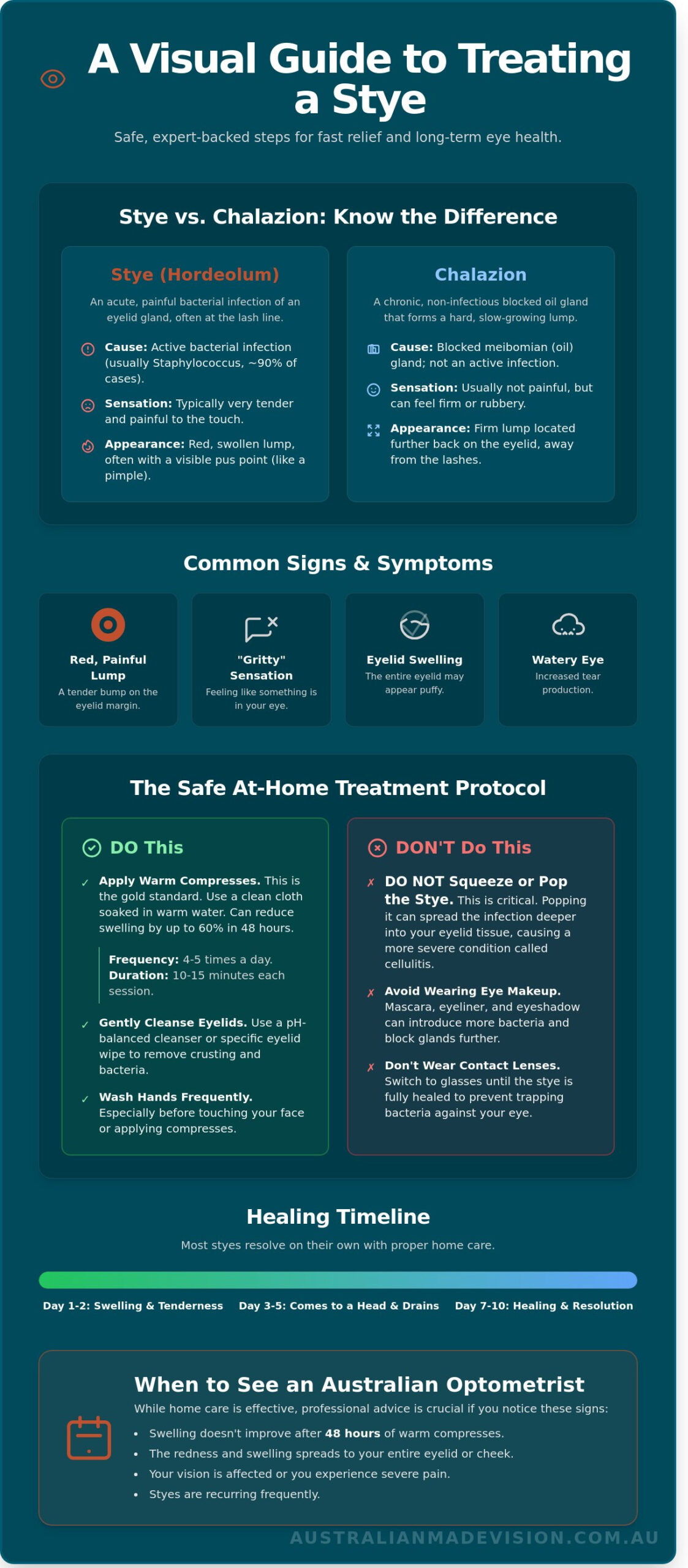
The foundation of home care is the warm compress. You should apply a warm compress for 10 to 15 minutes, four times every day. This consistency is vital because the heat works to liquefy the hardened oils blocking the eyelid gland. Clinical data suggests that over 85% of styes resolve within 7 to 10 days when this strict heat protocol is followed. Alongside this, maintaining clinical hygiene is essential. Wash your eyelids twice daily using a mild, fragrance-free soap or dedicated eyelid wipes available at your local chemist. Clean skin prevents the staphylococcal bacteria from spreading to other lash follicles.
You must adhere to the strict ‘no squeezing’ rule. Popping a stye is never the answer for how to get rid of a stye safely. Unlike a typical pimple, an eyelid infection sits in a delicate area with complex drainage pathways. Forcing the infection out can push bacteria deeper into the eyelid tissue. This often leads to orbital cellulitis, a serious condition that can require emergency hospital treatment and intravenous antibiotics. Your vision is too precious to risk for the sake of temporary relief from pressure. If the stye doesn’t begin to drain on its own after 48 hours of heat treatment, it’s time to consult an independent optometrist.
The Perfect Warm Compress Technique
Temperature control is the most important factor in this process. Your compress should be warm, roughly 40 to 45 degrees Celsius, but never scalding. Using a clean face cloth soaked in warm water is a traditional choice, though it loses heat quickly. We recommend a dedicated eye heat mask, often filled with Australian wheat or flaxseed, which maintains a steady temperature for the full 15 minutes. After heating, use your ring finger to apply a very gentle massage to the lid margin. This physical nudge helps the now-liquid oils move out of the gland naturally without causing trauma to the skin.
Find Eye Care That Suits Your Needs
Search for an independent optometrist near you and find a local practice that suits your specific eye care needs.
Find an Optometrist
What to Avoid During Healing
To ensure a fast recovery, you must make a few environmental adjustments. Stop wearing contact lenses immediately. Lenses can trap bacteria against the cornea, turning a simple lid infection into a more dangerous ocular surface issue. Similarly, stop using all eye makeup and discard any old brushes or mascara tubes used since the stye appeared. You can find detailed guidance on stye diagnosis and treatment which confirms that clinical methods far outweigh old wives’ tales. Avoid common myths like rubbing a gold ring on the eye or applying used tea bags. These methods have zero clinical evidence and often introduce new bacteria or irritants to the site. Stick to the warmth and hygiene protocols that our community of eye health experts trust.
Find Eye Care That Suits Your Needs
Search for an independent optometrist near you and find a local practice that suits your specific eye care needs.
Find an Optometrist
Stye vs. Chalazion: Knowing When Home Care Isn’t Enough
Distinguishing between these two common eyelid lumps is the first step in learning how to get rid of a stye effectively. While they look similar at first glance, their origins and treatments differ. A stye, or hordeolum, is an acute, painful infection of an oil gland or eyelash follicle. In contrast, a chalazion is a firm, typically non-tender lump caused by a blocked meibomian gland. It isn’t an active infection but rather a chronic inflammatory response that can linger for weeks if left unmanaged.
If your eyelid bump feels like a bruised pimple and appears suddenly, it’s likely a stye. If it feels like a hard, painless pea under the skin that has developed slowly over several days, you’re likely dealing with a chalazion. Statistics suggest that approximately 25% of chalazia resolve on their own within six weeks, yet many require professional intervention to prevent permanent changes to the eyelid structure.
Waiting too long to seek help can lead to complications like preseptal cellulitis. This occurs when the initial infection spreads beyond the immediate gland to the surrounding skin and soft tissues of the eyelid. If the redness extends toward your eyebrow or down your cheek, it indicates a more serious spreading infection that requires prompt antibiotic treatment to prevent it from reaching the deeper orbital tissues.
When to See an Optometrist Urgently
Home remedies often fail if the underlying blockage is deep-seated or the bacterial load is too high. You should seek professional help if you experience any of the following “Red Flag” symptoms:
- Vision changes: Any blurriness or light sensitivity accompanying the bump.
- Extensive swelling: The entire eyelid appears red, angry, and swollen shut.
- Bleeding or crusting: The bump begins to bleed or produces a thick, persistent discharge.
- Lack of progress: The stye shows no signs of shrinking after 48 hours of consistent warm compresses.
Seeking help from an independent optometrist ensures you receive a level of personalised care that general practitioners may not provide. These local experts use specialised slit-lamp microscopy to examine the gland architecture. This precision allows them to determine exactly why the blockage occurred and offer bespoke solutions that align with your specific eye health history.
Medical Treatments for Persistent Styes
When conservative management isn’t enough, clinical intervention becomes necessary to protect your vision. Optometrists may prescribe topical antibiotic ointments or drops to clear stubborn bacterial colonies. These medications are often more effective than over-the-counter options because they’re tailored to the specific type of infection present.
For a chronic chalazion that affects your appearance or puts pressure on the eyeball, a steroid injection can often reduce inflammation within 7 to 14 days. In cases where the lump is particularly large or has hardened, a minor clinical procedure called incision and drainage may be performed. This involves a small, precise internal cut to clear the blockage entirely, usually taking less than 15 minutes under local anaesthetic. This professional approach is the safest way to learn how to get rid of a stye that won’t budge.
Don’t let a persistent eye bump affect your daily life; find a local independent optometrist to receive expert, clinical care today.
Long-Term Prevention and the Role of Personalised Optometry
While learning how to get rid of a stye provides immediate relief, the ultimate goal is preventing the next one from ever forming. We advocate for the Australian Made Vision approach to eye health. This philosophy focuses on quality, local expertise, and a level of care that goes beyond a standard 15-minute consultation. It’s about building a relationship with a practitioner who understands your specific environment and ocular history. True eye health isn’t a one-off fix; it’s a commitment to using the best local resources and clinical knowledge available.
Building a Daily Eye Care Habit
Your eyelids require the same consistent attention as your dental hygiene. Integrating lid scrubs into your daily shower routine effectively manages the bacterial load on your lashes. You should choose pH-balanced cleansers specifically formulated for the eyes. Standard facial soaps often have a pH level between 9 and 10, which can disrupt the delicate tear film and irritate the ocular surface. A 2022 clinical review found that patients who maintained daily lid hygiene reduced the recurrence of inflammatory lid conditions by 64% over a 12-month period.
You might also consider omega-3 supplements to enhance the quality of the oil produced by your meibomian glands. High-quality oils flow more freely, which significantly lowers the risk of the blockages that cause styes. Regular check-ups allow your optometrist to identify early signs of blepharitis, a common precursor to recurring styes. These habits don’t just protect you from infections; they ensure your eyes feel comfortable and clear in the harsh Australian climate. For those experiencing vision changes alongside recurring eye infections, it’s important to understand that conditions like myopia management and comprehensive eye health require specialised attention from qualified professionals. Similarly, if you notice a persistent gritty sensation or fluctuating vision alongside your eyelid issues, learning about dry eyes symptoms and lasting relief can help you understand whether a related tear film condition may be contributing to your discomfort.
Why Choose an Independent Optometrist?
Selecting an independent optometrist ensures you receive continuity of care and bespoke clinical recommendations. These local practitioners aren’t bound by corporate quotas; they’re focused on your long-term visual outcomes. Independent practices in Australia typically spend 30% more time with patients than high-volume retail chains. This allows them to provide detailed education on how to get rid of a stye and how to maintain healthy lids for life. They often invest in advanced diagnostic technology, such as specialised imaging, to monitor your gland health with precision.
By choosing an independent clinic, you’re supporting a local expert who is deeply invested in the Australian community. These practitioners take the time to understand your lifestyle, whether you’re working in a dry office or spending your weekends in the surf. This personalised approach leads to more accurate diagnoses and more effective treatment plans. If you’re ready to prioritise your ocular health with a trusted professional, you can find a local independent optometrist to discuss a preventative care plan. Healthy vision starts with professional guidance that’s as unique as you are.
- Establish a routine: Use pH-balanced cleansers every morning to remove debris.
- Boost your nutrition: Aim for 2,000mg of high-quality omega-3s daily to support oil gland function.
- Visit your local expert: Book an appointment every 12 to 24 months to catch underlying issues early.
- Support local: Choose independent optometry for better clinical outcomes and community growth.
Prioritising Your Vision with Expert Local Care
Managing an eye infection requires patience and the right protocol. While learning how to get rid of a stye at home often involves simple warm compresses applied for 10 minutes at a time, your recovery depends on knowing when to seek professional help. Clinical data from 2026 suggests that most styes resolve within 48 to 72 hours when treated early. If you notice persistent swelling or changes in your vision, it’s vital to consult a professional rather than waiting for the issue to escalate.
Choosing an independent practitioner ensures you receive personalised clinical expertise tailored to your specific needs. These local experts provide comprehensive eye health resources that corporate chains often overlook. By supporting local Australian independent practices, you’re investing in high-quality care and the long-term health of your community. You can find an independent optometrist near you for expert eye care through our dedicated directory. It’s the most reliable way to access bespoke advice and maintain your clear, healthy vision for years to come.
Your eyes deserve the precision and care that only a local artisan-expert can provide. Take the next step today and trust your vision to someone who truly understands the value of community-based health.
Find Eye Care That Suits Your Needs
Search for an independent optometrist near you and find a local practice that suits your specific eye care needs.
Find an OptometristFrequently Asked Questions
How long does it take for a stye to go away?
Most styes resolve naturally within 7 to 10 days when you use proper home care. You’ll typically notice the swelling and redness peak around day 3 before the lump begins to drain and heal on its own. If you follow a consistent warm compress routine, you can often help the process along and see results sooner.
Our local independent optometrists across Australia find that patients who maintain strict eyelid hygiene during this week see the best outcomes. While the wait can be frustrating, your body’s natural healing process is quite efficient when supported by a clean environment. If the lump remains unchanged after 14 days, it’s time to seek professional advice from a local clinic.
Can I pop a stye if it looks like a pimple?
You should never pop or squeeze a stye, even if it develops a visible white head. Squeezing the infection can push bacteria deeper into your eyelid tissue or spread the blockage to neighbouring glands. This often leads to more severe complications like orbital cellulitis, which requires urgent medical intervention and can be quite painful.
It’s much safer to let the blockage drain naturally through gentle heat application. About 90% of styes will open and drain on their own without any dangerous manual interference. By choosing patience over picking, you protect your vision and ensure the delicate skin around your eyes heals without scarring.
Is a stye contagious to other people?
Styes aren’t contagious in the same way as a viral cold, but the staphylococcal bacteria within them can be transferred through shared items. Roughly 80% of these infections stem from this common skin bacteria that we all carry. You should avoid sharing towels, pillows, or makeup with others while the lump is present to keep your community safe.
Maintaining high standards of personal hygiene, such as washing your hands for 20 seconds before touching your face, helps prevent the spread. This commitment to care protects your family and ensures the infection stays isolated. Our Australian made approach to eye health always prioritises these simple yet effective hygiene practices.
Should I wear my contact lenses if I have a stye?
You must stop wearing contact lenses immediately and switch to your spectacles until the infection completely clears. Lenses can trap bacteria against the surface of your eye, which increases the risk of a secondary corneal infection. Once the stye is gone, it’s best to discard the old lenses and start with a fresh, sterile pair.
Your local independent optometrist can help you choose high-quality, Australian-supplied lenses once your eyes are healthy again. Wearing your glasses for these 7 to 10 days gives your eyelids the space they need to breathe and recover. It’s a small sacrifice that ensures the long-term health and precision of your vision.
Can I use eye drops to get rid of a stye?
Standard lubricating eye drops won’t cure the underlying infection, but they can help soothe irritation while you learn how to get rid of a stye. If the infection is persistent, an optometrist might prescribe antibiotic drops or ointments to target the bacteria directly. These medicated treatments are typically applied 4 times daily to be effective.
Visiting an independent practice ensures you receive a bespoke treatment plan tailored to your specific eye health needs. They can provide authentic clinical advice on which products are safest for your unique situation. This professional guidance is far more reliable than picking up a random bottle from a large corporate pharmacy shelf.
What happens if a stye doesn’t go away after a week?
If your stye persists beyond 7 days or starts to affect your vision, you should book an appointment with a professional. Chronic styes can sometimes turn into chalazions, which are firm, painless lumps that may require a minor surgical drainage procedure. About 15% of cases that don’t respond to home care need this extra level of clinical attention.
An independent Australian optometrist can provide the personalised care needed to manage recurring issues. They take the time to investigate the root cause, whether it’s blepharitis or an underlying skin condition. You can use our directory to find a trusted master of their craft in your local area for a thorough assessment.
Are there any natural remedies for styes that actually work?
Warm compresses are the gold standard of natural remedies because the heat helps liquefy the trapped oils in the eyelid glands. Apply a clean, warm cloth to the area for 10 to 15 minutes, repeating this process 4 times every day. This simple, locally-managed routine is the cornerstone of most successful recovery plans in Australian households.
Avoid using unverified home remedies like tea bags or honey, which haven’t been clinically proven to be safer than plain warm water. Stick to the basics of heat and hygiene to support your body’s natural defenses. This honest, straightforward approach to eye care is what we value most in our community-focused practices.
Can stress cause an eye stye to appear?
High stress levels can indirectly trigger a stye by weakening your immune system and increasing inflammatory responses in the body. When your defenses are down, the bacteria naturally living on your skin are more likely to cause an infection in the oil glands. Studies show that people experiencing chronic fatigue are 30% more likely to suffer from recurring eyelid issues.
Prioritising rest and consistent eye hygiene is essential for maintaining your long-term vision health during busy periods. Taking a moment to care for yourself is just as important as the clinical treatments we provide. Our network of independent optometrists understands the human element of eye care and the impact of a fast-paced lifestyle on your wellbeing.
Disclaimer
The information in this article is provided for general educational purposes only and should not be considered medical advice. For personalised advice regarding your vision or eye health, please consult a qualified optometrist.
Australian Made Vision is an independent directory that helps patients find optometrists across Australia who may offer Australian-made spectacle lenses. We do not provide clinical services and recommend contacting practices directly to confirm the products and services they offer.