
Diabetes can affect your eyes, sometimes before you notice any change in vision. Over time, high blood glucose can damage tiny blood vessels in the retina at the back of the eye. This is why regular diabetic eye checks matter, even when your eyesight seems fine.
Diabetic retinopathy is one eye condition associated with diabetes, but it is not the only one. Knowing what an eye examination looks for, when to have one and which symptoms need prompt attention can help you make informed decisions about your care.
What is diabetic eye disease?
Diabetic eye disease is a broad term for eye conditions associated with diabetes. One of these is diabetic retinopathy, which affects the retina, the light-sensitive layer at the back of the eye. Diabetes is also linked with a higher risk of cataracts and glaucoma. Changes in blood glucose can sometimes cause temporary blurred vision.
Having diabetes does not mean you will develop all these conditions. Risk varies between people, and an eye examination can identify changes that need monitoring or treatment.
How diabetes affects the retina
The retina converts light into signals that the brain interprets as images. Persistently high blood glucose can damage the retina's smallest blood vessels. They may leak fluid or blood, become blocked, or develop abnormal new vessels. These changes are known as diabetic retinopathy.
Early retinopathy may be mild and cause no noticeable symptoms. More advanced disease can threaten sight. The macula, the central part of the retina used for reading and recognising faces, may also swell when fluid leaks into it. This is called diabetic macular oedema.
Other ways diabetes can affect your eyes
Cataracts develop when the eye's natural lens becomes cloudy. They may cause hazy vision and glare, particularly in bright light or when driving at night. People with diabetes may develop cataracts at a younger age. Read more about cataract symptoms and assessment.
Glaucoma is a group of conditions that can damage the optic nerve. Diabetes is associated with a higher risk, although not everyone with diabetes develops glaucoma. Learn about glaucoma signs and eye tests.
Temporary blurred vision may occur when fluctuating blood glucose levels affect the eye's natural lens and its focusing ability. However, new blur should not automatically be attributed to glucose fluctuations. An eye examination can help identify other possible causes.
DIABETES AND EYE HEALTH
Is Your Diabetic Eye Check Due?
Regular retinal checks matter even when your eyesight seems fine. Find an independent optometrist to discuss your screening needs.
Find an Optometrist →What are the symptoms of diabetic eye disease?
Diabetic retinopathy can develop without early warning signs. A person may have retinal changes while still reading, working, and seeing everyday objects clearly. Regular screening is therefore important even if you have no symptoms.
When vision is affected, possible changes include:
- • Blurred, hazy, or distorted vision
- • Patchy areas or missing detail in what you see
- • Floaters, such as moving specks or dark shapes
- • Increased sensitivity to glare or difficulty seeing at night
- • A gradual reduction in vision, sometimes affecting both eyes
These symptoms can also occur with other eye conditions. They do not confirm diabetic retinopathy, and their absence does not rule it out.
If your vision changes, contact your optometrist or GP as soon as possible. Sudden or severe changes, particularly flashes, new floaters or a curtain-like shadow, need emergency assessment as described above.
What increases the risk of diabetic eye disease?
The longer someone has diabetes, the greater their risk of developing diabetic retinopathy. The risk is also higher when blood glucose levels remain above a person's target range over time, or when blood pressure or cholesterol levels are high.
Smoking and diabetic kidney disease are also associated with higher risk. In people who already have diabetic retinopathy, pregnancy can increase the risk of the condition progressing. These factors do not predict exactly what will happen to one person's eyes.
Managing diabetes with your GP and wider diabetes care team can lower the risk of eye complications, but it cannot guarantee they will never occur.
How often should people with diabetes have an eye test?
After initial screening, many Australians with diabetes need a retinal examination every one to two years. Some people need checks sooner or more often. The right schedule depends on the type of diabetes, how long you have had it, previous retinal findings and other health factors.
Situation | General Australian guidance |
|---|---|
Newly diagnosed type 2 diabetes | Arrange a retinal examination at diagnosis. |
Type 1 diabetes | For adults, initial screening is generally recommended within two to five years of diagnosis. Timing for children and adolescents should be guided by their care team. |
No or minimal retinopathy | Repeat checks are generally recommended every one to two years, depending on individual risk. |
Aboriginal and Torres Strait Islander people with diabetes | Annual diabetic retinal examinations are recommended. |
Existing retinopathy or higher risk | A clinician may recommend at least annual checks or more frequent review according to the findings. |
If you have type 1 or type 2 diabetes and are planning a pregnancy or are pregnant, discuss retinal screening with your diabetes care team and eye-care professional. An eye examination is recommended before pregnancy and again in the first trimester. Further checks during pregnancy and up to a year after birth may be needed, depending on the findings. Gestational diabetes alone does not usually require diabetic retinopathy screening.
These are recommendations for retinal screening. They do not describe Medicare claiming rules. Your care team can confirm the schedule that applies to you. The National Diabetes Services Scheme (NDSS) and the Royal Australian College of General Practitioners provide further guidance.
What happens during a diabetic eye examination?
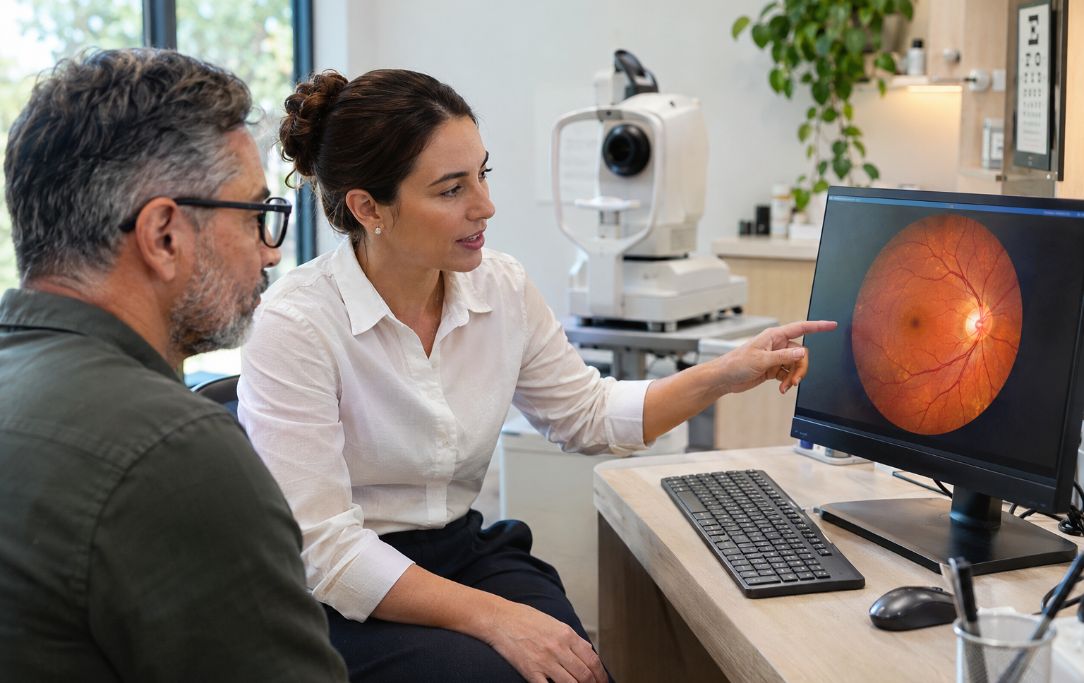
A diabetic eye check looks for signs of diabetes-related damage, particularly in the retina. It assesses eye health as well as how clearly you can see.
An optometrist or ophthalmologist may ask about your diabetes history, medicines, recent blood glucose management and any changes in your sight. Depending on your circumstances and the practice's equipment, the examination may include:
- • Vision test: Checks how clearly each eye sees.
- • Eye examination: Looks at structures including the natural lens and the retina.
- • Retinal photographs: Record blood vessels and other retinal changes.
- • Dilating eye drops: May be used to widen the pupils for a more detailed retinal examination.
- • Additional tests or referral: May be recommended if examination findings suggest macular swelling, glaucoma or another concern.
When clinically appropriate, some practitioners may use optical coherence tomography (OCT) to take detailed scans of the retina. Not everyone needs every test, and services vary between practices. Retinal photography is useful for screening, but it does not replace a comprehensive eye examination in every circumstance.
If dilating drops are planned, ask whether your vision may be temporarily blurred and whether you should arrange another way home. You can also ask the practice about any fees before your appointment.
Is Your Eye
Health on Track?
Complete our free 18-point checklist to check your eye health, spot any gaps, and take charge of your vision.
Start Free Checklist Test →How is diabetic eye disease treated and managed?
Treatment depends on the eye condition, its severity and the person's wider health. Some retinal changes need monitoring rather than an immediate eye procedure. Others require assessment by an ophthalmologist, a medical specialist in eye disease.
Managing diabetes and other health factors
Working towards agreed blood glucose, blood pressure and cholesterol targets can help lower the risk of diabetic retinopathy or slow its progression. Your GP or diabetes care team can discuss medicines, nutrition, physical activity and other measures suited to your circumstances.
Do not stop or change prescribed diabetes or blood pressure medicines because of an eye symptom or something you read online. Discuss concerns with the clinician who manages your treatment.
Specialist treatments for retinal damage
An ophthalmologist may recommend injections of medicines into the eye, particularly for certain forms of diabetic macular oedema. Laser treatment may be used for some retinal changes, while vitreoretinal surgery may be considered in advanced cases involving bleeding or other complications.
The aim is usually to limit further damage and reduce the risk of vision loss. Some people may experience improved vision, but recovery is not guaranteed. Treatment choice, possible risks and follow-up depend on the examination findings.
Cataracts and glaucoma have their own assessment and treatment pathways. A person with diabetes may need care for more than one eye condition at the same time.
How can you look after your eyes when living with diabetes?
Regular retinal examinations are a practical part of diabetes care. They provide an opportunity to find changes before vision is affected and to arrange treatment or follow-up when needed.
Between appointments, follow the diabetes plan developed with your health professionals. That may include monitoring blood glucose, reviewing blood pressure and cholesterol, taking prescribed medicines, and discussing food, physical activity or smoking cessation support.
It can help to keep a note of the date and outcome of your last diabetic eye check. Ask when the next examination is due and who will receive any results. If you have difficulty arranging an appointment, tell your GP or diabetes care team so they can help you plan the appropriate next step.
When should you seek professional eye care?
For routine screening: arrange the diabetic eye check recommended by your care team, even when your vision seems normal.
For new or changing vision: contact an optometrist or GP as soon as possible. If you already have diabetic retinopathy and develop new symptoms, seek urgent advice from your treating eye specialist.
For sudden vision loss, new flashes, a sudden increase in floaters or a dark curtain across your sight: go to an emergency department immediately. These signs may indicate retinal detachment or another serious eye problem. Call 000 if an ambulance is needed.
An optometrist may identify signs of disease and arrange monitoring or referral as appropriate. A GP can help coordinate diabetes care, while an ophthalmologist assesses and treats problems requiring specialist medical or surgical attention.
Frequently asked questions
Can you have diabetic eye disease without symptoms?
Yes. Early diabetic retinopathy may cause no noticeable change in eyesight. Retinal screening can identify signs that would otherwise be missed until the condition progresses. That is why normal-feeling vision is not a reason to skip a recommended check.
How often should someone with type 2 diabetes have an eye test?
An eye examination is recommended when type 2 diabetes is diagnosed. If screening finds no or minimal retinopathy, follow-up examinations are commonly recommended every one to two years. More frequent checks may be needed if you have retinal changes or other risk factors. Ask your optometrist or diabetes care team about your schedule.
Can diabetic retinopathy be reversed?
Not always. Managing diabetes and receiving appropriate treatment can slow progression and may improve some vision problems, but existing retinal damage or vision loss may not fully recover. An ophthalmologist can explain what treatment is intended to achieve in your situation.
Can an optometrist detect diabetes-related eye problems?
Yes. An optometrist can examine your eyes for signs of diabetic retinopathy and other conditions. Depending on the results, the optometrist may recommend monitoring or refer you to an ophthalmologist for further assessment and treatment.
Does a diabetic eye test hurt?
A routine diabetic eye check is generally not painful. It involves vision checks, examining the eyes and sometimes retinal photography. Dilating drops may cause temporary blur or light sensitivity. If you are worried about a test or need advice about travelling home, ask the practice what your appointment may involve.
Your next steps for diabetes-related eye care
If you live with diabetes and cannot remember when your eyes were last checked, ask your GP, diabetes care team or optometrist when your next retinal examination is due. Do not wait for blurred vision before seeking a recommended check.
You can use the Australian Made Vision directory to find an independent optometrist and contact a participating practice about eye examinations. Confirm directly whether that location offers diabetes-related retinal assessment, which tests are available and whether any fees apply. Australian Made Vision provides information and a directory; clinical care is provided by individual health professionals.

Take the Next Step
Plan Your Next Diabetic Eye Check
Contact a local independent optometrist about retinal assessment. Confirm available tests and fees with the practice, and follow the screening schedule recommended by your care team.
Find an Optometrist →Important information
This article provides general eye-health information for Australian readers. It cannot diagnose the cause of a vision problem or replace advice based on an individual examination. Seek guidance from an optometrist, GP or ophthalmologist, or emergency care when needed.
Sources accessed and checked: 2 November 2026. Medical content requires review by a suitably qualified Australian clinician before publication.
Australian Made Vision is an independent directory that helps patients find optometrists across Australia who may offer Australian-made spectacle lenses. We do not provide clinical services and recommend contacting practices directly to confirm the products and services they offer.
