Date archives: 20 July 2026

Polarised lenses reduce glare reflected from flat surfaces such as roads, water and vehicle panels. They can make bright daytime conditions more comfortable, particularly for driving or activities near water. But polarisation is only one part of choosing sunglasses: it does not automatically prove ultraviolet (UV) protection, it is not suitable for every light condition, and the finished lens still needs to suit your prescription, frame and daily tasks.

Table of Contents

What are polarised lenses and how do they work?

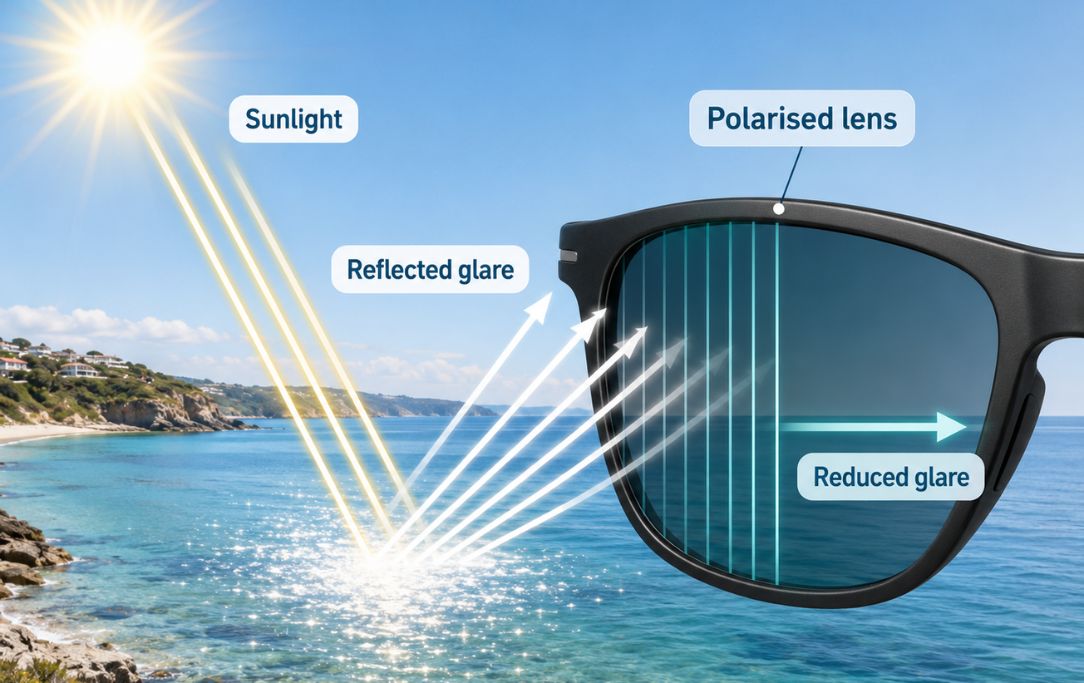
Ordinary sunlight travels with waves moving in many directions. When light reflects from a flat, shiny surface, much of the reflected light can become aligned in one direction. That concentrated reflection is a common source of glare.

Diagram showing how polarised lenses filter reflected glare from sunlight over water while allowing more useful light to pass through.
Polarised lenses use a special filter to reduce reflected glare from flat surfaces such as water, helping improve visual comfort in bright outdoor conditions.

A polarising filter is arranged to reduce much of this reflected light before it reaches your eyes. This is why polarised sunglasses can feel different from a standard tint around wet roads, water, glass or metal. ARPANSA notes that polarised lenses are particularly useful under high-glare conditions and near reflective surfaces.

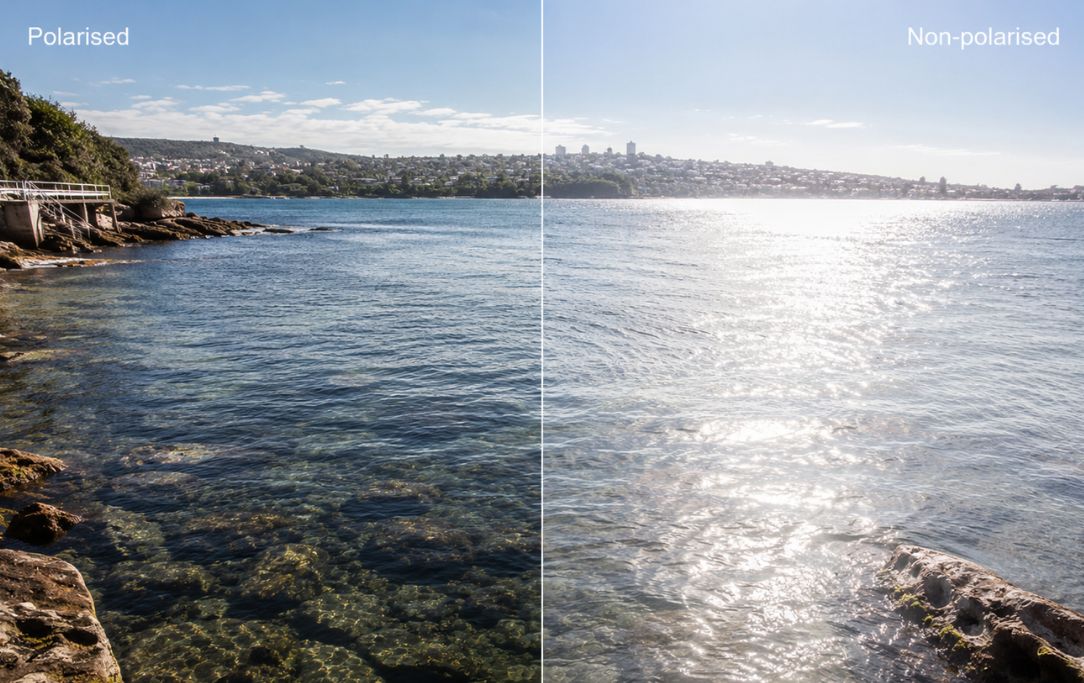
Side-by-side comparison showing clearer water with polarised lenses and stronger reflected glare with non-polarised lenses.
Compared with non-polarised lenses, polarised lenses reduce reflected glare from the water's surface, making details easier to see in bright daylight.

Polarisation does not remove every reflection, and its effect can vary with the surface, viewing angle and lens design. It is a sunglass feature, not a treatment for headaches, eye strain, light sensitivity or a vision condition.

Find Eye Care That Suits Your Needs

Search for an independent optometrist near you and find a local practice that suits your specific eye care needs.

Find an Optometrist

Polarised lenses, tinted lenses and UV protection: what is the difference?

Polarisation

Main purpose: Reduces certain reflected glare from flat or shiny surfaces.

Does not prove: UV protection, suitable tint darkness or driving suitability.

Check: Is the lens polarised, and what UV and road-use information applies?

Tint

Main purpose: Reduces visible brightness. Darker tints usually reduce more visible light.

Does not prove: Polarisation or stronger UV protection.

Check: Which tint and visible-light level suit my usual conditions?

UV protection

Main purpose: Reduces exposure to ultraviolet radiation when the lens provides verified protection.

Does not prove: Glare reduction, polarisation or suitability for every activity.

Check: What product information or testing supports the UV claim?

These features can be combined in one pair of sunglasses, but they should still be checked separately. A dark lens may reduce brightness without being polarised. A polarised lens may reduce reflected glare, but its UV protection should still be supported by product information or evidence.

The colour and darkness of a lens do not tell you how much UV protection it provides. ARPANSA explains that UV protection comes from the UV-absorbing properties of the lens material or treatment rather than the tint alone.

Is Your Eye
Health on Track?

Complete our free 18-point checklist to check your eye health, spot any gaps, and take charge of your vision.

Start Free Checklist Test

When may polarised lenses be useful?

Polarised use case

Daytime driving

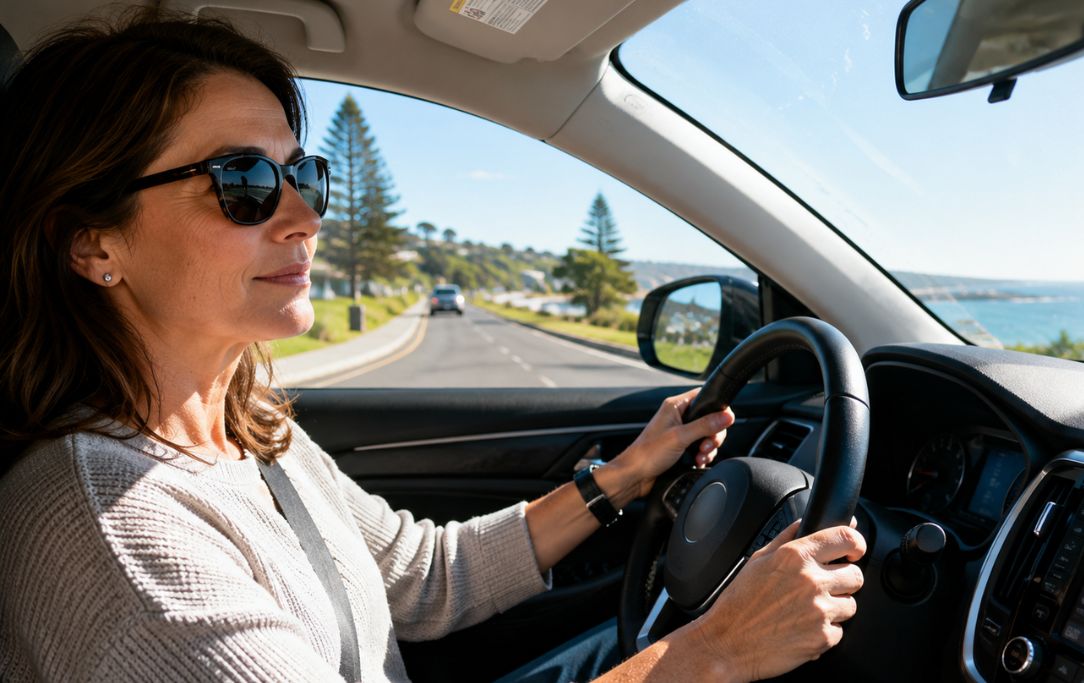
Reflections from roads, windscreens, bonnets and other vehicles can create strong glare in bright daytime conditions. Polarised lenses may reduce these reflections and make the view more comfortable.

They do not replace clear vision, an appropriate prescription or safe driving decisions. No sunglass lens can guarantee quicker reactions or a safer outcome. The lens also needs to be suitable for the available light and labelled for road use.

Bright outdoor driving scene showing where polarised sunglasses may help reduce reflected glare

Polarised use case

Fishing, boating and time near water

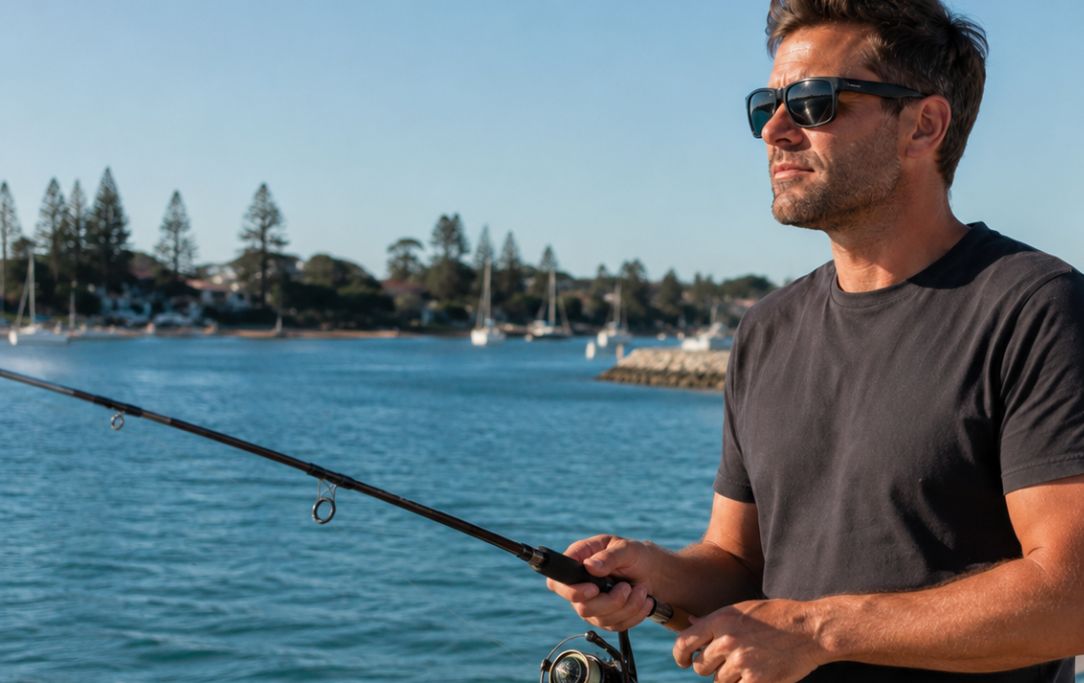
Water can reflect a large amount of light towards the eyes. Reducing surface glare may make boating, fishing, beach activities and other time near water more comfortable.

The effect depends on the conditions and viewing angle. Polarised lenses should not be presented as a guarantee that someone will see beneath the water, identify every submerged object or avoid hazards.

Person near water where polarised sunglasses may help reduce glare from reflective surfaces

Polarised use case

Bright everyday outdoor use

Polarised sunglasses may also suit walking, travel, outdoor sport and other bright activities where reflected glare is distracting. The practical question is whether the lens matches the task.

Coverage matters as well. For prescription wearers, the frame also needs to be technically suitable for the prescription and lens design.

Daytime outdoor scene showing everyday situations where polarised sunglasses may be useful

Coverage matters as well. Cancer Council Australia recommends close-fitting, wraparound sunglasses and a broad-brimmed hat as part of sun protection. For prescription wearers, the frame also needs to be technically suitable for the prescription and lens design.

Can polarised lenses be made with a prescription?

Polarised lenses may be available with single-vision, multifocal or progressive prescriptions, but the range varies between suppliers and practices. The prescription, lens material, design and selected frame all affect what can be made.

A suitable fit is more than a comfortable bridge and temple length. The practice may need measurements such as pupil distance, fitting height and the position of the frame on the face. Frame curve, lens size and how securely the glasses sit can also affect the finished result, especially with stronger or multifocal prescriptions.

A current prescription is a sensible starting point. The broader prescription sunglasses guide explains how fixed tints, polarisation, variable-tint lenses, frame shape and aftercare fit into the buying decision.

Before ordering

Confirm that the practice supplies the required lens type and can fit it to the selected frame. Ask about the full price, measurements, warranty, adjustments, remake conditions and aftercare rather than assuming these are the same everywhere.

Find Eye Care That Suits Your Needs

Search for an independent optometrist near you and find a local practice that suits your specific eye care needs.

Find an Optometrist

Australian sunglass categories and driving suitability

For non-prescription sunglasses and fashion spectacles sold in Australia, the mandatory safety standard uses five lens categories. The category describes glare reduction, UV protection and intended use. The standard covers non-prescription sunglasses, clip-ons, children’s sunglasses and fashion spectacles, but it does not apply to prescription and readymade spectacles.

The table below summarises the ACCC consumer guidance. Always check the label and any warning supplied with the product.

Category Product type General description Important use note
0 Fashion spectacles Very low glare reduction; limited or no UV protection. Not sunglasses.
1 Fashion spectacles Limited glare reduction and some UV protection. Not suitable for driving at night.
2 Sunglasses Medium glare reduction and good UV protection. Common everyday category; check activity and label.
3 Sunglasses High glare reduction and good UV protection. Useful in bright conditions; check road-use information.
4 Special-purpose sunglasses Very high glare reduction and good UV protection. Not suitable for driving or road use.

Driving and low-light limits

Category 4 sunglasses are not suitable for driving or road use. Sunglasses can also reduce visibility in low light, so do not wear them for night driving, twilight or dull conditions when they make the road harder to see.

For prescription sunglasses, do not assume that a non-prescription category label answers every question about the finished lenses. Ask the practice or supplier what evidence supports the UV claim, visible-light transmission and driving suitability of the specific product.

The full legal instrument is the Consumer Goods (Sunglasses and Fashion Spectacles) Safety Standard 2017.

What are the limitations of polarised lenses?

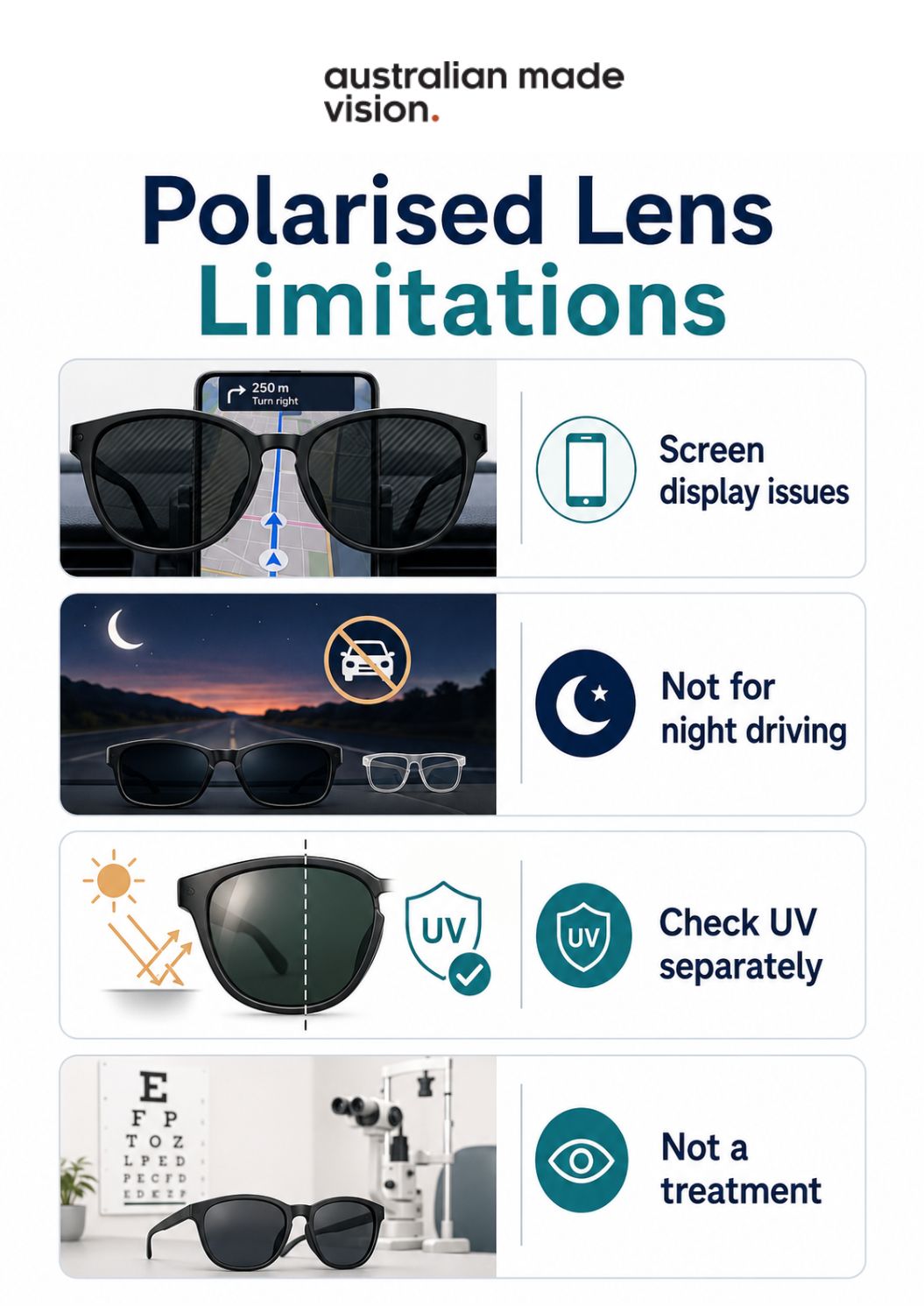
Infographic explaining the limitations of polarised lenses, including screen display issues, reduced suitability for night driving, the need to check UV protection separately, and that they do not treat eye conditions.
Polarised lenses reduce reflected glare but may affect digital screen visibility, are not recommended for night driving, require UV protection to be verified separately, and are not a treatment for vision or eye health conditions.

Polarised lenses are useful in many bright settings, but they have trade-offs.

Some liquid-crystal displays can look darker, show colour patterns or become harder to read when viewed through polarised lenses at particular angles. This may affect some vehicle dashboards, phones, navigation systems or work equipment. Display design varies, so test the lenses with the devices that matter to you before ordering. ZEISS Vision Care also advises checking LCD displays and older vehicle instruments before purchase.

They are also unsuitable when the tint makes the environment too dark. Do not use polarised sunglasses for night driving, twilight or dull weather simply because they are comfortable during the day.

Polarisation and UV protection are separate properties. Check both rather than assuming a polarised label covers everything.

The lenses do not diagnose or treat headaches, trouble seeing at night, eye strain or light sensitivity. Persistent or changing symptoms need an eye examination, and sudden or marked changes in vision should not be assumed to be ordinary glare.

Find Eye Care That Suits Your Needs

Search for an independent optometrist near you and find a local practice that suits your specific eye care needs.

Find an Optometrist

Are polarised lenses worth it?

They may be worth considering when reflected glare is a regular problem, such as frequent daytime driving, fishing, boating or time near bright reflective surfaces. The benefit is less clear when most use is indoors, in low light or around equipment that is difficult to read through polarised filters.

Value also depends on the full product, not the polarised label alone. Check the UV protection, tint, lens category, prescription accuracy, frame fit, warranty and aftercare. A less expensive pair that meets the relevant requirements and suits the task may be more useful than a higher-priced option with features you do not need.

The decision is practical rather than universal: compare where the glasses will be used, what you need to see and whether the lenses can be tested before purchase.

Buying checklist

Polarised Sunglasses Buying Checklist

Use this checklist before buying polarised sunglasses. It can help you identify what you have already confirmed and what you still need to ask an optometrist, optical dispenser or supplier.

This checklist provides general buying guidance only. It cannot determine whether a particular lens, frame or prescription option is suitable for you.

0 of 9 completed

0%

Start by deciding where and how you will use the sunglasses most.

An individual practice can explain which lens and frame options it supplies, take the required measurements and confirm pricing and aftercare.

Questions to ask an optometrist or practice

  1. Is this lens polarised, and what evidence supports the UV protection stated for the finished product?
  2. Which lens category is it, and is it suitable for my usual daytime driving conditions?
  3. Can it be made in my prescription and preferred frame?
  4. Could it affect the dashboard, phone or equipment I use?
  5. What measurements, products, price, warranty, adjustments and aftercare are included?

Products, services, fees and advice belong to the individual practice. Australian Made Vision provides general information and a directory pathway; it does not examine, prescribe or dispense eyewear.

When an eye test may be more useful than changing sunglasses

Changing sunglasses is not a substitute for checking a vision problem. If road signs, faces or other details are becoming harder to see, or if your vision has changed since your last prescription, an eye test can help identify what may be contributing.

A current prescription and accurate fitting measurements are particularly important for prescription polarised lenses. You can read what an eye test may include before booking.

Seek appropriate professional care for sudden or marked vision changes. Do not delay assessment because the change seems related to sunlight or glare.

Compare polarised lens options with an individual practice

The right polarised lenses depend on where you will wear them, the available light, your prescription, the frame, the lens category and the displays you need to read. Compare the benefits with the limitations, and ask for evidence behind UV, driving and product claims.

Use the Australian Made Vision directory to find an independent optometrist near you. Products, services, prices and appointment arrangements vary, so confirm the details directly with the individual practice.

Find Eye Care That Suits Your Needs

Search for an independent optometrist near you and find a local practice that suits your specific eye care needs.

Find an Optometrist

Polarised Lenses FAQs

What do polarised lenses do?

They reduce strongly reflected glare from surfaces such as roads, water, glass and metal. This may make bright daytime conditions more comfortable, but the effect varies and no lens removes every reflection.

No. Polarisation reduces certain reflected glare, while UV protection relates to how the lens blocks ultraviolet radiation. A lens can combine both features, but buyers should check the UV information separately.

They may be useful for reducing reflected glare in bright daytime conditions. Check the lens category, road-use warning, tint and visibility through the vehicle’s displays. Category 4 sunglasses must not be used for driving.

Polarised prescription lenses may be available in single-vision, multifocal or progressive designs. Suitability depends on the prescription, frame and supplier range, so confirm the available options and fitting requirements with the practice.

The polarising filters in the lens and display can interact at certain angles, reducing the light that reaches your eyes. Test the sunglasses with your dashboard, phone or work equipment before ordering.

No. Sunglasses reduce visible light and can make low-light conditions harder to see. Use clear lenses at night and discuss persistent night-vision difficulty with an optometrist.

General information only
The information in this article is provided for general educational purposes only and should not be considered medical advice. For personalised advice regarding your vision or eye health, please consult a qualified optometrist.Australian Made Vision is an independent directory that helps patients find optometrists across Australia who may offer Australian-made spectacle lenses. We do not provide clinical services and recommend contacting practices directly to confirm the products and services they offer.
Sources and clinical review
  1. Australian Radiation Protection and Nuclear Safety Agency (ARPANSA) — Sun protection using sunglasses — Glare, polarised lenses, UV protection, lens materials and reflective surfaces. Accessed 18 July 2026.
  2. ACCC Product Safety — Sunglasses and fashion spectacles mandatory standard — Standard scope, categories, testing, labels and category 4 road-use warning. Accessed 18 July 2026.
  3. ACCC Product Safety — Sunglasses and fashion spectacles guide — Consumer category descriptions, low-light limitations and buying guidance. Accessed 18 July 2026.
  4. Cancer Council Australia — Fact sheet: Eye protection — UV eye-protection context, wraparound coverage and hat recommendation. Accessed 18 July 2026.
  5. Federal Register of Legislation — Consumer Goods (Sunglasses and Fashion Spectacles) Safety Standard 2017 — Current legal instrument and scope. Accessed 18 July 2026.
  6. ZEISS Vision Care — Polarised sunglasses: comfortable vision without distracting glare — Supplementary product-technology source for LCD display limitations. Commercial source; not used for medical or superiority claims. Accessed 18 July 2026.
Picture of Michael Nasser
Michael Nasser
Michael Nasser is a qualified Optical Dispenser with law and business degrees and a director of Opticare. He is an advocate for independent optometry in Australia and host of The Focused View, where he brings industry leaders together to discuss practice growth, technology, team development and the future of independent eye care.